
Sky time over Reykjanes changes your sense of Iceland. I love that it’s a private experience with a calm, go-at-your-pace feel, and I also love the chance to sit right next to the pilot for a front-row view. One consideration: weather can affect what you see, and this is a premium-priced outing that won’t be worth it if you expect everything to be exactly the same as a road tour.
You’ll fly over a remote volcanic region that’s hard to grasp from the ground. From above, you can actually connect the dots between black-sand coasts, steaming geothermal areas, and crater-ringed lakes, while your pilot talks through the geology as you go. If you’re okay with paying extra for a high-impact view, this one is a strong match.
In This Review
- Key Things to Know Before You Fly
- Choosing Your Morning or Afternoon Flight Over Reykjanes
- Meeting at Nauthólsvegur: Getting Set Up Without a Hotel Pickup
- The Quick Safety Briefing and Why the Pilot Story Matters
- Over Seltun Geothermal Area: Steam Vents, Mud Pits, and Mint-Green Water
- Flying Past Black-Sand Coasts and Lava Fields
- Crater Lakes With Emerald Color: Kleifarvatn and Grænavatn
- A Blue Lagoon Flyover: Nice Sightlines, No Stop Required
- Price and Value: Is $3,954 Worth It for Up to 6?
- Comfort, Weight Limits, and Who This Tour Fits
- Should You Book Nordurflug’s Private Reykjavik Helicopter Flight?
- FAQ
- How long is the private helicopter flight?
- How many people are in a private group?
- Where do I meet for the tour?
- Do I need hotel pickup?
- What’s included in the tour?
- What areas will we fly over?
- Is food or drinks included?
- What language is the tour offered in?
- Can I sit next to the pilot?
- What if I’m over the weight limit?
- What’s the weather rule and cancellation timing?
Key Things to Know Before You Fly
- Private, up to 6 people: you won’t share the aircraft with strangers from other groups.
- Front-row seating option: you can sit near the pilot for the best angles and smoothest spotting.
- Pilot narration in English: you get real-time explanations of vents, craters, and minerals below.
- Seltun geothermal area: expect to see mud pits and minty-green hot springs from above.
- Crater lakes with mineral colors: Lake Kleifarvatn and Lake Grænavatn can look almost unreal in the sky.
- A Blue Lagoon flyover: you’ll pass overhead, even if you’re not stopping there.
Closer to the magma, compared
- Reykjavik: LAVA SHOW – Immersive Experience Entry Ticket★ 4.8 · 3,360 reviews
- Lava Show Reykjavik Admission Ticket – Optional Premium Upgrade★ 5.0 · 3,278 reviews
- Golden Circle with Kerid Volcanic Crater Day Tour from Reykjavik★ 4.5 · 2,826 reviews
Choosing Your Morning or Afternoon Flight Over Reykjanes
This flight is built around choice. Pick a morning or afternoon departure, and the timing helps you fit it around other Iceland plans without wrecking your day. The total time in the air is about 1 hour to 1 hour 15 minutes, which is long enough to feel like a proper experience, but short enough that you don’t get that “stuck in transit all day” feeling.
Why that matters: Reykjanes weather can shift quickly. If conditions are better at one time than another, you’ll feel it in visibility and the clarity of the steam and color in geothermal areas. And unlike a bus tour, you’re not trapped in one fixed viewing schedule. The aircraft can move you above the features you came to see.
Because it’s private, you also get a more natural rhythm. Instead of a loud, crowded group standing in everyone’s way, you can focus on what matters: the details beneath you, like where steam rises most strongly, or how lakes shift color from one patch of ground to the next.
Meeting at Nauthólsvegur: Getting Set Up Without a Hotel Pickup
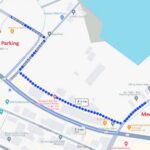
The tour’s meeting point is Nauthólsvegur 102, Reykjavík, and it ends back at the same place. There’s no hotel pickup or drop-off included, so plan to handle your own getting there. The good news: the meeting point is near public transportation, which makes it easier if you’re already moving around the city by foot, bus, or taxi.
From the meeting point, you’ll head to Reykjavík Domestic Airport. That airport step is important even if you’ve never flown a helicopter before. Helicopter flights have a more “hands-on” flow than commercial flights—quick check-ins, a short safety briefing, then you’re ready to go.
Tip for your comfort: dress in layers. Even when the day looks mild in Reykjavík, the air at the aircraft can feel sharper once you’re up and moving. Also, if you want photos, bring a lens cloth. Iceland’s weather is dramatic; you don’t want a smeary screen ruining a good minute.
The Quick Safety Briefing and Why the Pilot Story Matters
Before takeoff, you’ll receive a quick safety briefing, then climb aboard. This is one of those tours where the pilot is more than just a driver. Your pilot talks you through what you’re seeing as you fly.
That narration is a real value add because Reykjanes can look similar from a distance on the ground. From above, everything is visible—fault lines, geothermal zones, dark lava fields, and crater features—but you still need context to understand what you’re looking at. The pilot helps you “read” the terrain instead of just staring at it.
And yes, you can sit right next to the pilot. That’s a huge difference-maker. You’ll get a more direct view of the route and the controls, and it often makes spotting small features easier because you’re not craning across other seats.
Over Seltun Geothermal Area: Steam Vents, Mud Pits, and Mint-Green Water
Once you’re airborne, the Reykjanes Peninsula becomes a living geology lesson. A key area is Seltun Geothermal Area, where the terrain shows the active side of Iceland’s volcanic engine.
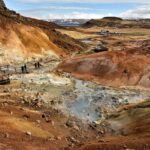
From the sky, you can see steaming volcanic vents and dormant craters—often in patterns that are hard to notice from roads. There are also mud pits filled with mineral-rich volcanic soil, and this is exactly the kind of detail you can’t appreciate well at ground level. Up above, it looks like textured ground art: darker patches, lighter mineral areas, and shapes where heat and minerals have carved out distinct zones.
Another standout is the color of geothermal hot springs. Expect minty-green water in spots. From the air, that color comes across strongly because you’re looking down at the minerals and heat-altered ground. If you’ve seen photos of Iceland’s geothermal colors but never understood why they look that way, this is the moment where it starts making sense.
Why this part is worth the money: most tours give you one or two scenic stops. Here, you get a working view of how geothermal areas form—steam, ground texture, mineral staining, and crater geometry—connected in a single flight.
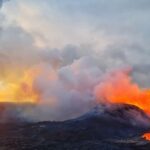
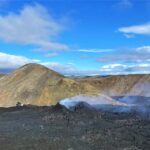
Lava fields and steam vents, other Reykjanes days
Flying Past Black-Sand Coasts and Lava Fields
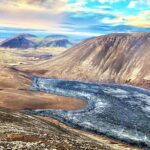
Reykjanes isn’t famous for lush scenery. It’s famous for volcanic drama: black-sand beaches and rugged lava fields. From above, the coast feels broader than you expect, and the lava patterns look more structured—like frozen rivers with branching directions.
These features can be difficult to access from the ground. Even if you rent a car, the remoteness and distance can limit what you realistically see in a day. The helicopter fixes that problem by shortening the gap between “I can see it on a map” and “I’m actually looking down at it.”
When you’re flying, keep an eye out for how the darkness of lava changes over distance. That shift tells you a lot about where the ground has cooled, how it fractured, and how later geothermal activity may have altered patches over time.
Crater Lakes With Emerald Color: Kleifarvatn and Grænavatn
Lakes show up during the flight, and two names matter: Lake Kleifarvatn and Lake Grænavatn.
Lake Kleifarvatn can appear massive, often set against mountainside terrain. From the air, you get a clean view of how it sits in the broader volcanic setting instead of seeing it as just a shoreline stop.
Then there’s Lake Grænavatn, famous (at least visually) for its brilliant emerald shade. The explanation you’ll get during the flight is that the color comes from mineral and algae deposits. That kind of detail is exactly why a pilot-led aerial tour beats a simple “look-down” experience. You’re not only seeing the color—you’re learning what likely created it.
This is also where you can spot crater-related shapes and how lakes relate to volcanic formations. From the road, you might see one angle. From above, you see the whole layout.
A Blue Lagoon Flyover: Nice Sightlines, No Stop Required
Your route includes an overflight of the Blue Lagoon, so you’ll pass overhead and get a new angle on Iceland’s most recognizable geothermal brand.
Just keep expectations practical. This isn’t described as a stop-and-spend visit. The value here is the aerial view—how the facility sits in its setting—and then moving on to the more remote volcanic features of Reykjanes.
If you’re coming to Iceland mainly for photo stops, the Blue Lagoon might be “the famous one” you want to see. But your best payoff on this flight is still the less-touristed geothermal zones, vents, and crater lakes.
Price and Value: Is $3,954 Worth It for Up to 6?
The price is $3,954.02 per group, and the group size tops out at 6. That means the true cost for you depends on whether you can fill seats with your own people. If you’re traveling solo, this is naturally a hard swallow. If you’re with a group, the math gets more reasonable fast.
So what are you paying for, beyond the obvious thrill of a helicopter?
- Time compression: Reykjanes is remote, and the flight turns distance into minutes.
- Rare access to viewpoints: you’re seeing steaming geothermal features, crater forms, and mineral-color lakes from angles that roads can’t replicate.
- Pilot-led interpretation: the narration adds meaning, especially in places like Seltun Geothermal Area and the lake color explanations.
- Privacy: your group flies alone, which makes the experience calmer and easier to enjoy.
Still, there’s one realistic caution: one review-style concern that comes up with this kind of route is that you may see some terrain that overlaps visually with what you’ve already covered on big road loops. From the sky, it’s different, but if you’re expecting something completely new in every direction, don’t. This flight is about viewpoint and context more than about “brand-new stops.”
In plain terms: it’s worth it when you value aerial access and want your day to be a highlight, not just another checklist item.
Comfort, Weight Limits, and Who This Tour Fits
This is designed for a wide range of people, with most people able to participate. It’s also private, so your group stays together, and that matters for comfort and for attention from the pilot.
Two practical notes about seating and balance:
- There’s a total weight per passenger limit listed as 265 lbs.
- If you weigh over 120 kg, you’ll need to purchase an additional half seat, paid directly to the operator on the day of the tour.
Also, the tour notes mention you can sit close to the pilot. If you’re short on height or just love a strong view, that’s a good thing to aim for.
Who should book:
- You want the quickest path to seeing Reykjanes geothermal features and crater lakes.
- You’re with friends or family who can actually fill the group seats.
- You like learning in real time and want a pilot-led explanation rather than just sightseeing from a distance.
Who might pause:
- If your budget is tight, or you prefer spending hours on the ground exploring instead of getting a high-altitude snapshot.
- If you’ve already decided your ideal day is driven by specific road stops like the classic big circuits, because this flight can feel like a “same-region, different angle” choice.
Should You Book Nordurflug’s Private Reykjavik Helicopter Flight?
If you’re the kind of person who gets satisfaction from understanding how things work—steam, minerals, craters, and color—this is one of the most direct ways to do it. The mix of Seltun geothermal features, crater lakes, and lava-and-coast views is exactly the reason helicopters matter here.
My final advice: book it when you can justify the premium and when your group can share the cost. Choose a departure time that fits your weather odds, and dress for cool air even if Reykjavík feels mild.
If you want Iceland’s volcanic energy in one hour, from an angle most people never see, this private flight is a strong yes.
FAQ
How long is the private helicopter flight?
The flight is about 1 hour to 1 hour 15 minutes.
How many people are in a private group?
This is a private tour for your group only, with a maximum of up to 6 people.
Where do I meet for the tour?
The meeting point is Nauthólsvegur 102, Reykjavík, Iceland, and the tour ends back at the same meeting point.
Do I need hotel pickup?
No. Hotel pickup and drop-off are not included, so you’ll need to make your own way to the meeting point.
What’s included in the tour?
Included is a professional pilot and the flight as described.
What areas will we fly over?
You’ll fly over the Reykjanes Peninsula, including the Seltun Geothermal Area, and see several lakes such as Lake Kleifarvatn and Lake Grænavatn. The route also includes an overfly of the Blue Lagoon.
Is food or drinks included?
No. Food and drinks are not included.
What language is the tour offered in?
The tour is offered in English.
Can I sit next to the pilot?
You can sit right next to the pilot for a front-row view.
What if I’m over the weight limit?
If you’re over 120 kg, you’ll need to purchase an additional half seat, paid directly to the operator on the day of the tour. The tour also lists a total weight per passenger of 265 lbs.
What’s the weather rule and cancellation timing?
The experience requires good weather. If it’s canceled due to poor weather, you’ll be offered a different date or a full refund. You can cancel up to 24 hours in advance for a full refund.
More Tour Reviews in Reykjavik

Reykjanes: Lava, Steam and More
Closer to the Volcanoes

Fresh off the road around Reykjavik
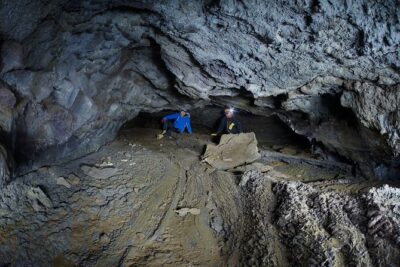
Volcano & Lava Tours, compared.
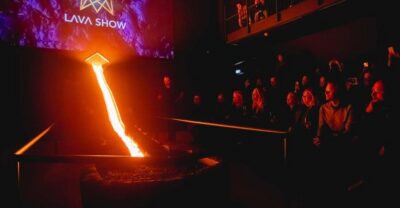 ★ 4.8LAVA SHOW – Immersive Experience Entry TicketFrom $543,360 reviews
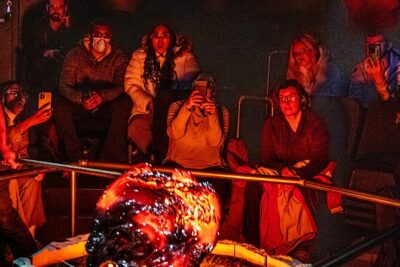 ★ 5.0Lava Show Reykjavik Admission Ticket – Optional Premium UpgradeFrom $543,278 reviews
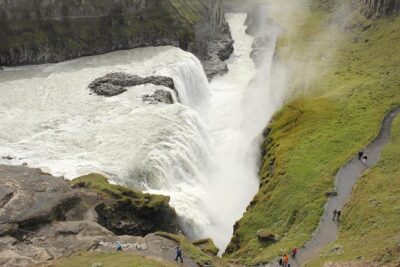 ★ 4.5Golden Circle with Kerid Volcanic Crater Day Tour from ReykjavikFrom $852,826 reviews
 ★ 4.8Red Lava Horse Riding TourFrom $1422,383 reviews
 ★ 5.0The Lava Tunnel Tour – RaufarhólshellirFrom $742,373 reviews
 ★ 5.0Golden Circle, Volcano Crater and Blue Lagoon Small-Group TourFrom $2531,932 reviews
 ★ 4.7Raufarhólshellir Lava Tunnel: Underground ExpeditionFrom $731,717 reviews
 ★ 4.7Snæfellsnes Day Trip with Vatnshellir Lava CaveFrom $2191,108 reviews
Browse the lists this tour appears in