
Reviewed · VOLCANO & LAVA TOURS
Reykjavik: 45-Minute Volcano Sightseeing Helicopter Tour
Volcano spotting by helicopter beats most ground plans fast. I love the views for every seat and the way the pilot ties the flight into a clear volcanic story over Reykjanes. The one catch is there’s no guarantee of visible lava, since eruptions are natural and flights run on weather rules.
You’ll lift off from Reykjavik Domestic Airport, cross older lava fields, and then circle the most recent eruption area tied to Sundhnúkahraun (March 2024)—all in about 45 minutes with a live English guide onboard. If you’re the type who wants a sure thing, plan this as a best-chance experience, not a promise.
In This Review
- Key Things I’d Not Skip About This Helicopter Tour
- Entering the Helicopter World from Reykjavik Domestic Airport
- The 45-Minute Flight That Packs a Volcanic Timeline into One Loop
- Reykjanes Peninsula: Where You Learn to See Lava as Evidence
- Sundhnúkahraun (March 2024): The Main Target Overhead
- Flying Past Old Eruption Craters and the Fagradalsfjall/Geldingadalir Story
- Capital Area Passing Glances: Quick Reykjavík Views from Above
- Bessastaðir: The Presidential-Home Sight on the Return
- Weather Rules and the No-Guarantee Lava Reality
- Price and Value: What $624 Buys You in Iceland
- Who This Tour Fits Best (and Who Should Skip It)
- The Bottom Line: Should You Book This Helicopter Volcano Tour?
- FAQ
- Where does the tour start?
- How long is the helicopter tour?
- How many people are in the group?
- What language is the tour guide in?
- Is the flight guaranteed to show flowing lava?
- What’s included in the price?
- Can I cancel or change plans if the weather is bad?
Key Things I’d Not Skip About This Helicopter Tour
- Small group (max 5 people) means easier attention and more breathing room during setup.
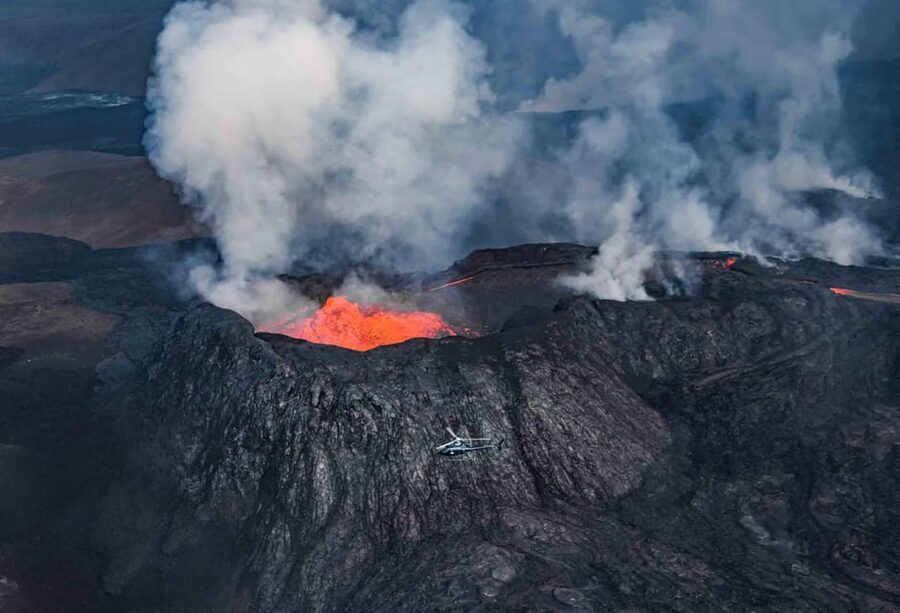
- Recent eruption focus: Sundhnúkahraun (March 2024) is a main target.
- Pilot-driven volcanic spotting across multiple eruption zones, including Fagradalsfjall/Geldingadalir (2021–2022).
- Easy Reykjavík access: Reykjavik Domestic Airport is about five minutes from the city center.
- Bessastaðir sighting on the return if visibility lines up.
- Weather-dependent flights governed by Iceland’s civil protection rules, so timing can shift.
Closer to the magma, compared
- Reykjavik: LAVA SHOW – Immersive Experience Entry Ticket★ 4.8 · 3,360 reviews
- Lava Show Reykjavik Admission Ticket – Optional Premium Upgrade★ 5.0 · 3,278 reviews
- Golden Circle with Kerid Volcanic Crater Day Tour from Reykjavik★ 4.5 · 2,826 reviews
Entering the Helicopter World from Reykjavik Domestic Airport
The easiest part of this whole outing is getting to where it starts. You meet at Reykjavik FBO at Reykjavik Domestic Airport, right by the Berjaya hotel, and it’s only about five minutes from the center of Reykjavík. That matters in Iceland, where a busy day can turn into a stressful day if transfers are long.
Once you’re there, you link up with airport staff and your pilot, then you get a short route briefing before takeoff. That quick orientation is useful because you’ll be looking in multiple directions fast—coastlines, lava fields, and crater areas change as you fly, and the guide/pilot helps you know what you’re seeing. This is a short flight, so the briefing sets you up to get more out of every minute in the air.
One practical note: the meeting point is a specific building. In at least one case, the door looked locked for a while until reception staff returned. You can’t control that, but you can reduce stress by arriving early and giving yourself extra time to find the right check-in spot.
The 45-Minute Flight That Packs a Volcanic Timeline into One Loop
This tour is listed as 45 minutes total. That’s short enough that you can still do other sightseeing the same day, but long enough to fly inland from Reykjavík and back while circling key eruption areas. The timing also means you’re not stuck watching clouds for an hour while weather changes—your experience is concentrated.
After departure, your helicopter heads toward the Reykjanes Peninsula. Along the way, you’ll see older lava fields, including areas that date back hundreds of years. That’s more than scenic window time. It helps you understand the “layering” effect of volcanic activity: eruptions build on previous ones, and the terrain you’re seeing is the accumulated result, not just one moment.
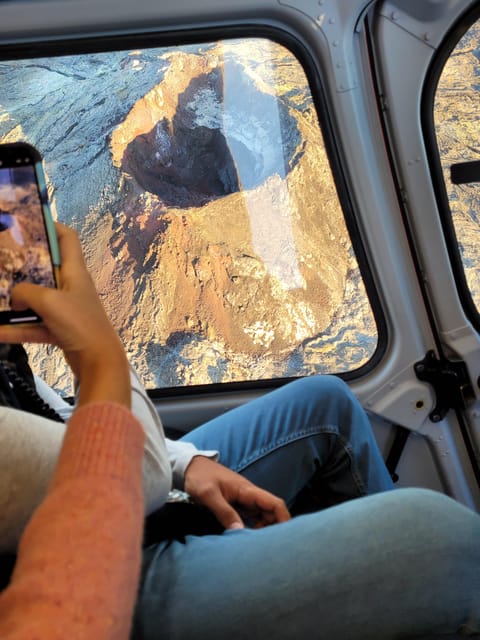
Then comes the main act: the recent eruption sites. The flight is designed to move through a volcanic timeline—starting with the larger crater systems tied to the Fagradalsfjall/Geldingadalir eruptions in 2021 and 2022, and then traveling to the most recent eruption area highlighted for this tour: Sundhnúkahraun from March 2024. Even though you’re flying fast, the pilot guides your attention so you’re not just looking at random patches of dark rock.
Reykjanes Peninsula: Where You Learn to See Lava as Evidence
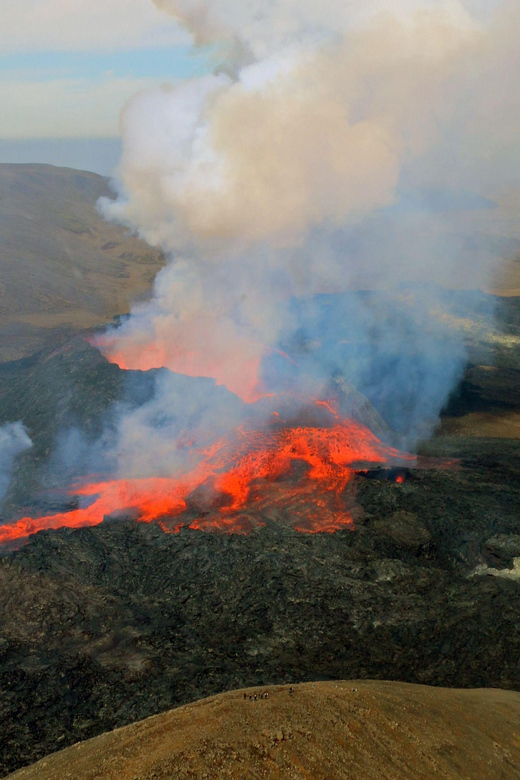
Once you’re over the Reykjanes Peninsula, the tour becomes a visual lesson. You’ll spend about 30 minutes in the peninsula area, which is when most of the volcano-spotting happens. That’s the time for close viewing of lava fields and crater areas, and it’s when you’ll most likely catch the “wow” factor you came for.
The helicopter format changes how you experience the volcano. From the ground, you often pick a single vantage point and hope the view lines up with what you’re trying to photograph. From the air, you can see patterns: channels, edges, and the way the eruption field spreads out across the terrain. Your pilot will circle the lava fields, and that circling is a big part of why photos tend to come out well. You get chances to reframe the view without leaving your seat.
Here’s what makes this area especially interesting in the supplied details: the tour doesn’t just point at one eruption. It connects what you’re seeing to volcanic activity over time. You’ll hear the volcanic history of the region as you fly, and you’ll also get pointed out to multiple crater areas connected to earlier activity.
Sundhnúkahraun (March 2024): The Main Target Overhead
The most recent eruption site on the route is Sundhnúkahraun, identified as starting in March 2024. That’s the kind of detail that’s easy to gloss over until you realize what it means: the flight is aimed at current volcanic context, not a generic overview from long-ago eruptions.
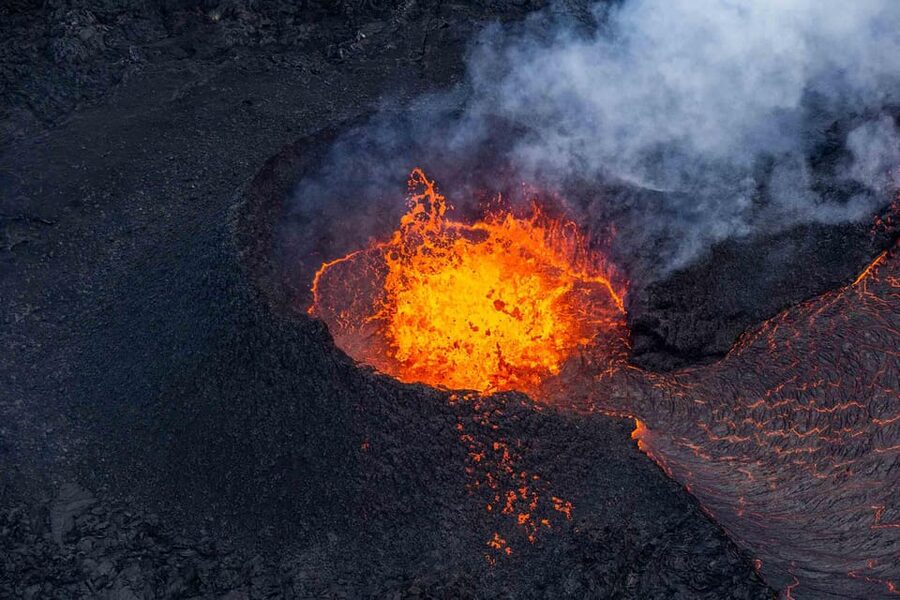
What you should expect realistically is this: you may see flowing lava, but you also might not. The tour explicitly warns that visible lava isn’t guaranteed. That’s not a marketing loophole; it’s the nature of volcanic activity. A lava flow can be active, slow down, stop, or become hard to see depending on conditions.
Still, even without obvious lava movement, the air view of the eruption field can be striking. Think of it as seeing the “footprint” of an eruption, even if you don’t catch it in motion. If flowing lava is happening during your window, this tour is set up for the best chance to spot it from above.
Reykjavik from the air, other flights
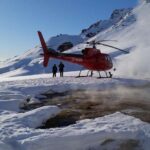
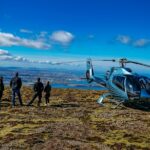
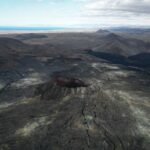
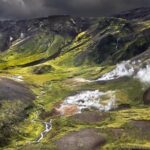
Flying Past Old Eruption Craters and the Fagradalsfjall/Geldingadalir Story
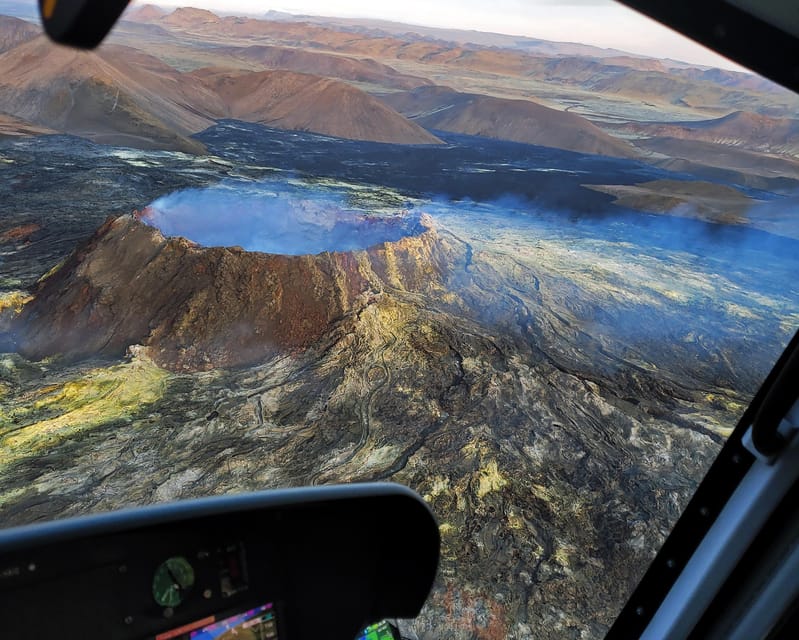
Another highlight is the way the route connects multiple eruption zones. The flight includes the massive craters formed during the Fagradalsfjall/Geldingadalir eruptions in 2021 and 2022, and you’ll then move on to the March 2024 eruption area.
Why that matters: it helps you understand how volcanic landscapes evolve. Craters and lava fields aren’t isolated events; they link together through time, and the geology tells a longer story than any one eruption date. From the air, the scale becomes easier to grasp. You can see the structure and the distribution in a way that doesn’t feel possible from a single spot on the ground.
The pilot approach is part of the value here. In the most positive feedback, the pilot is described as informative and kind, and people appreciated the multiple approaches used to circle the active volcano area. That means you’re not stuck with one straight passover—you get varied angles and a better sense of where the key features sit.
Capital Area Passing Glances: Quick Reykjavík Views from Above
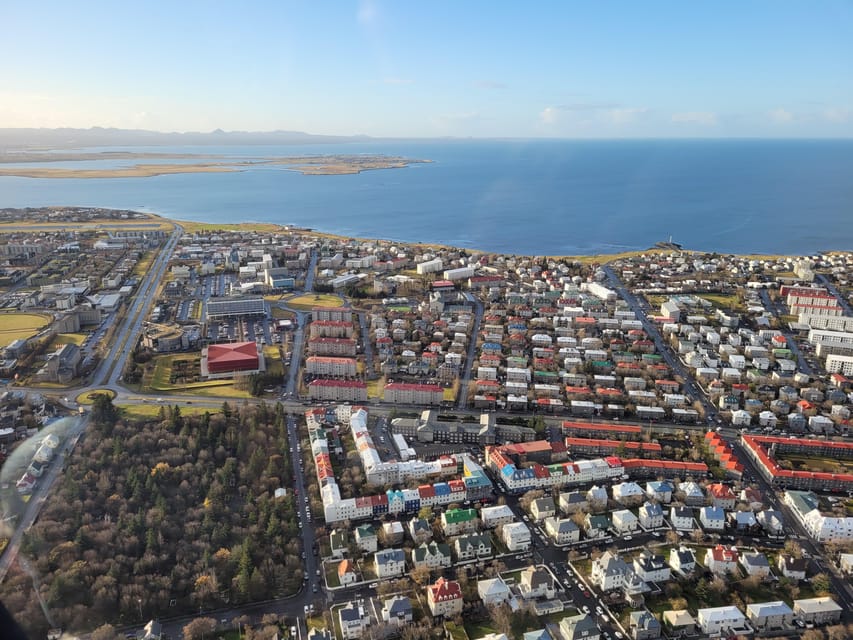
The itinerary includes short sightseeing moments over Reykjavík and the capital region area. You’ll get a view of the city as you depart, then another brief look on the way back. Those minutes aren’t the main reason to pay for a helicopter, but they do serve a purpose: they help you orient yourself and see how Reykjavík sits next to the volcanic zones.
There’s also a smart “human geography” element. Seeing the city first, then leaving it behind for lava terrain, gives the trip a clear before-and-after feel. When you return, it can feel like you’ve gone from everyday Reykjavík to a totally different planet in the span of an hour.
Bessastaðir: The Presidential-Home Sight on the Return
On the way back, the tour includes a short sightseeing stop over Bessastaðir, the president’s home. This is a fun add-on because it connects the volcanic focus to a recognizable landmark. You’re unlikely to “do” anything with it besides look—but from the air, you’ll likely spot the area quickly and then move on.
One thing to keep your expectations grounded: the tour mentions you might be able to see Bessastaðir if you know where to look. That’s a good reminder that this isn’t a dedicated landmark tour. It’s a bonus window view layered onto the main lava experience.
Weather Rules and the No-Guarantee Lava Reality
This is the part you should take seriously when planning your day. Flights are weather dependent, and the operation has to follow rules and regulations set by the Department of Civil Protection and Emergency Management. Translation: if conditions aren’t safe, the flight can change or be canceled.
The good news is that the operator states they’ll try to reschedule your flight or give a full refund if they cancel due to weather or factors out of their control. That reduces the risk of being stranded with a sunk cost.
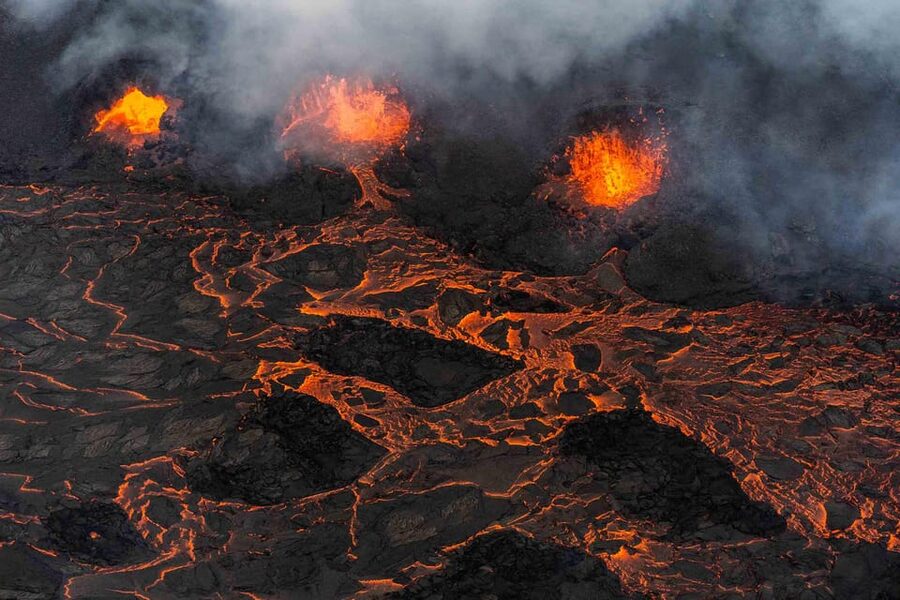
The other reality is about eruption visibility. Even if you fly, you might not see flowing lava. Iceland’s volcanic behavior is unpredictable, and visibility from the air can be tricky. I treat that as part of the deal, not as a disappointment. A helicopter ride over the eruption field still delivers value by showing you the real-scale geography of volcanic activity.
Price and Value: What $624 Buys You in Iceland
At $624 per person, this is not a budget activity. A helicopter tour is always expensive because you’re paying for aircraft time, specialized operations, and safety oversight.
So where does the value come from? For me, it’s the combination of:
- a tight 45-minute window that keeps the experience intense,
- small group size (limited to 5), which is a real quality-of-experience advantage,
- and the flight plan targeting recent eruption areas like Sundhnúkahraun (March 2024) plus earlier eruption zones in the same region.
You’re paying for access and viewpoint. This isn’t just transportation; it’s the ability to see volcanic features in spatial context. If you love photography, want the best odds of spotting active lava, or you simply want to feel the scale of Reykjanes from above, the price can make sense.
If you want a guaranteed view of lava in motion, treat this as a high-quality chance, not a guarantee. If you want something cheaper, you’d likely need to look at ground-based options instead.
Who This Tour Fits Best (and Who Should Skip It)
This tour fits well if you:
- want the fastest route to a “volcano from above” experience,
- enjoy guided interpretation rather than just sightseeing,
- and like the idea of flying over multiple eruption generations, not one single viewpoint.
It’s also a good match for photographers and anyone who struggles to visualize lava fields from maps. The air angles make the terrain easier to read.
Who might skip it:
- If you’re traveling with very young kids, note it isn’t suitable for children under 2 years.
- If you’re extremely sensitive to weather uncertainty and want zero variability, you may find a helicopter tied to safety rules stressful.
The Bottom Line: Should You Book This Helicopter Volcano Tour?
I’d book this if your top priority is seeing Reykjanes volcanic terrain from above in a short, high-impact flight, especially with a focus on Sundhnúkahraun (March 2024). The small group cap helps, and the pilot-led guiding approach seems to be one of the strongest parts of the experience.
But I’d also go in with the right mindset: you’re buying a guided aerial look at recent and older eruption fields, with a possibility of flowing lava, not a promise. If that matches how you like to travel in Iceland—flexible, curious, and ready for what the weather and volcano allow—this is an easy yes.
FAQ
Where does the tour start?
You meet at Reykjavik FBO at Reykjavik Domestic Airport. The building is marked with their sign and is right next to Berjaya hotel. The activity ends back at the same meeting point.
How long is the helicopter tour?
The tour duration is 45 minutes total. Starting times vary, so it’s best to check availability for your preferred day.
How many people are in the group?
It’s a small group limited to 5 participants.
What language is the tour guide in?
The live tour guide is provided in English.
Is the flight guaranteed to show flowing lava?
No. Flights are weather dependent, and lava visibility isn’t guaranteed. Eruptions are natural and may or may not be active during your visit.
What’s included in the price?
The price includes all taxes and airport fees.
Can I cancel or change plans if the weather is bad?
You can cancel up to 24 hours in advance for a full refund. If the operator cancels due to weather or factors outside their control, they’ll try to reschedule your flight or provide a full refund.
More Tours in Reykjavik
More Tour Reviews in Reykjavik

Closer to the Volcanoes

Fresh off the road around Reykjavik
Volcano & Lava Tours, compared.
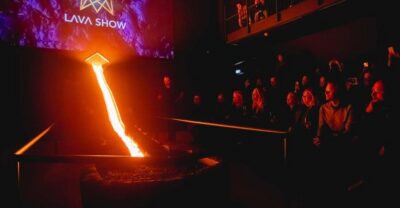 ★ 4.8LAVA SHOW – Immersive Experience Entry TicketFrom $543,360 reviews
 ★ 5.0Lava Show Reykjavik Admission Ticket – Optional Premium UpgradeFrom $543,278 reviews
 ★ 4.5Golden Circle with Kerid Volcanic Crater Day Tour from ReykjavikFrom $852,826 reviews
 ★ 4.8Red Lava Horse Riding TourFrom $1422,383 reviews
 ★ 5.0The Lava Tunnel Tour – RaufarhólshellirFrom $742,373 reviews
 ★ 5.0Golden Circle, Volcano Crater and Blue Lagoon Small-Group TourFrom $2531,932 reviews
 ★ 4.7Raufarhólshellir Lava Tunnel: Underground ExpeditionFrom $731,717 reviews
 ★ 4.7Snæfellsnes Day Trip with Vatnshellir Lava CaveFrom $2191,108 reviews
Browse the lists this tour appears in