
Reviewed · PRIVATE DRIVERS
From Reykjavik: Reykjanes Geopark Tour & Airport Transfer
Steam, lava, and tectonic drama in one ride. This Reykjanes Geopark tour turns the Reykjanes Peninsula into a living science lesson, with walks through Krysuvík–Seltún hot springs and stops that feel otherworldly. Guides such as Trond, Gummi, and Starri can really make the geology (and the stories) click.
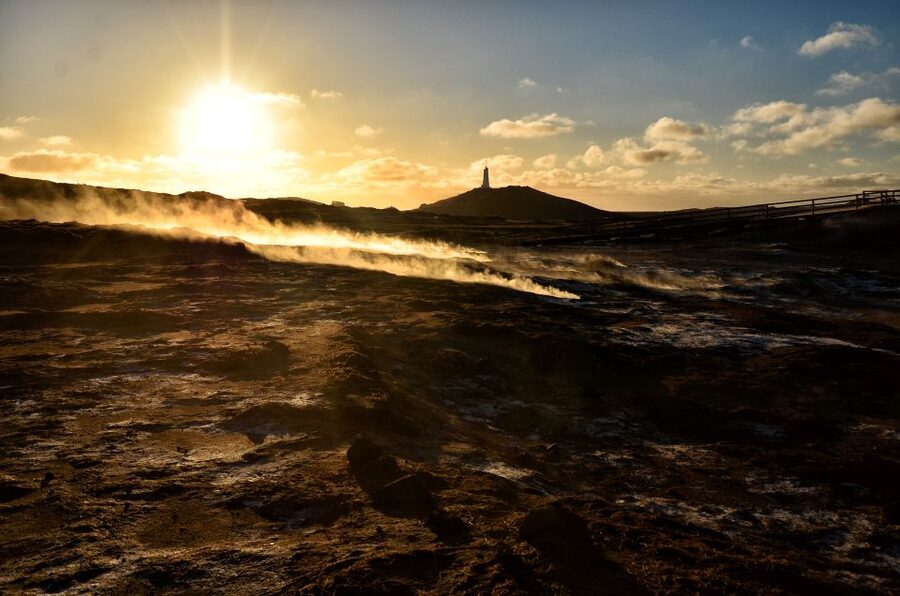
I also love how you’re not just looking at famous points—you’re walking right in the action. The Bridge Between the Continents crossing and the views from Reykjanesviti lighthouse make it easy to grasp the whole tectonic-plate story, and it helps that the pace gives real time at key stops.
One thing to plan for: because this is a volcanic region, the route may change due to activity or road closures, which can mean skipping certain coastal stops like the lighthouse/bridge on some days.
In This Review
- Key things that make this Reykjanes Geopark day special
- Reykjanes Geopark: where Iceland’s forces show up in plain sight
- Getting from Reykjavik to the peninsula without the headache
- Kleifarvatn and Grænavatn: two crater lakes with very different vibes
- Krysuvík–Seltún hot springs: a walk through color and steam
- Gunnuhver mud pools: the smell, the steam, and the story
- Reykjanesviti lighthouse and coastal bird cliffs
- Bridge Between the Continents: a simple stop with a big idea
- Grindavík lava fields and the eerie abandoned-city feeling
- How the timing works (and why it feels like enough)
- Airport transfer and the Blue Lagoon option
- What to bring: the geothermal zone is not a gentle stroll
- Price and value: why $159 can make sense here
- Who should book this Reykjanes tour, and who might want another option
- Final call: should you book it?
- FAQ
- How long is the Reykjanes Geopark tour from Reykjavik?
- When will I get back to Reykjavik?
- What is included in the price?
- Are meals included?
- Does the price include Blue Lagoon admission?
- How big is the group?
- Where does pickup happen?
- Will this tour drop me at the airport?
- What should I bring?
- What if there’s volcanic activity or road closures?
Key things that make this Reykjanes Geopark day special
- Small-group size (5–17) keeps it flexible and easier to hear the guide on windy stops
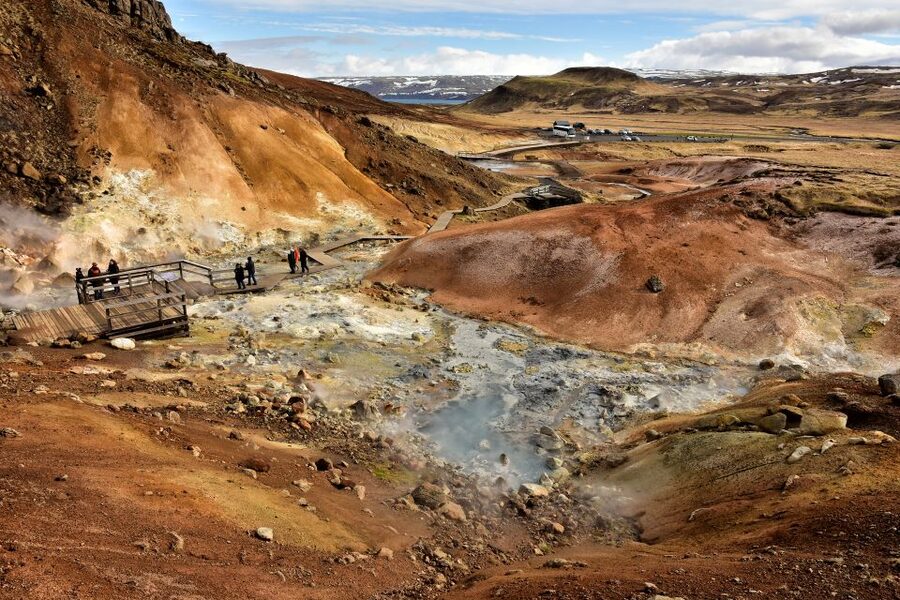
- Krysuvík–Seltún walk puts you among color-changing hot-spring minerals
- Gunnuhver geothermal area delivers steaming mud pools and a famous local ghost story
- Bridge Between the Continents gives you a symbolic, very photo-worthy tectonic moment
- Newly solidified lava near Grindavík connects the science to real, recent eruption evidence
Lava fields and steam vents, other Reykjanes days
- Reykjavík: Volcano Eruption Site and Reykjanes Hiking Tour★ 4.6 · 1,066 reviews
- From Reykjavík: Fagradalsfjall Volcano Hike with Geologist★ 4.8 · 780 reviews
- Iceland Hiking Tour to Fagradalsfjall Volcano with Local Guide★ 5.0 · 573 reviews
Reykjanes Geopark: where Iceland’s forces show up in plain sight
If you want one day that makes Iceland feel less like a postcard and more like a planet in motion, this is a strong pick. The Reykjanes Peninsula sits on active fault lines, where geothermal energy and seismic movement are part of the scenery, not a footnote.
What I like best is the way the tour moves from calmer geothermal water to intense heat. You start with crater lakes tied to fissure zones, then you work your way into bubbling hot springs, steaming mud pools, and coastal views. It feels like the peninsula is telling you, step by step, how Iceland is being built—and reshaped—right now.
And yes, the guide quality matters. Several guides (like Trond, Ian, Jakob, Rakel, and Starri) are praised for making the stops feel connected, not random. Even if you’re not a geology buff, you’ll get practical context for what you’re seeing.
Getting from Reykjavik to the peninsula without the headache
The day begins with a hotel (or designated bus stop) pickup in central Reykjavik. There are lots of pickup options, plus a cruise port pickup if that’s where you’re starting. You’ll want to be outside by 9:00 AM, and pickup happens between 9:00–9:30 AM depending on the route and traffic.
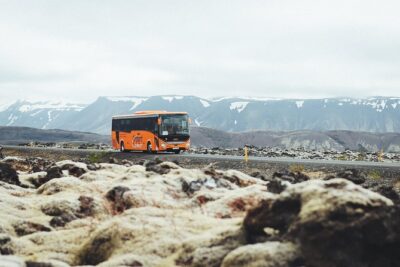
The ride is in a climate-controlled minibus with a small group. That matters more than it sounds. On this kind of itinerary, you’ll be switching between viewpoints, short walks, and lots of outside time. A smaller vehicle usually means fewer delays from waiting for a huge lineup of passengers.
There’s also a short break built in (including a stop around Hafnarfjörður with coffee/shopping time). So even though it’s a packed day, it doesn’t feel like nonstop sprinting.
Kleifarvatn and Grænavatn: two crater lakes with very different vibes
Early on, you’ll reach Kleifarvatn Lake, perched atop a fissure zone. What makes this stop interesting is the cause-and-effect feeling: the lake isn’t just pretty; it’s positioned where underground activity shapes the surface.
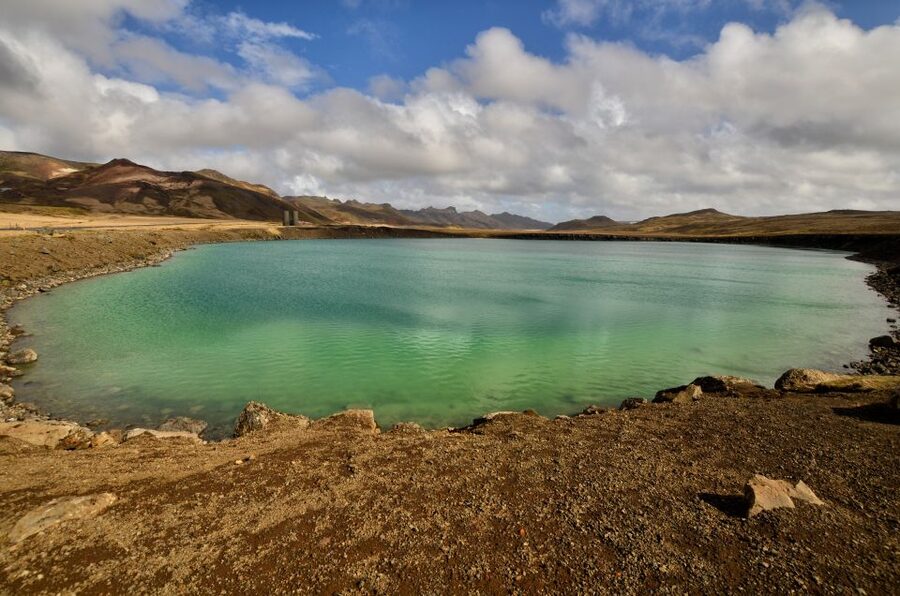
Next comes Grænavatn, a smaller lake inside a volcanic crater. The teal color is the headline, but the real takeaway is how quickly the scenery changes as you move across the peninsula’s volcanic system. It’s the kind of stop that helps you calibrate your eyes before you get to the hotter, smellier places.
These early viewpoints are a good time to slow down and decide how you want to shoot photos. The light can change fast near the coast, and your guide will be moving you along a route where timing matters.
Krysuvík–Seltún hot springs: a walk through color and steam
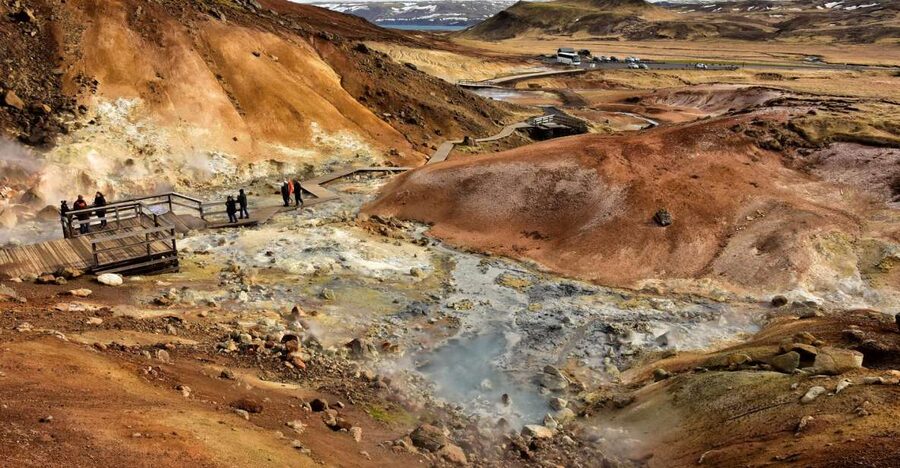
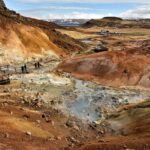
Your biggest walking stop is Krysuvík–Seltún. This is where you’ll stretch your legs among bubbling hot springs and multicolored ground. The area is known for mineral colors created by geothermal activity—so you’ll see streaks and patches that look like nature is painting with chemicals.
This is also one of those places where sturdy footing helps. You’re not on a paved boardwalk the whole time, and the ground can be uneven or slick with geothermal moisture. Bring outdoor clothing and rain gear. Even if the day looks calm in Reykjavik, conditions out here can change.
What makes this stop especially satisfying is the way it turns a “look, that’s hot water” moment into a real walk. You’re close enough to notice textures, not just steam columns in the distance.
Worth a look alongside this Reykjavik pick:

Gunnuhver mud pools: the smell, the steam, and the story
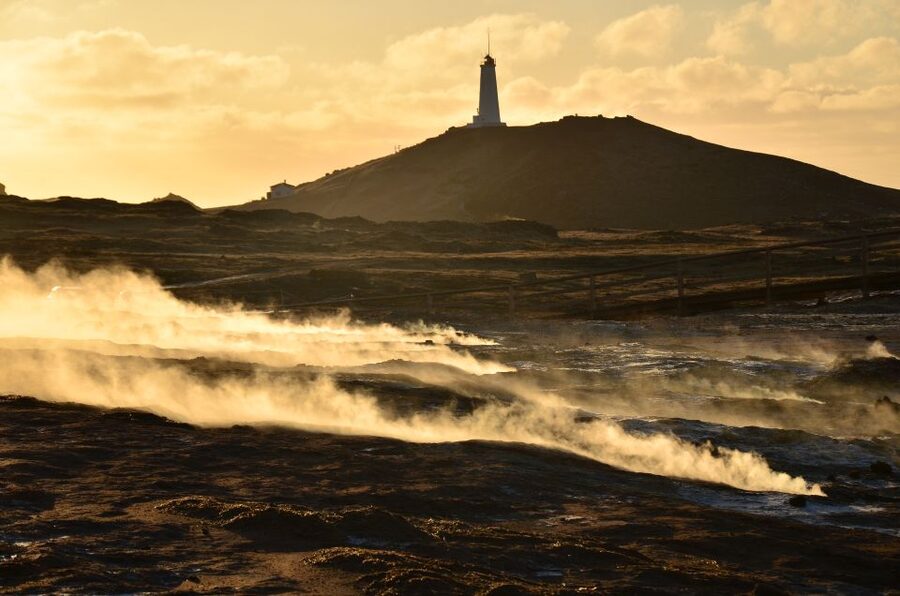
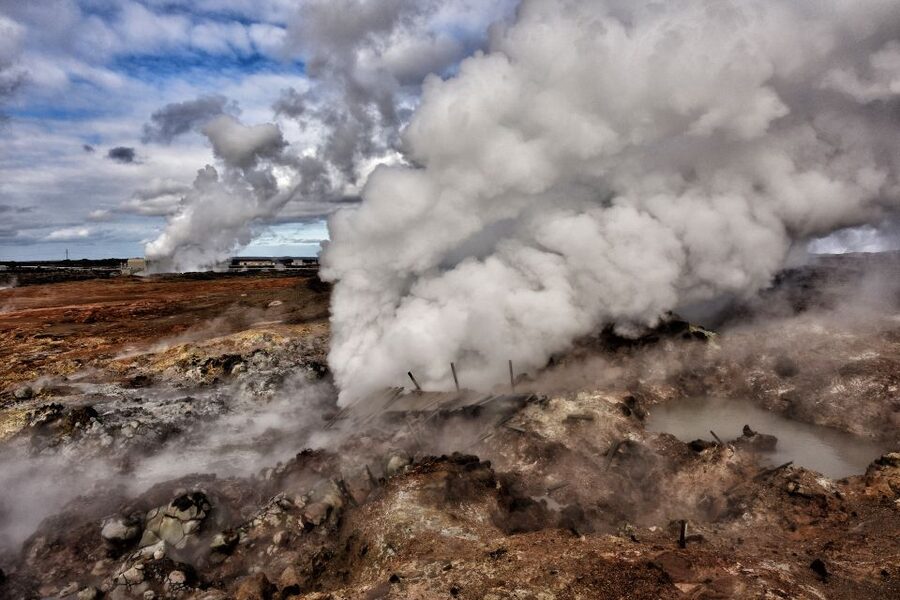
Next up is Gunnuhver, a geothermal area filled with steaming mud pools. If you’re expecting quiet scenery, this place will reset your expectations. It’s dramatic, active, and unmistakably geothermal.
You’ll also hear a local ghost story tied to the area. Whether you love legends or just enjoy atmosphere, these stories do something useful: they make the geothermal features feel human. You’re not just staring at fumes; you’re learning how people have lived with (and tried to explain) these forces.
This stop is short on purpose, because the best photos and the most interesting observations happen while conditions are stable. It’s the kind of place where you should pay attention to wind direction and where you place your feet—because the ground and the air are both doing a lot.
Reykjanesviti lighthouse and coastal bird cliffs
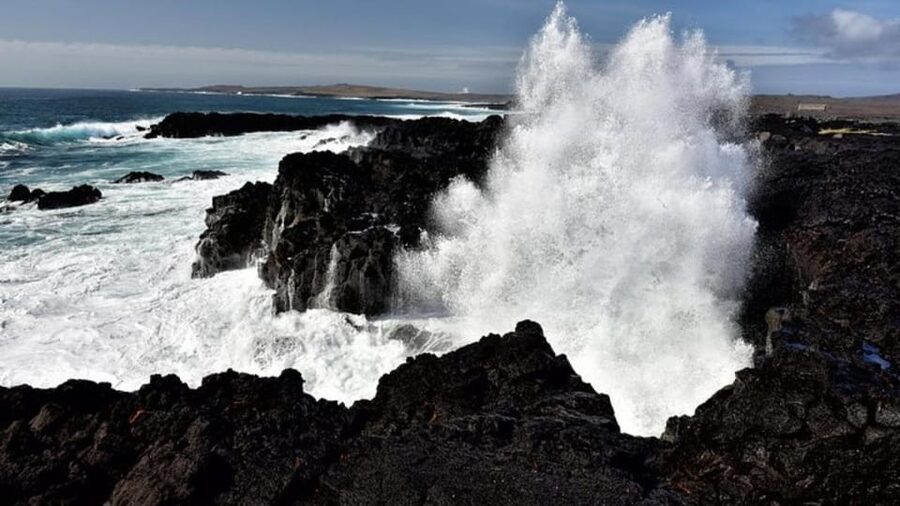
As the day moves toward the coast, you’ll get that classic Reykjanes feeling: ocean air, sharp views, and birdlife along the cliffs. Then comes Reykjanesviti lighthouse, described as Iceland’s oldest lighthouse in the tour materials.
What I like about this part of the route is the contrast. Earlier stops are all steam, minerals, and heat. Here, the scale opens up. You can step back and see how the peninsula’s geology meets the Atlantic.
If the weather is windy, don’t fight it. Stand where the guide directs you, take your photos quickly, and then move on. It’s better to get a sharp shot than to stand there trying to “win” against gusts for 15 extra minutes.
Bridge Between the Continents: a simple stop with a big idea
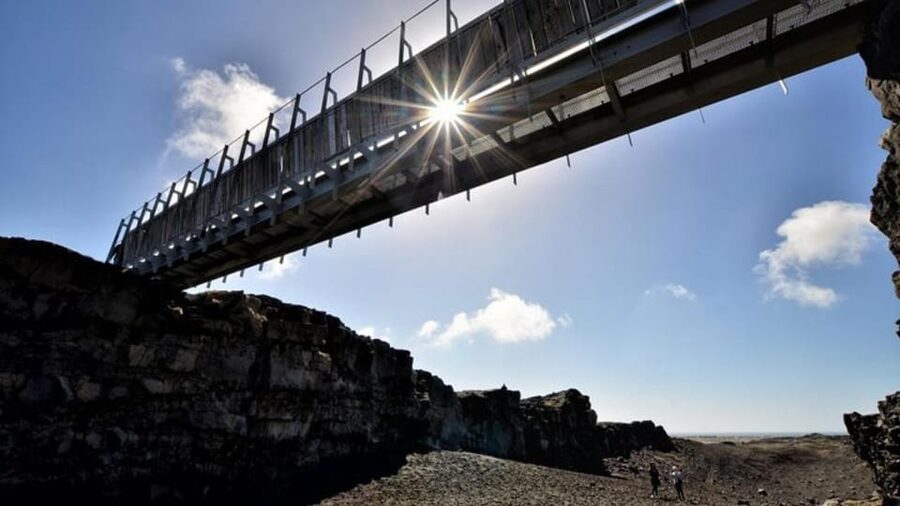
One of the tour’s signature moments is crossing the Bridge Between the Continents. The symbol is the point: you’re spanning the divide between Iceland’s two tectonic plates.
The “wow” here is mostly mental. You’re in Iceland, which already feels geologically alive, and suddenly the concept becomes literal. If you’ve ever wondered what tectonic plate boundaries look like in real life, this is one of the clearer ways to understand it.
Time-wise, it’s not a long stop, but it’s long enough to get photos and actually take in the meaning. You’ll feel it more if you’ve already visited the thermal sites earlier in the day, because then it all ties together.
Grindavík lava fields and the eerie abandoned-city feeling
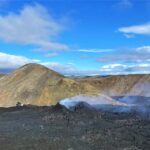
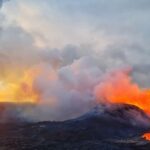
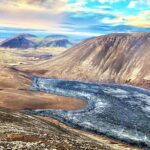
Toward the end of the core stops, you’ll reach Grindavík and the surrounding area, where you can see freshly solidified lava from the last volcanic eruption referenced in the tour description.
This is the most emotionally charged part of the itinerary. You’re not looking at a permanent feature from centuries ago—you’re looking at evidence of more recent change. That’s why people often remember this stop longer than the others. It’s raw and real.
You may also notice the abandoned feel of parts of the area once described as a thriving community. It’s quiet, and that quiet hits harder in a place where the science says everything is moving.
Important note: in some situations, road closures around Grindavík can affect access to certain coastal stops like the lighthouse, cliffs, bridge, or planned lunch time. When that happens, your guide will adjust the route, but the exact replacements can be limited.
How the timing works (and why it feels like enough)
This is a 7-hour tour that’s designed to be a half-day in practice, with a return to Reykjavik around 4:00 PM. You’ll have short driving segments between stops, plus brief sightseeing blocks that keep the day moving.
The best part of the timing is the balance: you get enough time at the big walking/active areas (especially Krysuvík–Seltún and Gunnuhver), and you still get the iconic points like the lighthouse and the bridge. It avoids the trap of spending most of the day parked outside for quick 30-second photo breaks.
One more practical benefit: the tour’s small-group format makes it easier to manage flow. When weather changes or someone needs a moment, it usually doesn’t turn into a cascading delay.
Airport transfer and the Blue Lagoon option
If you have an airport flight later, this is one of the nicer ways to use your final hours in Iceland. The tour offers an optional drop-off at Keflavik International Airport (and it also includes passing by the Blue Lagoon with the possibility of a drop-off option).
Do note: Blue Lagoon admission isn’t included. If you want to go there, you’ll need your own ticket and plan your timing around your pickup/drop-off arrangement.
Also, since food and drinks aren’t included, you’ll want to plan snacks or a meal before or after. There’s a break on the way that can help with coffee and basic shopping, but don’t assume lunch is included.
What to bring: the geothermal zone is not a gentle stroll
This tour spends a lot of time outdoors in active geothermal areas and on windy coastal viewpoints. Bring:
- rain gear
- outdoor clothing
- sturdy outdoor footwear
Even if Reykjavik is clear, coastal weather can flip fast. And around hot springs and mud pools, you’ll want shoes that can handle uneven ground. The goal is simple: stay comfortable enough that you can focus on the sights instead of your feet.
If you’re traveling with kids: Icelandic law requires booster seats, so plan for that in advance.
Price and value: why $159 can make sense here
At $159 per person, this tour isn’t the cheapest option. It also isn’t trying to be. You’re paying for a small-group format, a professional local guide/driver, and hotel pickup and drop-off.
Here’s the value math that matters:
- You don’t have to rent a car or figure out a route through a volcanically active region
- Small group (5–17) usually means less waiting and better guidance at stops
- The itinerary hits multiple high-impact sites in one day: hot springs, mud pools, lighthouse, bridge crossing, and lava fields
- The optional Keflavik Airport (and Blue Lagoon area) connection can save time on a travel day
It may cost more than large-bus tours, but you’re paying for time on your side. Multiple guides are praised for giving enough time at each stop and handling route decisions smoothly.
Who should book this Reykjanes tour, and who might want another option
This tour is a great match if:
- you want a high-impact geology day without driving
- you’re short on time and need a reliable plan before a flight
- you like guided context, including local stories tied to place
- you want a smaller group experience instead of being packed into a large bus
It might not fit as well if:
- you hate walking on uneven ground (even if it’s not extreme hiking)
- you’re looking for long stays at each stop rather than a well-paced route
- you need guaranteed access to every single coastal site every day, since volcanic conditions and road closures can force changes
Final call: should you book it?
I’d book this tour if you want Reykjanes in one efficient, guided shot. The mix of Krysuvík–Seltún hot springs, Gunnuhver mud pools, Reykjanesviti lighthouse, and the Bridge Between the Continents gives you variety without feeling scattered. Add the recent lava fields near Grindavík, and you get both wonder and meaning.
I’d only hesitate if your schedule is extremely tight and you can’t tolerate the possibility of route changes due to conditions in the region. If that risk is a deal-breaker, you may prefer a more flexible plan with extra buffer.
If you do book, pack for outdoors, expect real geothermal terrain, and trust the guide’s adjustments. This part of Iceland rewards the people who show up ready to walk, look, and learn.
FAQ
How long is the Reykjanes Geopark tour from Reykjavik?
The tour runs for about 7 hours.
When will I get back to Reykjavik?
The tour is expected to return to Reykjavik around 4 PM.
What is included in the price?
The price includes hotel pickup and drop-off, a professional local driver/guide, and a small-group tour.
Are meals included?
Food and drinks are not included.
Does the price include Blue Lagoon admission?
No. Blue Lagoon admission is not included (you may pass by it, and the bus may offer an option related to it).
How big is the group?
The small group is between 5 and 17 people.
Where does pickup happen?
Pickup is available from hotels and/or designated bus stops. If your accommodation is more than 10 minutes walking from a fixed pickup location, you’re asked to contact the provider by email.
Will this tour drop me at the airport?
Yes, there is an optional drop-off at Keflavik International Airport.
What should I bring?
Bring rain gear and outdoor clothing, and wear sturdy outdoor footwear.
What if there’s volcanic activity or road closures?
The route may be changed due to volcanic activity. In very special cases, some sections may be unavailable and replaced by alternative routes. The tour may also be delayed, altered, or canceled due to unsafe travel conditions.
More Tours in Reykjavik
More Tour Reviews in Reykjavik

Reykjanes: Lava, Steam and More
Fresh off the road around Reykjavik
Private Drivers, compared.
 ★ 4.8Sky Lagoon Admission with TransferFrom $2122,388 reviews
 ★ 4.9Golden Circle Minibus Tour & Blue Lagoon TransferFrom $136546 reviews
 ★ 4.0Airport Transfer in Iceland from Keflavik Airport to Reykjavik City With Hotel Drop OffFrom $40464 reviews
 ★ 4.5The Lava Tunnel Tour with Transfer from ReykjavikFrom $124435 reviews
 ★ 4.0Airport Express Shared Departure Transfer from Reykjavik Hotels to Keflavik AirportFrom $40386 reviews
 ★ 4.8Golden Circle Day Trip with Blue Lagoon TransferFrom $152345 reviews
 ★ 4.5Blue Lagoon Entry Ticket with Optional Private or Shared TransferFrom $206343 reviews
 ★ 4.0Airport Transfer in Iceland from Reykjavik City to Keflavik Airport with Hotel Pick UpFrom $41332 reviews
Browse the lists this tour appears in