
Reviewed · REYKJAVIK CITY SIGHTSEEING
Reykjavik City Walking Tour
Reykjavik clicks into place fast. This small-group walking tour (max 12) strings together the city’s biggest icons and the stories behind them, from Hallgrímskirkja and Harpa to parliament and the Old Harbour, with hands-on stops like the statue garden and the city pond. What I like most is the tight 2.5-hour pacing and the fact that your guide brings the city to life with fun, clear storytelling that makes Iceland feel personal.
One heads-up: tower access at Hallgrímskirkja can be affected by onsite rules and timing. In other words, the view is the plan, but it’s smart to be flexible if conditions or access don’t cooperate.
In This Review
- Key things you get (and where they matter)
- Reykjavik in 2.5 Hours: What This Walk Really Gives You
- Starting at Hallgrímskirkja: The Best First View in Town
- Þingholt and the City Pond: Where Downtown Gets Soft Edges
- Einar Jónsson’s Statue Garden: Vikings and Elves, Explained for Real Life
- City Hall’s Topographical Map: Volcano Science Without the Headache
- Parliament, Cathedrals, and the First Houses: Power, Faith, and Early Reykjavik
- Old Harbour, Harpa, and Sun Voyager: The Bay Stops That Pay Off
- Weather and walking reality: How to pack for a 2.5-hour Reykjavik loop
- Price and value: Why $54.65 can be fair (and when it isn’t)
- Tour length, group size, and who it suits best
- Should you book the Reykjavik City Walking Tour?
- FAQ
- How long is the Reykjavik City Walking Tour?
- Where does the tour start and end?
- What is the group size?
- What is included in the price?
- Do I need hotel pickup or drop-off?
- Does the tour run in bad weather?
- Final call
Key things you get (and where they matter)
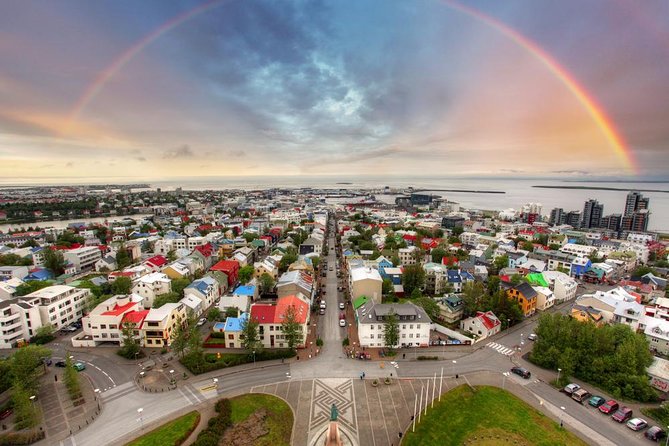
- Hallgrímskirkja bell-tower views over red rooftops, Faxaflói Bay, and the wider city.
- Einar Jónsson’s statue garden for Norse gods myths, not a textbook version.
- Þingholt and the city pond where ducks, geese, and swans turn the middle of downtown into a mini reset.
- Reykjavík City Hall’s giant topographical map for an on-foot primer on volcanology and Iceland’s shape.
- Harpa and Sun Voyager for bay views and a photo stop that actually has a point.
More of the capital in a single morning
- Reykjavik Walking Tour – Walk with a Viking★ 4.5 · 1,018 reviews
- Reykjavík City Card★ 4.3 · 964 reviews
- City Sightseeing Reykjavik Hop-On Hop-Off Bus Tour: 24 or 48-Hour★ 3.0 · 839 reviews
Reykjavik in 2.5 Hours: What This Walk Really Gives You
This tour is built for orientation. You start in the one area most first-timers want to understand, then you move outward just enough to learn the layout before your day gets busy with museums, pools, and day trips.
You’ll also leave with practical direction, not just facts. The guide is there to point you toward good museums and places to eat and drink, so you can turn Reykjavik from a list of stops into a plan.
And because it’s a small group, your guide can keep the energy up while still slowing down when there’s something worth noticing—like the details on historic houses or the way the city’s “nature pockets” pop up in the middle of streets.
Starting at Hallgrímskirkja: The Best First View in Town
Hallgrímskirkja is the easiest landmark to recognize, and that’s why it makes such a strong first stop. It’s the stepped concrete giant over central Reykjavik, and even if you’re not into church architecture, the shape alone tells you something about Iceland’s designers: simple lines, bold mass, and a hint of landscape influence.
From here, the tour aims to get you up into the bell-tower for the classic postcard view: red rooftops, Faxaflói Bay, and the wider city spread. If conditions allow, it’s a quick way to understand where everything sits relative to the sea. The interior is described as minimalist, with a grand organ, which makes the building feel like it’s focused on atmosphere rather than decoration.
Practical note: some people expect the tower climb based on the description. If you’re especially attached to getting up there, show up early to maximize your chances—access rules can change, even on the day you book.
Þingholt and the City Pond: Where Downtown Gets Soft Edges
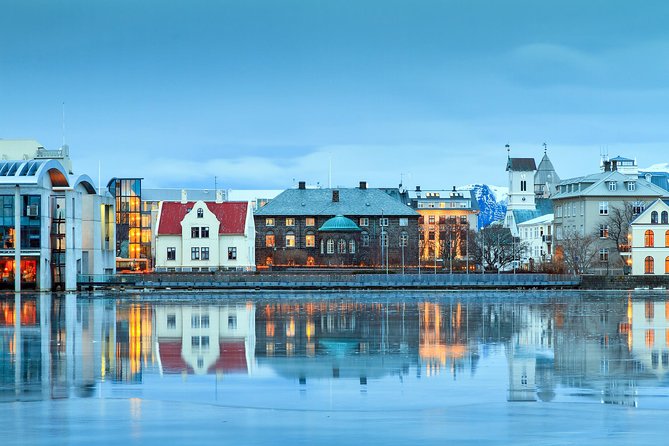
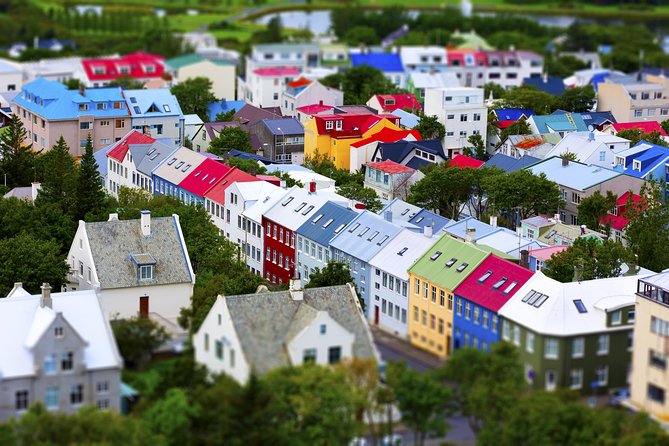
After Hallgrímskirkja, the walk threads into Þingholt, one of Reykjavik’s older neighborhoods. This area is known for colourful corrugated iron houses, and you’ll get a sense of how the city’s identity leans into practicality while still keeping things visually lively.
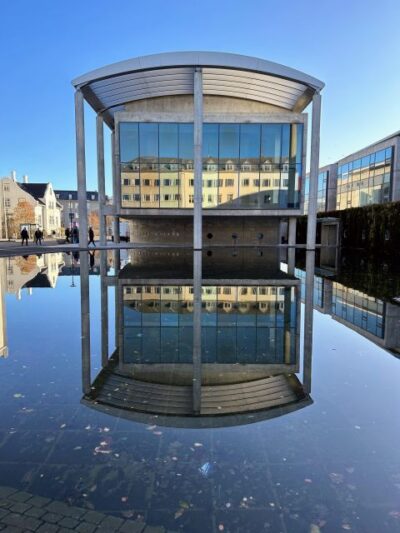
Then you reach Reykjavik City Pond. This is one of those stops that sounds small until you’re standing there watching ducks, geese, and swans treat the middle of town like a park. It’s a nice break from the cold-weather grind, and it helps you reset mentally for the next layer of the tour: geology, legends, and big civic buildings.
If you’re traveling with a camera, this is where you’ll want it ready. The mix of water, birds, and old-town streets gives you shots that feel Reykjavik, not just Iceland.
Einar Jónsson’s Statue Garden: Vikings and Elves, Explained for Real Life
One of the best parts of this tour is the way myths are used as a lens, not a lecture. At Einar Jónsson’s statue garden, your guide connects Norse gods myths and legends to what you see around you—statues, symbolism, and Reykjavik’s cultural memory.
This stop matters because Iceland can feel intense at first: big weather, big geology, big stories. A guided myth stop helps you translate that intensity into something you can hold in your head while you walk.
Also, this is a good pacing moment. It sits right after the church area and before the civic buildings, so it gives you a mental “breather” before the tour leans into history and science.
Reykjavik on foot, a few more ways



City Hall’s Topographical Map: Volcano Science Without the Headache
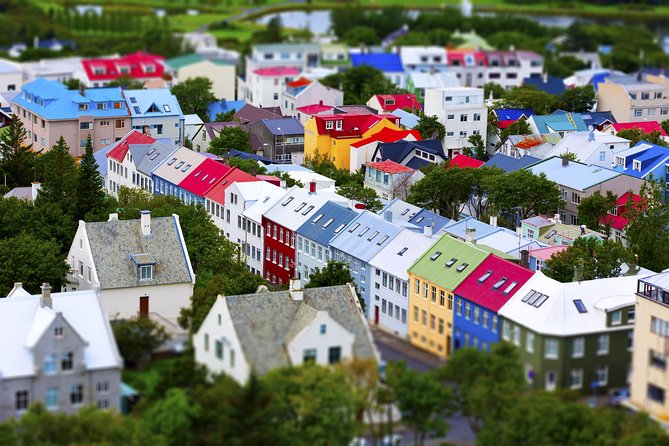
Reykjavík City Hall is more than an impressive building. The standout feature here is the giant topographical map of Iceland, built for visitors to understand how the country sits together as one physical system.
This is where your guide gives you a primer on volcanology and Iceland’s volcanic history. The goal isn’t to turn you into a geologist. It’s to help you understand why the country looks the way it does—and why Reykjavik feels like it’s always connected to the earth beneath it.
I love stops like this because they make later experiences easier. Once you have the big picture of Iceland’s geology, day trips and museum exhibits click faster. Even simple conversations in Reykjavik start to make more sense.
Parliament, Cathedrals, and the First Houses: Power, Faith, and Early Reykjavik
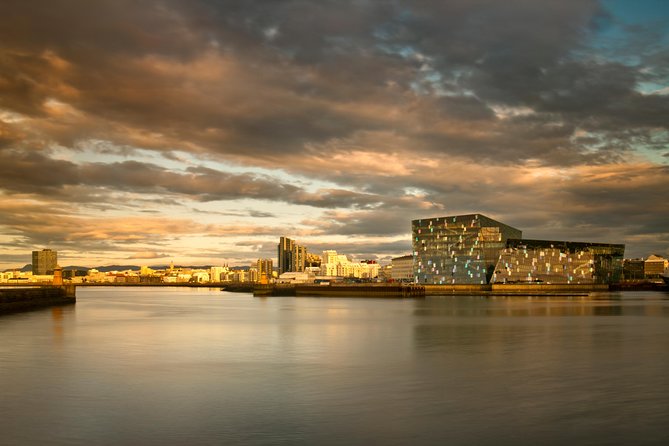
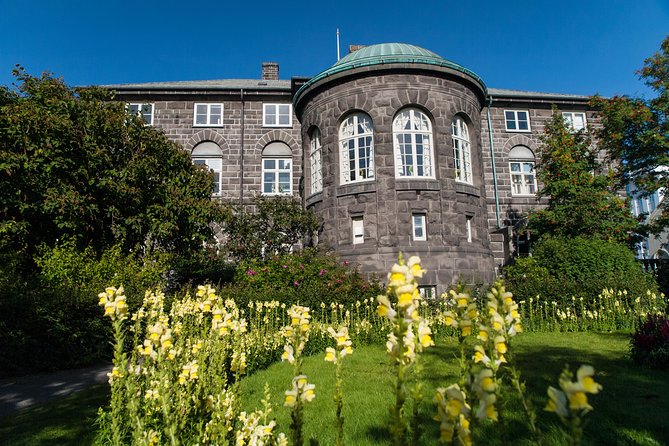
The tour then moves through the heart of the city, taking in the parliament area and passing sites linked to early homesteads and the city’s first houses. Even if you don’t plan to study political history, this is a useful way to see where government and community life sit in the modern city.
You also pass the cathedral zone, including Domkirkjan (Reykjavík Cathedral). It’s the seat of the Bishop of Iceland and part of the Evangelical Lutheran Church structure, and it’s described as the mother church of the old city centre. This gives you context for why the building style and location matter.
The value of this section is that it connects “landmark sightseeing” to “how a town works.” You see civic institutions, religious anchors, and the physical places people originally lived—then you can better understand why Reykjavik grew where it did.
Old Harbour, Harpa, and Sun Voyager: The Bay Stops That Pay Off
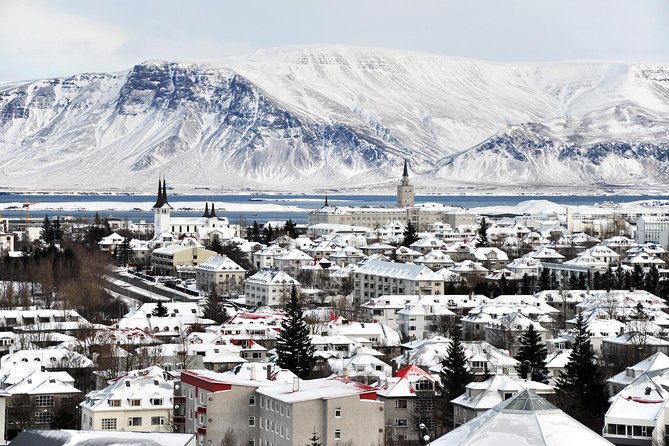
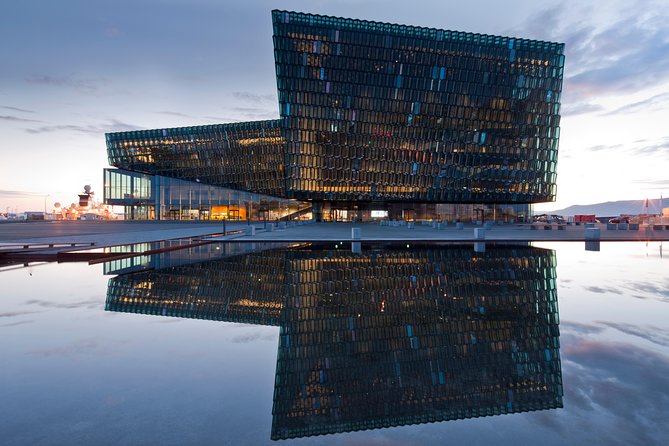
Near the end, you head toward the Old Harbour and the bay-facing area around Harpa Concert Hall and Conference Centre. Harpa is the kind of architecture that makes you stop even if you’re already cold and slightly annoyed at the weather.
Here, the tour combines a practical viewpoint with a cultural one. You’ll also admire the Sólfar (Sun Voyager) sculpture, which gives you a clean skyline line back over the water. With Mt. Esja in the distance on a clear day, this stop turns into one of those “I get it now” moments—Reykjavik isn’t just a city. It’s a city pressed up against a huge, dramatic environment.
If the wind is brutal, this is still worth it because you’re not wandering aimlessly. You’re getting a defined view corridor, and the rest of the walking is about moving you to the next cluster of central Reykjavik.
Weather and walking reality: How to pack for a 2.5-hour Reykjavik loop
This tour operates in all weather conditions. That’s great—your day doesn’t stall—but it also means you need to dress like the forecast is wrong (and in Iceland, that’s often the right mindset).
Comfortable walking shoes matter. The route covers multiple central streets and involves small outdoor time blocks at several key stops. You’ll also want layers you can adjust fast. Reykjavik weather can change quickly, and your comfort level controls whether the tour feels fun or just survivable.
One more practical tip: the pace can feel “guided,” meaning the group is expected to keep moving between points. If you walk slower, tell your guide early. Some people have mentioned situations where they felt the guide didn’t slow down enough, and small communication upfront can prevent that.
Price and value: Why $54.65 can be fair (and when it isn’t)
At $54.65 per person for about 2 hours 30 minutes, this isn’t a bargain tour. But it can be good value for one big reason: it bundles orientation, storytelling, and targeted recommendations in a tight timeline.
If you only have one day in Reykjavik, the guide’s direction can save you time and money. A good museum or restaurant recommendation isn’t just a nice extra; it changes how your whole itinerary performs.
It’s also a value choice if you like understanding what you’re seeing. The tour isn’t only photo stops. It includes explanations around geology, legends, and the city’s development—so the landmarks don’t stay as just shapes.
Where it might not be worth it: if you already know Reykjavik well and mostly just want to wander independently, the price might feel heavy for a fairly short walk. Also, if tower access is a must for you, be prepared for variability.
Tour length, group size, and who it suits best
This is a small-group tour with a maximum of 12 people. That size is what keeps the experience from turning into a loud herd.
It also suits travelers with moderate physical fitness. It’s not described as intense hiking, but it is real walking, in real weather. Families with children can join, but children must be accompanied by an adult.
If you’re visiting for the first time and want a fast introduction that makes later plans easier, this works well. It’s also a smart choice if you enjoy stories—especially Norse myths and the way Iceland’s geology shows up in everyday life.
On the guide side, people often mention guides like Asi, Ásta, Tomas, and Dominica. The common thread in praise is engaging narration and a good sense of humor, which matters because cold outdoor walking can drain energy quickly.
Should you book the Reykjavik City Walking Tour?
I think you should book it if you want a clear, guided path through central Reykjavik in one go. It’s one of those rare tours where the landmarks come with context, and the city layout becomes obvious by the time you finish.
Skip it (or at least adjust expectations) if you’re strictly optimizing for independent touring time, or if Hallgrímskirkja bell-tower access is the only thing you care about. In that case, consider building in extra flexibility outside the tour.
Overall, for first-time orientation plus smart recommendations, it’s a strong way to start a Reykjavik visit without locking yourself into a full day.
FAQ
How long is the Reykjavik City Walking Tour?
The tour lasts about 2 hours 30 minutes.
Where does the tour start and end?
It starts at Hallgrimskirkja (Hallgrímstorg 1, 101 Reykjavík) and ends at Old Harbour Souvenirs (Geirsgata 5c, 101 Reykjavík).
What is the group size?
The tour has a maximum of 12 travelers.
What is included in the price?
The guide is included. Lunch is not included.
Do I need hotel pickup or drop-off?
No. Hotel pickup and drop-off are not included, and the tour meets near central downtown.
Does the tour run in bad weather?
Yes, it operates in all weather conditions, and you’re advised to dress appropriately for changing conditions.
Final call
If you want Reykjavik to feel understandable fast—church views, Norse legends, a geology primer, and bay photos in one walk—this is an easy yes. Just bring good walking shoes, dress for fast weather shifts, and be flexible about tower access.
More Tours in Reykjavik




More Tour Reviews in Reykjavik



More of Reykjavik City





Fresh off the road around Reykjavik


Reykjavik City Sightseeing, compared.
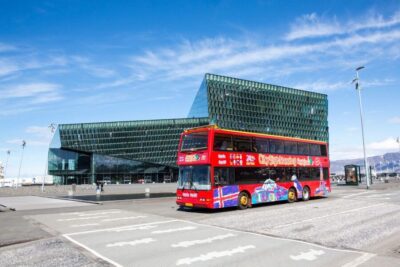 ★ 3.9City Sightseeing Hop-On Hop-Off Bus TourFrom $471,283 reviews
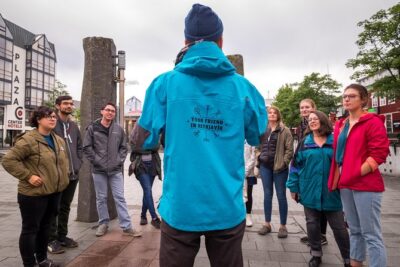 ★ 4.5Reykjavik Walking Tour – Walk with a VikingFrom $551,018 reviews
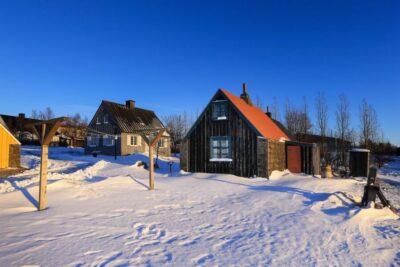 ★ 4.3Reykjavík City CardFrom $40964 reviews
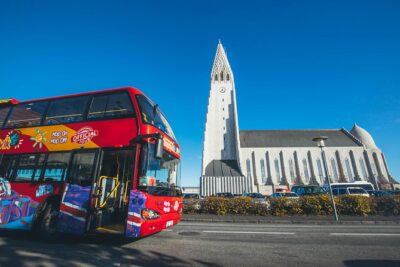 ★ 3.0City Sightseeing Reykjavik Hop-On Hop-Off Bus Tour: 24 or 48-HourFrom $48839 reviews
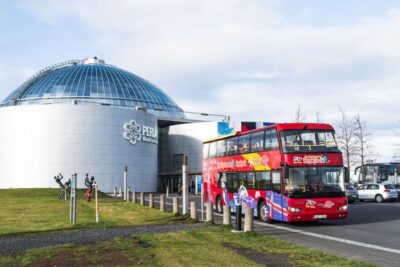 ★ 4.3Hop-On Hop-Off Bus and Perlan Museum Entry TicketFrom $88719 reviews
 ★ 4.0Airport Transfer in Iceland from Keflavik Airport to Reykjavik City With Hotel Drop OffFrom $40464 reviews
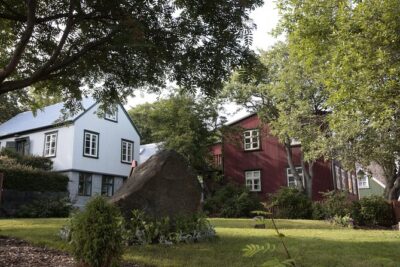 ★ 5.0Walking tour of Reykjavik cityFrom $51416 reviews
 ★ 4.8City Walking tour in Small Group with Local GuideFrom $51380 reviews
Browse the lists this tour appears in