
Reviewed · WALKING TOURS
Reykjavik Folklore Walking Tour: Meet the Elves, Trolls & Ghosts of Iceland
Ghost stories start on daylight streets. This Reykjavik folklore walk mixes old-city landmarks with myth-borne characters like elves, trolls, and ghosts, guided by someone who knows how to turn walking into a story. It’s one hour 30 minutes of steady city-core wandering that feels like culture, not a lecture.
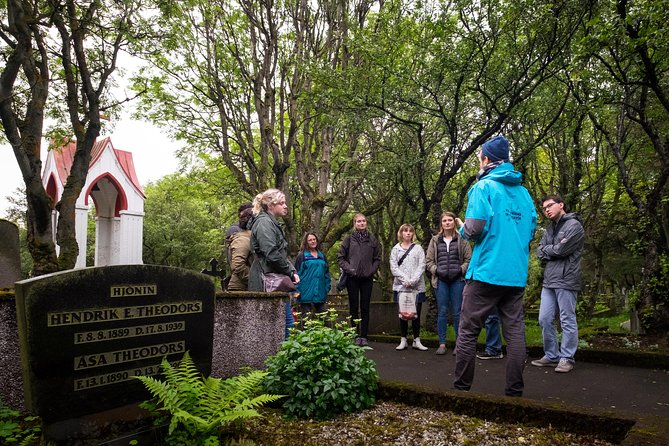
I especially love two parts. First, you visit graveyards with dates that go back to around year 900, including the oldest graveyard in Iceland. Second, the guide’s performance matters here; names like Ester, Bo, and Mathias have been behind the storytelling, and you can hear how the voices and humor shape the mood.
One consideration: you’ll be on your feet for the full loop, and the route is outdoors in all weather. If rain or wind is strong, you’ll want good footwear and layers, and you may want to go in with patience for a slightly variable story-to-history balance by guide.
In This Review
- Key highlights you’ll care about
- Where the elves, trolls, and ghosts begin at Ingólfstorgi
- The oldest graveyard stop (around year 900) you won’t rush
- Cathedral of Christ the King and the troll vs church clash
- Hólavallagarður cemetery: meeting the Deacon of Dark River
- Tjörnin lake monsters and Reykjavik’s water-life
- Reykjavik City Hall and the big map of Iceland for troll spotting
- Alþingishúsið guardian spirits: short stop, different feel
- Ending at Austurvollur Square: what you do next matters
- Price and logistics: why $55.63 feels fair for this format
- Who should book this folklore walk (and who might want a different plan)
- Booking tips that make your night easier
- Should you book this tour?
- FAQ
- How long is the Reykjavik Folklore Walking Tour?
- What does the tour cost?
- Where do I meet the guide, and where does the tour end?
- Is the tour offered in English?
- Does the tour run in bad weather?
- What’s included in the price?
- Is hotel pickup included?
- Is there a cancellation policy?
- Are there any limits for children or service animals?
Key highlights you’ll care about
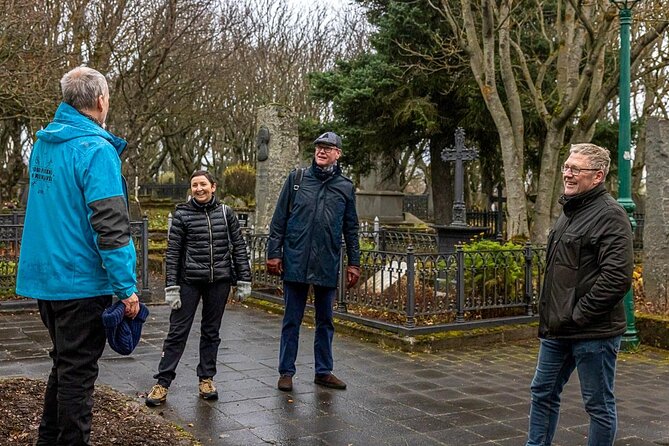
- Oldest graveyard in Iceland (around year 900) as your myth starting point
- Hólavallagarður cemetery and the most-famous ghost, the Deacon of Dark River
- Tjörnin lake stop where the stories include Icelandic monsters (and you may spot ducks or swans nearby)
- Reykjavik City Hall with a big map of Iceland used to talk creature locations
- Alþingishúsið guardian spirits, a short stop that changes the vibe
- Live entertainment through storytelling including song with guides such as Dúi
Reykjavik on foot, a few more ways
- Reykjavik Food Walk – Local Foodie Adventure in Iceland★ 5.0 · 18,952 reviews
- Reykjavik: Guided Foodie Walking Tour with 6 Tastings★ 4.9 · 1,645 reviews
- Reykjavik Walking Tour – Walk with a Viking★ 4.5 · 1,018 reviews
Where the elves, trolls, and ghosts begin at Ingólfstorgi
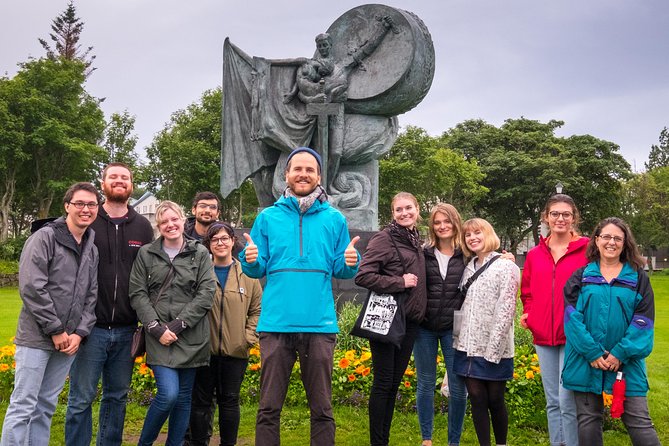
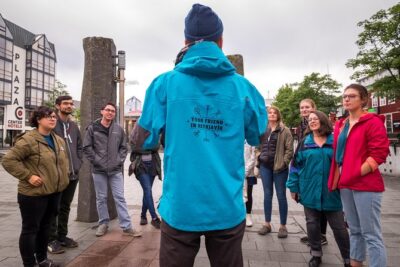
The tour kicks off at Hlöllabátar, on Ingólfstorgi (about 5 minutes before start is ideal). This matters because Reykjavik’s center is easy to walk, but finding the exact meeting spot can be a little fiddly if you’re juggling bags, cold wind, or bad weather.
Right away, the experience frames Reykjavik as more than a postcard city. You’re walking the older core, and your guide ties what you see to what locals used to explain with myth. The tone is practical too: you get a route through major landmarks at a walking pace that works for most people.
You’re also in English, and the tour is built for the real-world mess of travel days. Mobile tickets keep things simple, and there’s no hotel pickup. You go to the guide. The guide brings the story.
The oldest graveyard stop (around year 900) you won’t rush
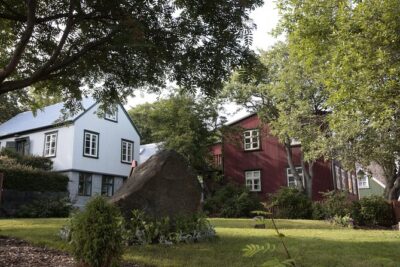
The first big “wait, what?” moment is the oldest graveyard in Iceland, dating from around 900. In a city where modern life is close at hand, this stop adds instant weight. It’s not just old stones. It’s the idea that people in this place have been marking time, loss, and community for centuries.
What I love about starting here is the contrast. You’re not just chasing spooky characters. You’re learning how Iceland’s imagination grew alongside real lives and real landscapes. The guide connects that sense of memory to the folklore you’ll hear later.
Also, cemeteries don’t work like museums. You can’t treat them like a quick photo stop. Even if your time is limited, you’ll feel the pace slow down, and you’ll get a sense of why myths often cling to places of remembrance.
Cathedral of Christ the King and the troll vs church clash
Next comes the Cathedral of Christ the King area, where the folklore theme turns into a cultural point: the trolls of Iceland don’t like the church. That line could sound like a cartoon, but it does something useful. It shows you how myths can mirror real social tensions—old beliefs rubbing up against organized religion and official authority.
The stop itself is short, which is good. It keeps the walk moving while still giving you a clear myth “chapter.” You get just enough context to carry that idea with you as you move into the more cemetery-heavy segment later.
If you like stories with humor, this is where you’ll often see the guide’s energy kick in. Many guides are known for performing different characters and using voices to keep the walk fun rather than solemn.
Hólavallagarður cemetery: meeting the Deacon of Dark River
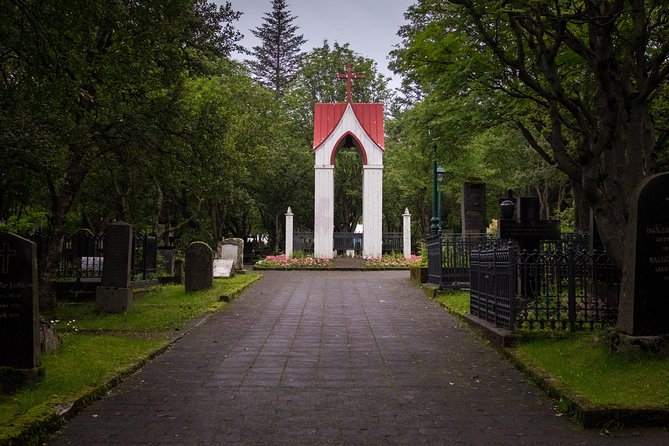
Then you arrive at Hólavallagarður (the tour uses Hólavallakirkjugarðurt), the second oldest cemetery in Reykjavik and a favorite haunt of Iceland’s most-famous ghost: the Deacon of Dark River. This is the stop that sells the whole concept. It’s spooky without turning into cheesy horror.
What makes it work is how the guide links ghost lore to the physical place. Cemeteries are already eerie in winter light. Add folklore about a named figure, and you get that “how did this story get passed on?” feeling.
This is also where your “belief level” matters less than your curiosity. You don’t have to think a ghost is real. You just need to enjoy how people used stories to explain fear, danger, and the unknown in everyday settings.
One small caution: the cemetery segment isn’t designed to be a long wander. Some people want more time among the oldest graves, so go in expecting storytelling and key visuals, not an in-depth self-guided cemetery tour.




Tjörnin lake monsters and Reykjavik’s water-life
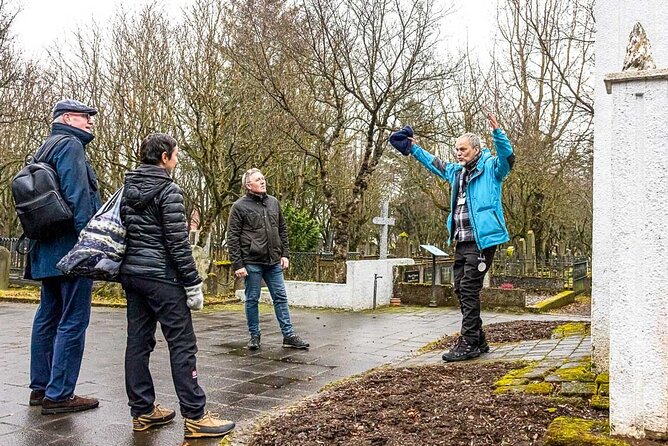
After the cemeteries, you shift back to city life with a walk by Tjörnin, Reykjavik’s lake near the center. This stop is where the folklore broadens from ghosts to creatures, including Icelandic monster stories.
Your guide talks about water monsters as part of the local imagination. And because this is a real urban lake, the scene can feel unexpectedly alive. One family-style account I’ve seen noted swans and ducks nearby, which makes the monster talk feel even more grounded. You get the sense that folklore isn’t separate from daily life here—it’s attached to what people actually see.
Timing helps too. You’re not stopping for long. You’re getting a shift in mood and a mental reset after the cemetery heaviness. If you’ve been doing other tours the same day, this is a nice change of pace.
Reykjavik City Hall and the big map of Iceland for troll spotting

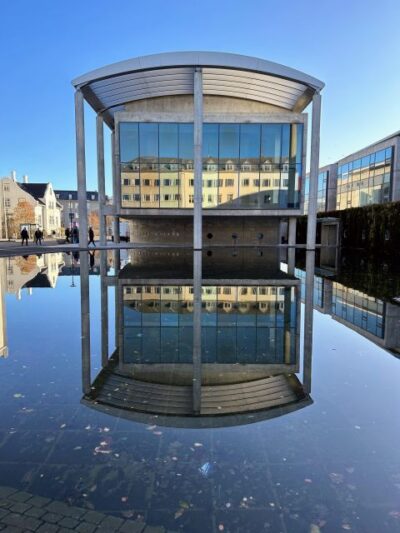
Another highlight is Reykjavik City Hall, where you walk by a large map of Iceland used to discuss locations of trolls and other creatures. This is a clever idea for a walking tour because it turns myth into geography.
Even if you’re not making a creature-spotting scavenger hunt in your head, the map helps your brain connect the stories to place names and routes. It’s also a great bridge to planning your next day in Iceland, because Reykjavik folklore often points outward to the wider island.
This stop is brief, but it’s memorable. It also gives you a chance to stand still for a minute (or two) if the walking pace has you a bit cold.
Alþingishúsið guardian spirits: short stop, different feel
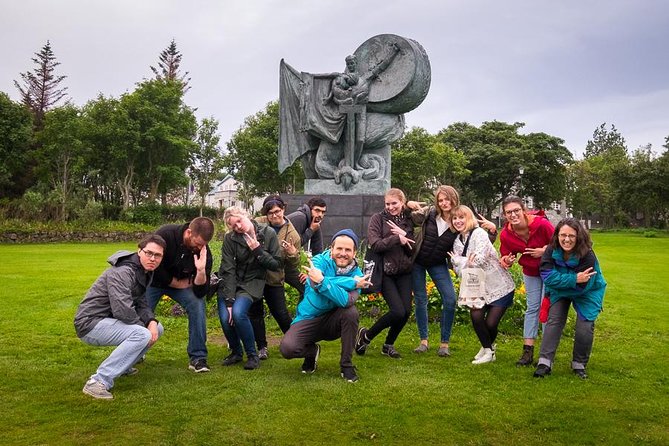
At Alþingishúsið (Parliament House area), the tour brings in Icelandic guardian spirits. This is one of those “small” stops that changes the vibe. The folklore theme shifts from spooky cemetery figures to protectors and presences tied to the community.
For me, this is one of the most interesting parts because it shows a broader pattern in Icelandic myth: not everything is out to scare you. Some stories are about watching over people, guiding households, or holding onto local identity.
The duration is short here, so think of it as a mood lift before your final walk finish. You’re not getting a long lecture. You’re collecting one more myth thread to take with you.
Ending at Austurvollur Square: what you do next matters
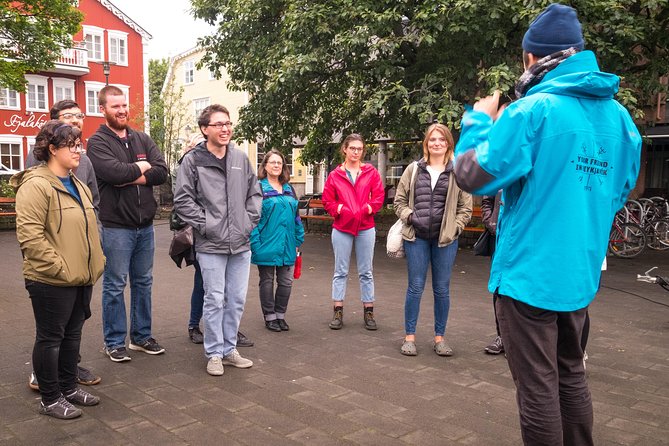
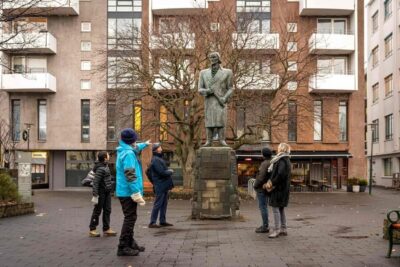
The tour ends up at Austurvollur Square, near where you began, but closer to the Parliament building side of the center. That ending location is convenient. It puts you in a good spot for a next move: food, coffee, or continuing on foot through Reykjavik.
If you’re starting your trip here, this is also a solid choice. You get your bearings fast. The walk helps you understand how the city center is laid out, so later you can navigate without constantly checking your phone.
If you’re sensitive to walking distance, you’ll be glad the loop isn’t sprawling across the whole city. It’s more “core Reykjavik” than “long out-and-back.”
Price and logistics: why $55.63 feels fair for this format
At $55.63 per person for roughly 1 hour 30 minutes, you’re paying for a guide plus live entertainment, not a museum ticket. You’re also paying for performance. The difference shows in how stories land: some guides use song (again, accounts of Dúi with a singing voice show this can be real), and others use character voices that make the myths feel like Reykjavik’s spoken language.
Value comes from how the tour compresses a lot of meaning into a short loop. You’re not just passing landmarks. You’re stopping at specific points tied to folklore themes: cemetery lore, church conflict with trolls, water-monster stories, and guardian spirits near Alþingishúsið.
Two quick logistics notes that affect your comfort. First, there’s no hotel pickup, so you’ll start by finding the meeting spot yourself. Second, the tour runs in all weather, so dressing for cold, wind, and rain isn’t optional.
Also, plan for the tour to be a bit flexible. One account noted it ran longer than expected. You don’t need to panic, but it’s wise to leave enough time afterward for a meal without a strict schedule.
Who should book this folklore walk (and who might want a different plan)
This tour suits you if you want a fun, culture-forward way to see the old center of Reykjavik. It’s ideal as an early trip activity because it gives you context fast: older graves, the city’s key buildings, and the myth lens that locals use to talk about the world.
You’ll also enjoy it if you like storytelling more than “facts and dates.” Many guides (like Ester, Bo, Mathias, Steingrímur, Stefan, and Mathias) have been described as engaging, funny, and animated, with performances that keep the pace from feeling stiff.
You might choose something else if you strongly prefer quiet, minimal performance and lots of deep cemetery time. The experience focuses on stops and stories over extended self-guided exploring. And because guide style can vary, the balance between folklore and history may not match your exact preference every time.
Booking tips that make your night easier
- Arrive a little early at Ingólfstorgi so you don’t start stressed.
- Dress like you expect wind. The tour runs in all weather.
- Bring a phone with battery. Some guides have taken group pictures and sent them later by text, and you may even see small souvenir magnets mentioned in past experiences.
- If you want more folklore and less side talk, ask yourself what kind of guide energy you like. This tour is story-led, not lecture-led.
Should you book this tour?
I think you should book it if you want a practical way to learn Reykjavik through myth. The mix of old cemeteries, city-center landmarks, and creature stories gives you something you can’t get from a regular sightseeing walk.
It’s also a great fit for first-timers. You’ll get bearings, a few standout stops (especially Hólavallagarður and the Deacon of Dark River), and a “Reykjavik has a personality” feeling that sticks after you leave.
Skip it only if you dislike walking outdoors, want a long cemetery deep-dive, or prefer minimal performance. Otherwise, this is one of those rare city tours that makes the streets feel like they still have secrets.
FAQ
How long is the Reykjavik Folklore Walking Tour?
It runs about 1 hour 30 minutes (approx.).
What does the tour cost?
The price is $55.63 per person.
Where do I meet the guide, and where does the tour end?
You start at Hlöllabátar, Ingólfstorgi 1, 101 Reykjavík. The tour ends near Jón Sigurðsson at Austurvöllur (in front of the Parliament building area).
Is the tour offered in English?
Yes, the tour is offered in English.
Does the tour run in bad weather?
It operates in all weather conditions, so you should dress appropriately.
What’s included in the price?
The tour includes a professional guide and live entertainment.
Is hotel pickup included?
No. Hotel pickup and drop-off are not included, so you make your own way to the meeting point.
Is there a cancellation policy?
Free cancellation is available up to 24 hours in advance for a full refund. If it’s canceled due to poor weather, you’ll be offered a different date or a full refund.
Are there any limits for children or service animals?
Children must be accompanied by an adult. Service animals are allowed.
Reykjavik on Foot: More Walks

More Tours in Reykjavik


More Tour Reviews in Reykjavik


Fresh off the road around Reykjavik


Walking Tours, compared.
 ★ 5.0Reykjavik Food Walk – Local Foodie Adventure in IcelandFrom $14618,952 reviews
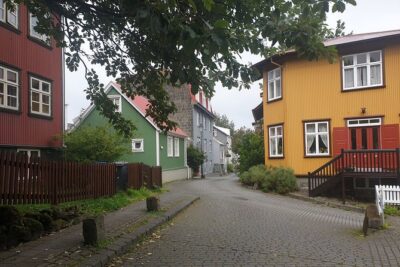 ★ 5.0Reykjavík Small group Walking Tour – by CityWalkFrom $535,076 reviews
 ★ 4.9Guided Foodie Walking Tour with 6 TastingsFrom $1421,645 reviews
 ★ 4.5Reykjavik Walking Tour – Walk with a VikingFrom $551,018 reviews
 ★ 4.7Sightseeing Walking Tour with a VikingFrom $54434 reviews
 ★ 5.0Walking tour of Reykjavik cityFrom $51416 reviews
 ★ 5.0Funky History Walking Tour in Reykjavik – With local storytellerFrom $72389 reviews
 ★ 4.8City Walking tour in Small Group with Local GuideFrom $51380 reviews
Browse the lists this tour appears in