
Reviewed · VOLCANO & LAVA TOURS
From Reykjavik: Raufarhólshellir Lava Tunnel by Bus
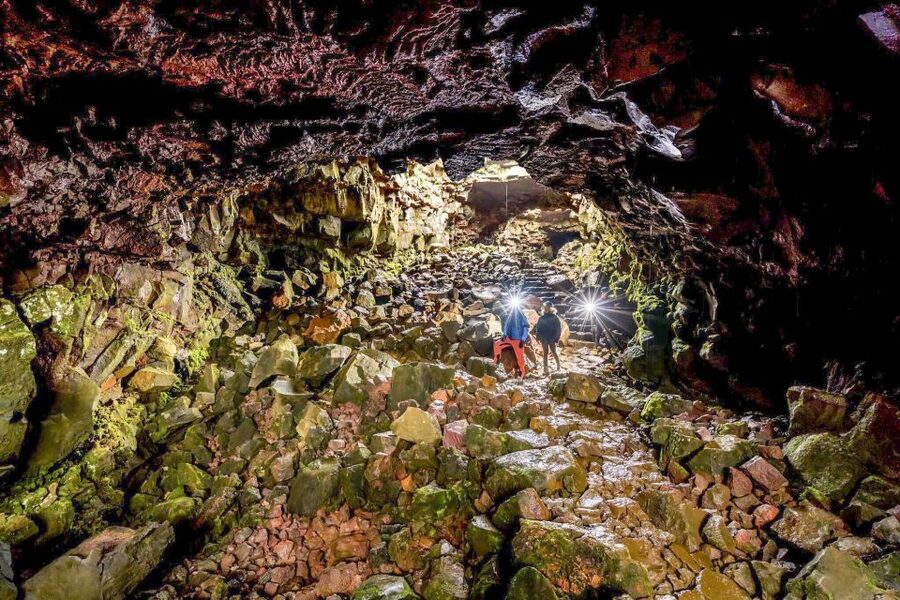
Lava still shapes the path today. This Raufarhólshellir lava tunnel trip from Reykjavik turns a volcanic eruption from Leitahraun into a hands-on walk—complete with a helmet and flashlight, plus those early sections where the ceiling break makes columns of light. I also love the range of colors on the tunnel walls, caused by different minerals, and how the guide makes the cave feel like a living place. The only real drawback is you need to be ready for cold, uneven, and sometimes slippery rock underfoot.
From the start, this is built for people who want a half-day that feels like an event. You’ll ride a climate-controlled bus about 30 minutes, get onboard Wi-Fi to kill time, and then take a guided 1-hour cave tour with an English-speaking guide—often funny and engaging (guides I’ve heard names like Dimitri, Juan, Alex, and Rosi tied to this experience). If you’re hoping for a flat, easy stroll, you may find the terrain a bit challenging, especially deeper in the tunnel.
In This Review
- Key things to know before you go
- Reykjavik to Raufarhólshellir in About 3 Hours
- The Bus Ride: Warm, Wi-Fi Ready, and Easy
- Getting Suited Up: Helmet, Flashlight, and Real Cave Conditions
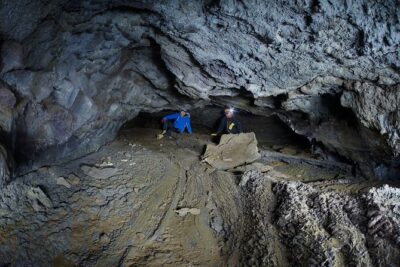
- Inside the Lava Tube: Columns of Light and Mineral Colors
- Hearing the Cave Story Behind Leitahraun (5,200 Years Ago)
- Terrain, Safety, and What to Wear for Slippery Rock
- Value for $129: What You Get for a Half-Day Block
- Who Should Book This Lava Tunnel Bus Tour
- Should You Book the Raufarhólshellir Bus Tour?
- FAQ
- How long is the Raufarhólshellir bus tour?
- Where is the meeting point in Reykjavik?
- Is the guided tour in English?
- What’s included with the tour?
- What should I bring or plan for food and drinks?
- Is there hotel pickup?
- What should I wear?
- How far is the cave from Reykjavik?
- Can I cancel for a refund?
Key things to know before you go
- A one-hour guided cave walk inside one of Iceland’s larger lava tubes
- Helmet + flashlight so you can see textures up close and still get that dark-cave feeling
- Skylight columns near the entrance, where the ceiling has collapsed and lets light pour in
- Mineral colors on the walls, linked to different materials in the cooled lava
- A short Reykjavik-to-cave bus ride, about 30 minutes each way, with Wi-Fi onboard
Closer to the magma, compared
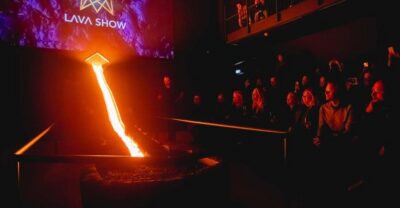
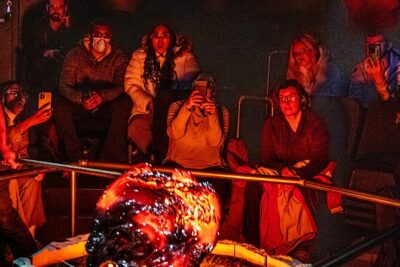
- Reykjavik: LAVA SHOW – Immersive Experience Entry Ticket★ 4.8 · 3,360 reviews
- Lava Show Reykjavik Admission Ticket – Optional Premium Upgrade★ 5.0 · 3,278 reviews
- Golden Circle with Kerid Volcanic Crater Day Tour from Reykjavik★ 4.5 · 2,826 reviews
Reykjavik to Raufarhólshellir in About 3 Hours
This tour is short enough to fit into most Iceland schedules without stealing your whole day. The total time is 3 hours, and the cave visit itself is about 1 hour with a guided walk. That timing matters in Iceland, where weather and road conditions can be fickle. A tight itinerary like this helps you keep momentum—especially if you’re also planning the Golden Circle or south-coast stops.
You meet at the BSI Bus Terminal in Reykjavik. Plan to arrive 15 minutes early so you’re not sprinting for a bus with cold hands and stiff fingers. From there, you head to the southern region for the Raufarhólshellir lava tunnel, roughly 30 minutes from the capital.
What you’re really buying is the combo: transportation + safety gear + guided interpretation + a cave experience that’s not just “look and leave.” You walk along the path connected to the lava flow from Leitahraun about 5,200 years ago, then you see how those flows cooled into tubes that still feel eerie and alive.
The Bus Ride: Warm, Wi-Fi Ready, and Easy
I like when the travel part is handled. This one uses a climate-controlled bus and includes Wi-Fi, which is handy if your phone needs a battery-save mission like maps, photos planning, or sending a quick message home. Since you’re not stuck doing long transfers, you can actually focus on what you came for: the cave.
The drive itself gives you a little Iceland context—enough to feel like you left Reykjavik, not so much that you’re zoning out before you reach the tunnel. Expect a smooth, straightforward segment: get on at BSI, ride out to the cave, then return the same way.
One small note: there’s no hotel pickup. You’ll start and end at the bus setup. That’s normal for bus tours, but it means your day planning should center around BSI rather than expecting curbside convenience.
Getting Suited Up: Helmet, Flashlight, and Real Cave Conditions
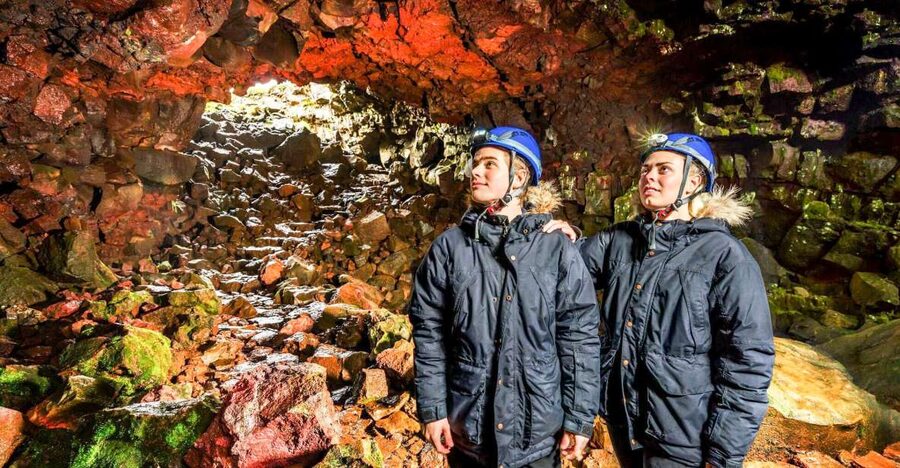
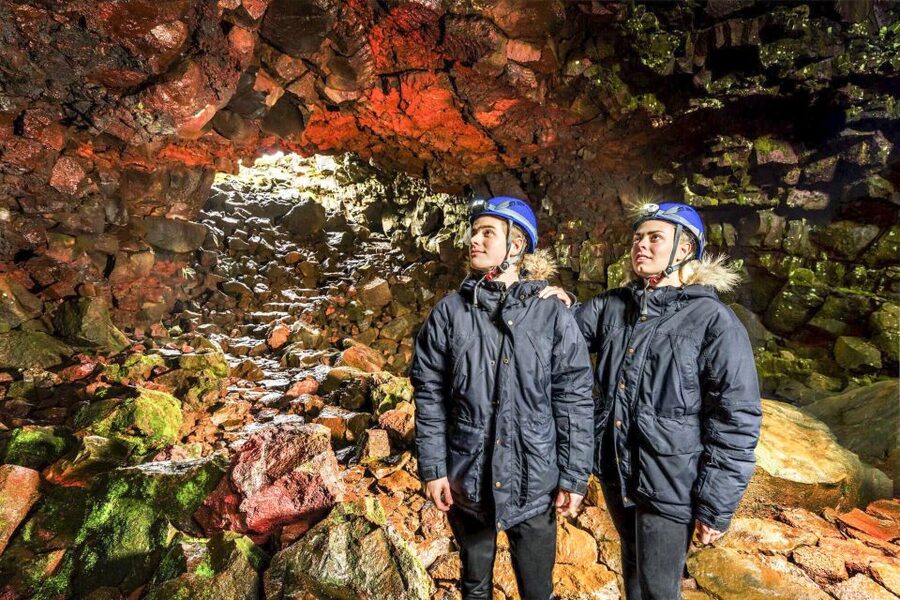
Once you arrive, you’ll get what you need for a safe walk: a protective helmet and flashlight. That gear isn’t just for safety—it changes how you experience the place. When you can aim light at the walls, you notice details you’d miss with ambient illumination alone.
Now the cave reality check: Raufarhólshellir stays cold. Even in warmer months, you can feel the chill during the walk, and it can get colder as you go deeper. I strongly recommend planning for damp rock and cold air. Wear warm layers, and bring a waterproof jacket if your itinerary has rain in the forecast.
Footwear is crucial. The walk includes uneven ground and stretches that can be slippery, so sturdy shoes matter more than fashion. Many people report being given traction help such as shoe spikes/crampons, and you can often use walking poles or a stick if you want extra balance.
If you’re doing this after a late arrival in Reykjavik, you’ll still be fine—just don’t underestimate the cave temperature and footing. The experience is worth it, but you have to show up ready.
Inside the Lava Tube: Columns of Light and Mineral Colors
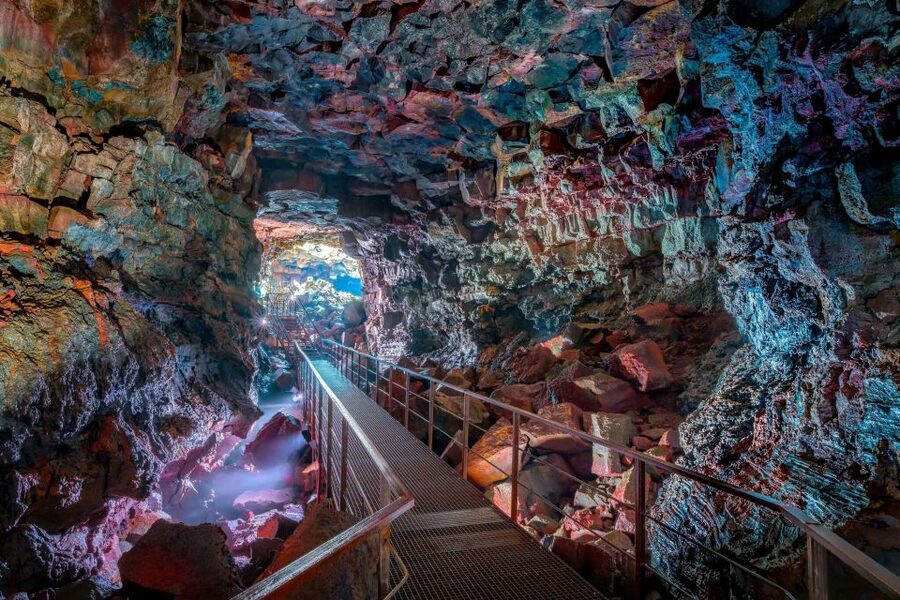
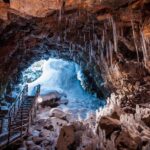
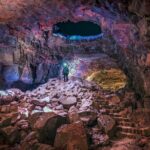
The first big wow hits near the entrance. The tunnel ceiling has collapsed in that area, creating columns of light that fall into the cave. It’s a striking contrast: dark rock around you, then light breaking down from above like spotlights you didn’t pay for.
After that, you move through sections where lighting depends on the setup. Some parts are lit with electric lights, which helps you see the textures and mineral layers without guessing. But the guide experience is often built to create that “how dark can it really get” moment. In fact, I’ve heard guides turn off lights briefly so you feel true darkness—an unforgettable way to understand how the cave changes once you lose illumination.
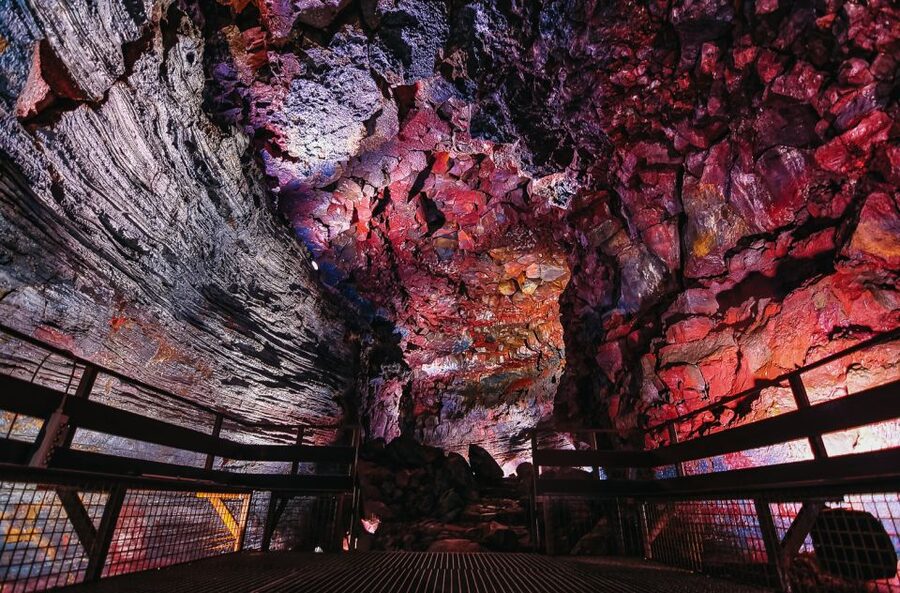
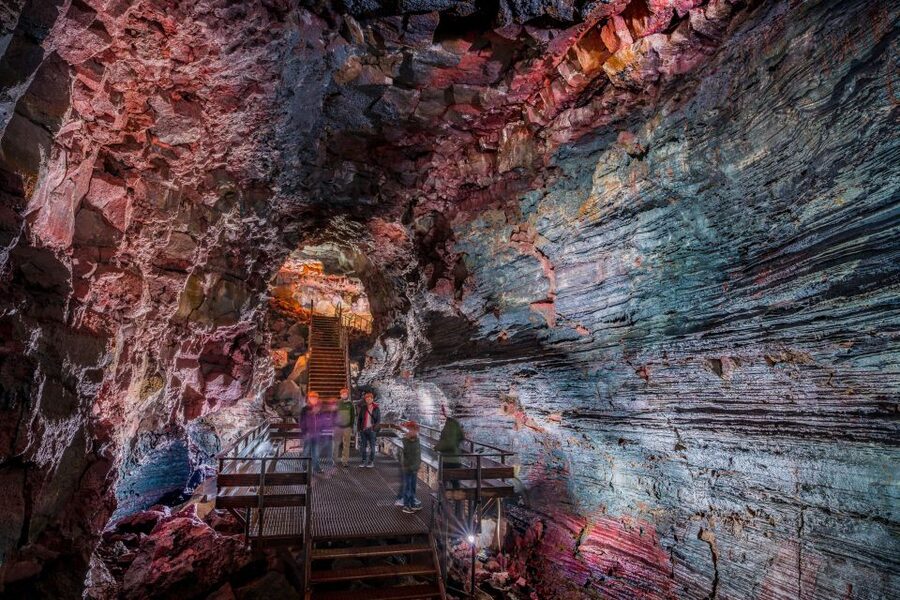
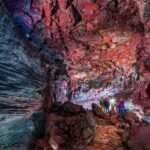
Then there’s the main attraction: the colors. The tunnel walls show a range of reds, browns, and muted tones from different mineral types deposited as the lava cooled and later reacted. It’s not decorative paint. It’s the geological story written into rock.
You’ll also notice the cave in a more sensory way than just visual. Guides often point out sounds—echo, drips, and the way your voice carries. If you like science that feels physical, this is the kind of place that turns “volcanic history” into something you can almost feel in your chest.
Back underground into the lava tubes
Hearing the Cave Story Behind Leitahraun (5,200 Years Ago)
This lava tube isn’t random. You’re walking in the footprint tied to the Leitahraun eruption about 5,200 years ago. Leitahraun is old enough that the landscape around the tunnel has changed—but the tunnel itself preserves the flow path like a frozen diagram.
A lava tube forms when surface lava cools and crusts over, while molten lava keeps running inside the channel. Over time, the inside drains away, leaving a hollow tube. That’s why you’re not just seeing a cave—you’re seeing a structure created by volcanic movement, cooling, and drainage.
What the guide does well (and what I’d look for if you’re choosing this type of tour) is linking the visuals to the process. You see the tunnel shape, then you learn what that shape implies about how lava behaved during the eruption. The mineral colors then become part of that story instead of just something pretty to photograph.
There’s also a fun cultural angle: this location has been used as a filming site for the movie Noah, starring Anthony Hopkins. That detail isn’t the main reason to go, but it helps explain why the tunnel shows up in pop culture—it really does have that cinematic, otherworldly look.
Terrain, Safety, and What to Wear for Slippery Rock
I’ll be direct: this is a cave walk on rough ground. Even when there’s a metal walkway or platform in parts, you may step on sections that are uneven and rocky. The tour is short, but you should treat it like a real walk in cold weather, not a casual museum stroll.
To enjoy it without stress:
- Wear sturdy footwear with good grip. If your shoes flatten traction when wet, swap them.
- Plan for wet rock and dripping water. A waterproof jacket helps more than you’d think.
- Consider traction help like shoe spikes/crampons if you’re offered them.
- If balance is a concern, use walking poles or a stick if available.
The good news? The route is guided and managed. Plus, the time in the tunnel is about an hour, so you’re not committing to an all-day hike through slippery corridors.
If you have limited mobility, be honest with yourself about the footing. Some older participants have had to turn back due to insecurities on the uneven path. That’s not a knock on the tour—it’s just cave terrain being cave terrain.
Value for $129: What You Get for a Half-Day Block
At $129 per person, this isn’t the cheapest thing you can do in Iceland. But it’s also not just “transport to a site.” You’re paying for:
- Bus fare, with a climate-controlled ride
- Wi-Fi onboard
- A guided 1-hour cave tour
- Helmet + flashlight
- A short, structured itinerary that keeps you moving without wasting daylight
In practice, the value comes from how little time you lose. You spend about 30 minutes on the road each way, then you’re in the tunnel learning what you’re seeing. If you’re the type who hates spending half a day to get a generic photo, this one earns its place because it’s both guided and hands-on.
Is it pricey? Yes, a bit. But it’s also one of those activities that compresses a lot of “Iceland feeling” into a small window: real volcanic terrain, real cold, and a guide who helps you interpret it.
Who Should Book This Lava Tunnel Bus Tour
This tour fits best if you:
- Want a short, memorable experience from Reykjavik
- Like geology, nature science, or “how it works” explanations
- Prefer a guided walk over self-guided wandering
- Can handle cold temperatures and uneven steps with confidence
It may not be ideal if you’re looking for:
- A fully flat walk with no uneven rock
- A warm, comfortable attraction where you stay dry and seated
- A long, deep cave expedition
If you’re traveling with kids, it can still work, since the walk portion is manageable for many ages. Just keep an eye on footing and cold clothing, and expect that the cave will feel like a real cave, not a studio set.
Should You Book the Raufarhólshellir Bus Tour?
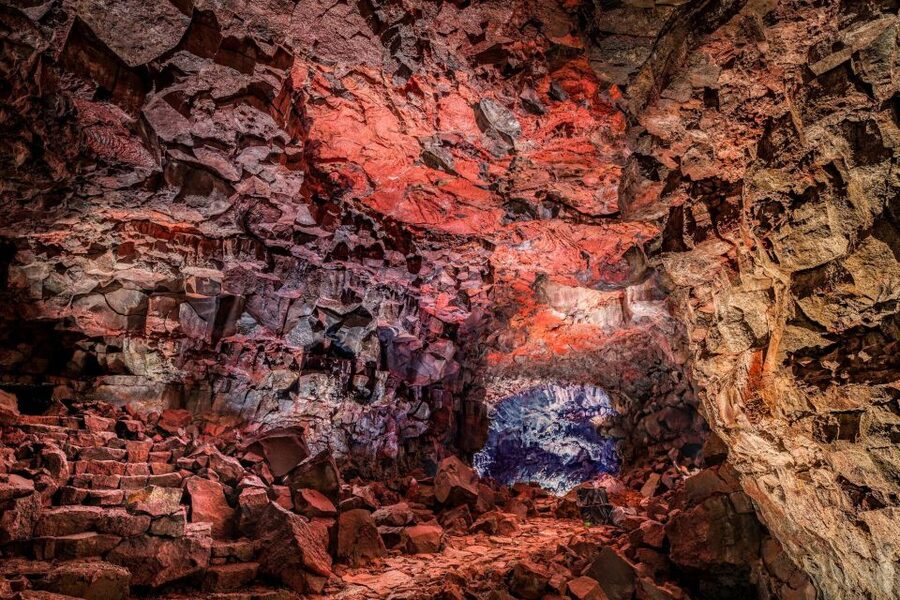
I’d book it if you want a strong geology stop without turning your day into logistics math. The helmet-and-flashlight setup, the columns of light near the entrance, and the way the guide connects mineral colors to the eruption story make this feel more than sightseeing. Add the short 3-hour format and the onboard Wi-Fi, and it becomes a very practical Iceland add-on.
Skip it (or at least think twice) if slipping on uneven rock would stress you out. This is an active cave walk, and the tunnel stays cold enough to make warm layers feel like smart gear, not optional comfort.
If you’re excited by volcanic landscapes but want something efficient from Reykjavik, this is a good match.
FAQ
How long is the Raufarhólshellir bus tour?
The total duration is about 3 hours, including transportation, with a guided 1-hour cave tour.
Where is the meeting point in Reykjavik?
You meet at the BSI Bus Terminal. Arrive about 15 minutes before the departure time.
Is the guided tour in English?
Yes, the live guide is listed as English.
What’s included with the tour?
Included are bus fare, a guided 1-hour cave tour, a flashlight, a protective helmet, and free Wi-Fi on the bus.
What should I bring or plan for food and drinks?
Food and drinks are not included, so you should plan accordingly.
Is there hotel pickup?
Hotel pickup is not included, so you’ll need to get to the BSI Bus Terminal.
What should I wear?
Dress warmly and wear sturdy footwear. The cave is cold, and the walk can involve uneven and slippery surfaces.
How far is the cave from Reykjavik?
The ride from Reykjavik to the cave is about 30 minutes.
Can I cancel for a refund?
Yes. Free cancellation is available up to 24 hours in advance for a full refund.
More Tour Reviews in Reykjavik


Back Underground: More Lava Tunnels
Closer to the Volcanoes

Fresh off the road around Reykjavik
Volcano & Lava Tours, compared.
 ★ 4.8LAVA SHOW – Immersive Experience Entry TicketFrom $543,360 reviews
 ★ 5.0Lava Show Reykjavik Admission Ticket – Optional Premium UpgradeFrom $543,278 reviews
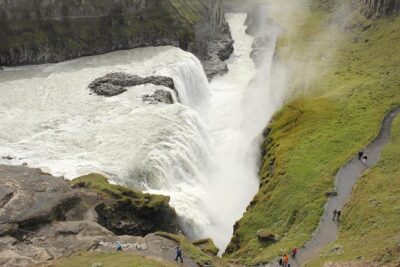 ★ 4.5Golden Circle with Kerid Volcanic Crater Day Tour from ReykjavikFrom $852,826 reviews
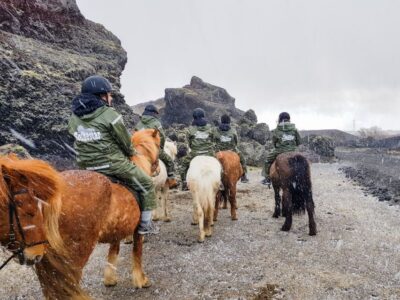 ★ 4.8Red Lava Horse Riding TourFrom $1422,383 reviews
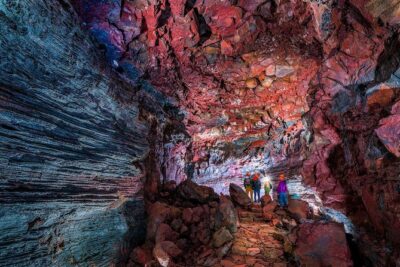 ★ 5.0The Lava Tunnel Tour – RaufarhólshellirFrom $742,373 reviews
 ★ 5.0Golden Circle, Volcano Crater and Blue Lagoon Small-Group TourFrom $2531,932 reviews
 ★ 4.7Raufarhólshellir Lava Tunnel: Underground ExpeditionFrom $731,717 reviews
 ★ 4.7Snæfellsnes Day Trip with Vatnshellir Lava CaveFrom $2191,108 reviews
Browse the lists this tour appears in