
Reviewed · GOLDEN CIRCLE TOURS
Dive the Divide: Silfra Fissure Scuba Tour | Meet at Thingvellir
Clear water, cold comfort, big rewards. In Silfra, you swim through electric-blue sections of the fissure system with serious visibility and a guided route tied to Thingvellir National Park. It’s a small-group scuba experience where preparation matters as much as the scenery.
I especially like the tight group limit (max 3)—it means you get real attention during gear setup and in the water. I also like the practical warmth at the end: after you surface, you get hot chocolate and cookies before heading back in everyday clothes.
One thing to seriously consider: this is a challenging cold-water setup and you must already have dry suit experience, plus you’re expected to carry heavy equipment for about 400 meters.
In This Review
- Key highlights worth planning for
- Thingvellir Meeting Point: where your day really starts
- Price and value: what you pay for (and what you don’t)
- Gear check and dry suit rules: the non-negotiables
- Eyewear reality: plan for clear vision without glasses
- The pre-water routine at Silfra: ladder, platform, and checks
- Underwater route highlights: Deep Crack to Cathedral to Lagoon
- Silfra Deep Crack: the plates and the narrow gap
- Silfra Hall: moving from tight to open
- Silfra Cathedral: the deepest chamber moment
- Silfra Lagoon: endless visibility at the end
- After you surface: gear off, walk back, and warm-up
- Timing by season: two shorter sessions or one longer one
- Physical demands: carrying 400 meters of heavy kit
- Who this is best for (and who should skip)
- The standout factor: small group coaching and calm guidance
- Should you book Silfra Fissure scuba tour with Thingvellir as your base?
- FAQ
- Where is the meeting point for the Silfra Fissure scuba tour?
- Is there pickup from Reykjavik included?
- What’s included in the price?
- Do I need previous dry suit experience?
- How long will I be in the water?
- What happens in winter if it’s extremely cold?
- What are the depth limits?
- Can I wear glasses under the mask?
- What are the cancellation terms if weather changes?
Key highlights worth planning for
- Small group, max 3 travelers for more hands-on coaching
- Dry suit proof required (card or logbook showing minimum experience, within the last 2 years)
- Route through Silfra Deep Crack, Hall, Cathedral, and Lagoon with guide-led pacing
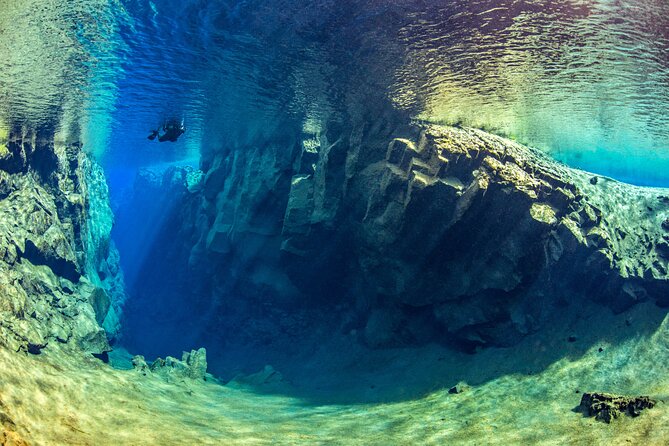
- Visibility that can exceed 100 meters, so you’ll spend time looking, not guessing
- Weather- and temperature-driven timing (winter may become one longer session)
- Eyewear rules are strict: no glasses under the mask; contacts or prescription goggles may be needed
The classic loop, run a few other ways
- Reykjavik: Golden Circle Full-Day Tour with Kerid Crater★ 4.8 · 24,485 reviews
- From Reykjavik: Golden Circle, Kerid, & Secret Lagoon Tour★ 4.8 · 6,009 reviews
- Small-Group Golden Circle, Blue Lagoon with Ticket & Kerid Crater★ 5.0 · 5,631 reviews
Thingvellir Meeting Point: where your day really starts
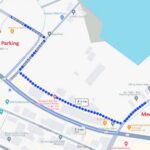
This experience starts in the Thingvellir National Park area, with the meeting point at the Silfra parking area (listed as Vallarvegur, 806, Iceland). There’s no pickup from Reykjavik included, so you’ll need your own way to get there. Plan to arrive early so you’re not rushing gear checks in a cold, damp parking zone.
You’ll also pay a small park parking fee on your own (500 ISK is the stated amount). It’s a minor cost, but it’s the kind of line item that can catch you off guard if you only budget for the tour price.
The upside of meeting at Thingvellir is that everything stays focused: you get briefed on park rules and procedures, then you head straight to the Silfra entrance area without extra transfers.
Price and value: what you pay for (and what you don’t)
The price is $296.41 per person for a roughly 4-hour experience. For that money, you’re not just paying for time in the water—you’re paying for a full guided setup with specialized cold-water equipment.
What’s included is the big value:
- Guided instruction on the route
- All specialized dry suit scuba gear (including tanks, weights, regulator, thermal undersuit, mask, fins)
- A warm snack moment after the session (hot chocolate and cookies)
- A small group format (max 3)
What’s not included helps you budget more realistically:
- No Reykjavik pickup
- No separate food or drinks beyond the included hot chocolate and cookies
- The national park parking fee (500 ISK)
One more practical cost: you may need to plan for eyewear solutions. Since glasses can’t go under the mask, contact lenses or prescription goggles might be your best option (or you’ll need to bring your own). That’s not extra money from the tour, but it can become extra planning on your side.
Gear check and dry suit rules: the non-negotiables
Silfra is cold, and the tour treats that seriously. The experience is limited to people with dry suit diving certification or previous dry suit experience, and your instructor needs to verify it.
You’ll need to show either:
- A dry suit certification card, or
- A logbook proving you’ve completed at least 10 previous dry suit sessions (signed by a dive professional)
It also requires that you did dry suit work within the last 2 years to keep your skills current. If you don’t meet those requirements, you shouldn’t plan on this as a first-time cold-water trial.
Warm clothing under your suit is also required. You should wear warm undergarments (fleece/wool) and warm socks. On top of that, bring a change of clothing because no dry suit can be guaranteed to stay 100% dry.
Eyewear reality: plan for clear vision without glasses
This is one of the most important “read-the-fine-print” parts. Your mask seals must have nothing in the way, so you cannot wear glasses underneath the seal. That means:
- If you rely on glasses, you’ll likely need contact lenses, or
- Bring your own prescription goggles that work with the mask setup
If you’ve never done cold-water scuba, this may sound fussy. In practice, it’s smart safety design—water finding gaps is the enemy.
Between two continents: other Silfra dives
The pre-water routine at Silfra: ladder, platform, and checks
After meeting your instructor at the Silfra parking lot in Thingvellir National Park, you’ll get a thorough briefing. Expect time spent on:
- Park regulations
- Underwater procedures and signals
- Getting acquainted with the gear, the route, and the dry suit setup
Then comes the physical warm-up that isn’t on the brochure. You descend a ladder to a submerged metal platform. You’ll stand in waist-deep water to acclimatize and to complete required weight and safety checks.
If you want, you can taste the water—it’s presented as perfectly safe to drink. That small option is surprisingly memorable, because it reinforces how clean and clear the water is once you’re wearing a mask and looking around.
Underwater route highlights: Deep Crack to Cathedral to Lagoon
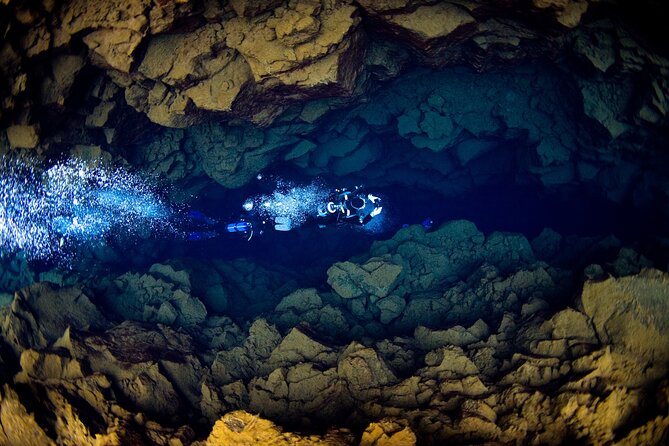
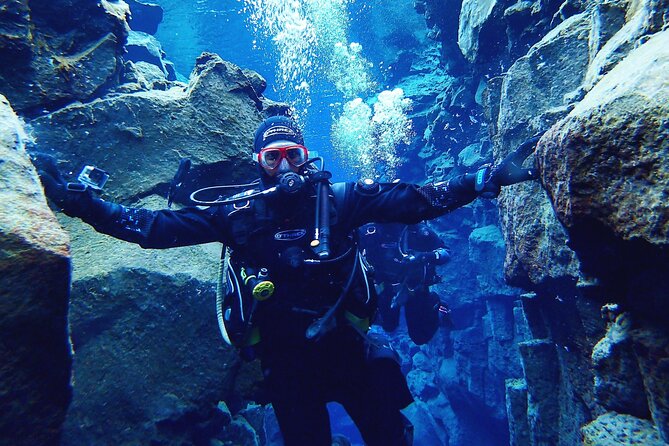
Once you’re suited, weighted, checked, and ready, you follow your guide through the fissure world. The most striking part is the look of the water itself: you get electric-blue shades and extremely clear views. Visibility can extend beyond 100 meters, which changes the whole feel of the trip—you’re not focused on your feet. You can actually study the formations and the route.
Silfra Deep Crack: the plates and the narrow gap
You start by heading toward Silfra Deep Crack, where two continental plates are a short distance apart. Your guide leads you through the fissure’s narrow gap first, then it widens as you move onward.
This section is about geometry. You get close enough for the scale to feel real, but you’re still moving as a team with clear guidance.
Silfra Hall: moving from tight to open
From the narrow fissure gap, you enter Silfra Hall, a broader area that acts like a transition space. The route keeps the pacing intentional: you don’t just swim until you’re tired. You move through zones, and each one has a different “feel.”
Silfra Cathedral: the deepest chamber moment
You continue to Silfra Cathedral, described as the deepest point at 72 feet (22 meters). This is the cavern-like portion where you can take in lava-walled shapes and a sense of depth that’s hard to capture from shore.
You should also be aware that the overall stated depth limit is 59 feet (18 meters) for the experience, so your exact depth moments depend on the conditions and your guide’s plan. Either way, Cathedral is the big “wow” stop on the route.
Silfra Lagoon: endless visibility at the end
After Cathedral, you reach Silfra Lagoon, a brilliant-blue lake with seemingly endless visibility. This is the part where clear water turns into a mental reset. If you’ve been anxious about cold or breathing, this is where the trip often shifts from “survive the conditions” into “slow down and look.”
After you surface: gear off, walk back, and warm-up
When you finish underwater and return to the surface here, you remove fins and other heavy equipment. Then you walk back toward the parking lot.
Finally, you change into everyday clothes and recharge with hot chocolate and cookies. It’s a smart finish, especially because you’ve spent hours in insulated gear where you still can feel chilled.
Timing by season: two shorter sessions or one longer one
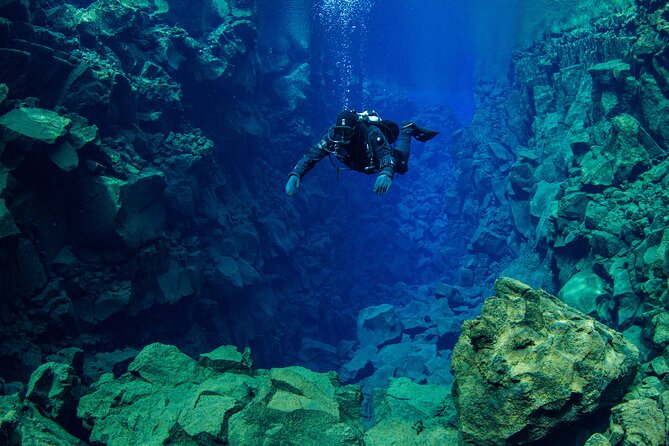
Your time in the water depends on the season and temperature.
- In summer months, you’ll have an option for two 30-minute underwater sessions.
- In winter, if water temperatures are below freezing, you’ll perform one dive of about 45 minutes.
There’s also a temperature safety rule: if the temperature drops below -0°C, the instructor may change the tour into just one session due to safety reasons. That doesn’t mean the trip is weaker. It means your schedule adapts to keep it within safe limits.
If your goal is flexibility, you’ll like this. If your calendar is rigid, you’ll need to accept that Iceland weather can change plans.
Physical demands: carrying 400 meters of heavy kit
This tour makes no attempt to pretend the work isn’t hard. You’re expected to carry heavy equipment for about 400 meters (stated as 1,312 feet) as part of the experience. That’s on top of being comfortable in cold conditions and moving while suited.
So what does that mean for you?
- You should have a strong physical fitness level
- You should feel confident carrying weighted gear
- You should be comfortable with a longer day where warmth comes in stages (gear up, brief, then water time, then hot drink)
If you’re the type who needs frequent breaks, this may not be the best match. If you’re fit, calm under instruction, and ready to follow safety cues, the effort becomes part of the story.
Who this is best for (and who should skip)
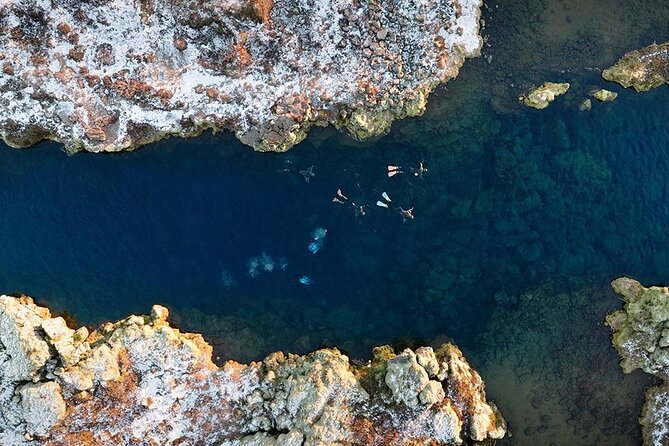
This Silfra experience is best for adults (minimum age 18) who already have dry suit experience and want a guided route with major visibility.
It’s a great fit if you:
- Have the required dry suit certification or meet the logbook requirement
- Want small-group attention (max 3)
- Are comfortable in cold water and prepared to wear warm underlayers
- Can handle eyewear constraints (no glasses under the mask)
It’s not a great fit if you’re:
- New to dry suits and can’t verify the required experience
- Unprepared for the carry of heavy gear (~400 meters)
- Reliant on glasses and unwilling to plan contacts or prescription goggles
One more note: you’re restricted to good weather for the experience. That means you should treat your travel schedule as “plan with options,” not “lock it in.”
The standout factor: small group coaching and calm guidance
One of the most consistently praised parts of the experience is the guidance style. A named example from prior participants is Franceska, who’s described as going above and beyond to make people comfortable—warming gloves, helping with dry suit setup, and keeping the mood calm and focused.
That’s exactly what you want in a cold-water setting. When conditions are intense, comfort isn’t a luxury. It’s part of being able to follow instructions, check your equipment, and enjoy what you came for.
The small group size supports that teaching style. With only up to three people, your instructor can correct fit issues sooner and keep an eye on your safety throughout the route.
Should you book Silfra Fissure scuba tour with Thingvellir as your base?
I’d book this if your checklist looks like this: adult, strong enough to carry heavy gear, dry suit experience you can prove, and the willingness to handle cold plus strict mask/eyewear rules. If that’s you, the value is strong because equipment, guidance, and a warm end-of-day treat are built in.
I wouldn’t book it if you’re hoping to treat it like an easy scenic activity. The kit is specialized, the route is structured, and the requirements are specific for a reason—Silfra conditions are demanding.
Also think timing. Winter can turn a two-part schedule into one session if temps drop. If your trip window is short, build in a bit of flexibility so weather doesn’t box you in.
If you want one clear decision rule: book it when you can meet the dry suit requirements and you’re physically ready. Then show up with warm underlayers, a change of clothes, and the right eyewear plan—and you’ll be set for an unforgettable lesson in how dramatic a fissure can feel underwater.
FAQ
Where is the meeting point for the Silfra Fissure scuba tour?
You meet your instructor at the Silfra meeting point at Vallarvegur, 806, Iceland, in Thingvellir National Park.
Is there pickup from Reykjavik included?
No. Pick up service from Reykjavik is not included, so you’ll need your own transport to reach the meeting point.
What’s included in the price?
The tour includes guided underwater time with a certified PADI guide, small-group format (max 3), all specialized dive gear (including dry suit, thermal undersuit, mask, fins, tanks, weights, and regulator), plus hot chocolate and cookies after.
Do I need previous dry suit experience?
Yes. You need previous dry suit diving experience, and your guide must see your dry suit certification card or a logbook showing at least 10 previous dry suit sessions signed by a dive professional. You also need to have done dry suit diving within the last 2 years.
How long will I be in the water?
The experience is about 4 hours total. In summer you can do two 30-minute sessions, while in winter you may do one session of about 45 minutes.
What happens in winter if it’s extremely cold?
If temperatures fall below -0°C, the instructor may change the tour into just one session due to safety reasons.
What are the depth limits?
The experience has a stated depth limit of 59 feet (18 meters). Silfra Cathedral is described as the deepest point at 72 feet (22 meters).
Can I wear glasses under the mask?
No. There can be nothing in the way of the seal, so you cannot wear glasses under the mask. You’ll need to go without glasses, use contact lenses, or bring your own prescription goggles.
What are the cancellation terms if weather changes?
Cancellation is free. You can cancel up to 24 hours in advance for a full refund. If the tour is canceled due to poor weather, you’ll be offered a different date or a full refund.
More Tour Reviews in Reykjavik


More Snorkelling in Silfra

The Golden Circle, A Few More Ways Round

Fresh off the road around Reykjavik
Golden Circle Tours, compared.
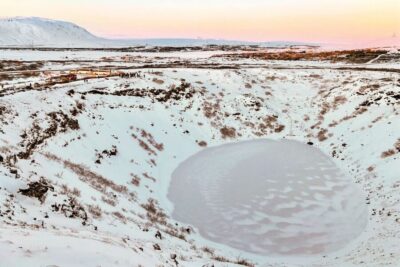 ★ 4.8Golden Circle Full-Day Tour with Kerid CraterFrom $8224,485 reviews
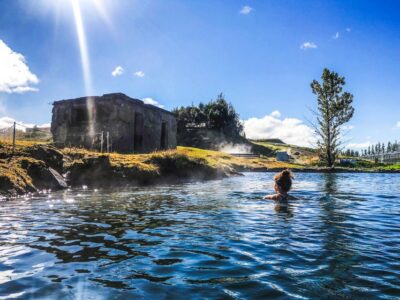 ★ 4.8Golden Circle, Kerid, & Secret Lagoon TourFrom $1326,009 reviews
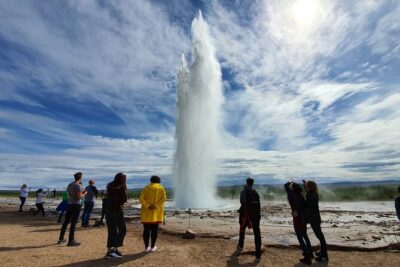 ★ 5.0Small-Group Golden Circle, Blue Lagoon with Ticket & Kerid CraterFrom $2495,631 reviews
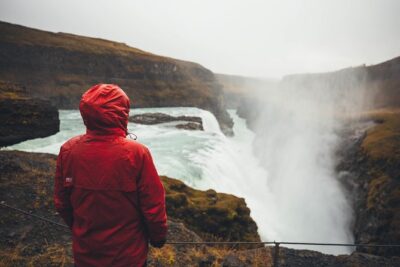 ★ 4.5Golden Circle Classic Day Tour from ReykjavikFrom $735,195 reviews
 ★ 4.9Golden Circle, Kerid Crater, & Blue Lagoon TourFrom $2434,351 reviews
 ★ 4.5Golden Circle with Kerid Volcanic Crater Day Tour from ReykjavikFrom $852,826 reviews
 ★ 4.6Golden Circle Full Day TourFrom $842,337 reviews
 ★ 5.0Small-group Golden Circle Classic Tour from ReykjavikFrom $1162,023 reviews
Browse the lists this tour appears in