
Reviewed · CITY TOURS
Reykjavík Interactive City Tour
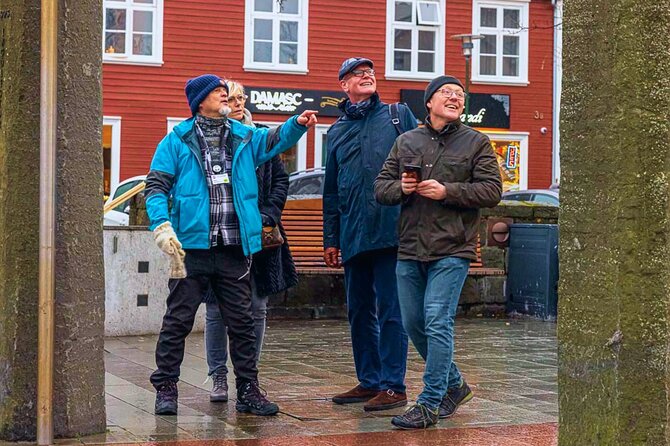
Reykjavik tells its story in small, smart steps. This self-guided smartphone walking tour lets you move at your pace while an English audioguide with quizzes guides you from one landmark to the next. I like how the stops are practical and mostly outside, so you’re not stuck hunting tickets or entrances.
My favorite part is the way the quiz prompts keep you paying attention, even when you’re just taking in a building from the sidewalk. The main catch: you should expect a fairly long walk and you’ll need an internet connection on your phone (it isn’t available offline).
In This Review
- Key highlights you’ll feel right away
- How a smartphone audioguide turns Reykjavik into a walk-with-a-purpose
- Price and time: $8.47 for 1 hour 45 of “see it, then know it”
- The route in order: Dómkirkjan, parliament stone, oldest houses, and the big Harpa finish
- Stop 1: Dómkirkjan í Reykjavík
- Stop 2: Reykjavik Parliament Building (stone facade story)
- Stop 3: Aðalstræti 10 (one of Reykjavik’s oldest houses)
- Stop 4: Lækjargata (Iceland’s oldest concrete structure)
- Stop 5: Bankastræti (street life and the fishing-village to capital shift)
- Stop 6: Skólavörðustígur (murals, rainbow path, and Hallgrímskirkja in view)
- Stop 7: Vesturgata 2 (Reykjavík Gate and the old harbor)
- Stop 8: Steinbryggja (Stone Pier sculptures and seafaring stories)
- Stop 9: Laugavegur street art (shopping avenue energy)
- Stop 10: Aðalstræti 15 (Bailiff’s Garden and older settlement clues)
- Stop 11: Eyjarslóð 9 (harbor views and fishing heritage)
- Stop 12: Njarðargata 51 (Einar Jónsson sculpture garden myths)
- Stop 13: Hallgrímskirkja (architecture inspiration and city views)
- Stop 14: Grjótagata (folklore about hidden folk)
- Stop 15: Austurstræti 4 (Ingólfstorg Square and first settler origins)
- Stop 16: Finish at Harpa (basalt-inspired glass facade) and a note about the New Synagogue
- What the quizzes and recorded videos do for you (and where the experience can feel thin)
- Best fit: who should book this and who should think twice
- Practical tips before you start at Dómkirkjan
- Should you book the Reykjavik Interactive City Tour?
- FAQ
- How long is the Reykjavik Interactive City Tour?
- What does the tour cost?
- Do I need to download an app?
- What languages are available?
- Do I need internet during the tour?
- Are tickets or entrance fees included?
- Where do I start and end?
- Is this a private tour?
Key highlights you’ll feel right away
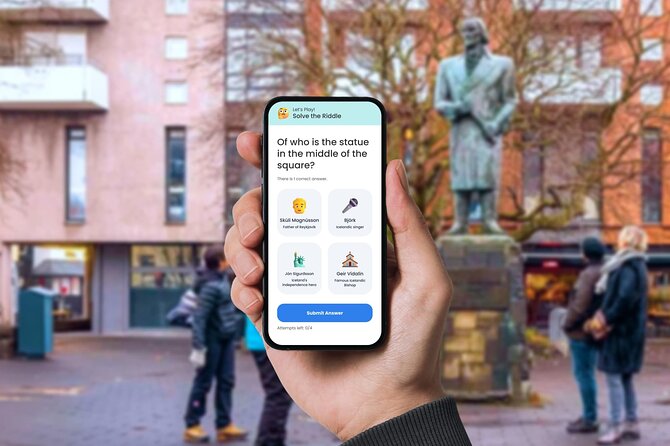
- No app download required: you use the tour on your phone without installing anything.
- Audioguide + quizzes at every stop to help the facts stick.
- All stops are exterior (no museum ticket lines needed on this route).
- A big range of Reykjavik themes: church, parliament, harbor, street art, sculpture gardens, and folklore.
- Finish at Harpa, one of the city’s most distinctive modern landmarks.
Worth a look alongside this Reykjavik pick:
- Reykjavik: City Sightseeing Hop-On Hop-Off Bus Tour★ 3.9 · 1,283 reviews
- Reykjavík City Card★ 4.3 · 964 reviews
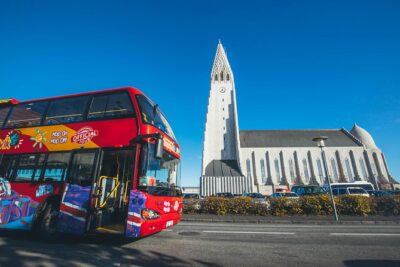
- City Sightseeing Reykjavik Hop-On Hop-Off Bus Tour: 24 or 48-Hour★ 3.0 · 839 reviews
How a smartphone audioguide turns Reykjavik into a walk-with-a-purpose
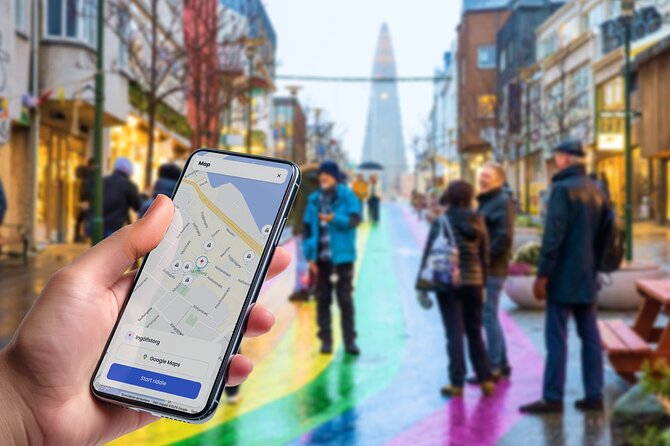
The Reykjavik Interactive City Tour is built for travelers who want guidance but don’t want to be herded. You start at Dómkirkjan í Reykjavík and follow a walking route stop by stop, with audio content delivered right on your smartphone. There’s no physical guide tagging along, and no app install, which means less friction before you even step outside.
You’ll get an audioguide experience in English, with options in German, Italian, French, Spanish, Portuguese, and Chinese. Each point comes with audio and quizzes, so you’re not just listening passively. It also makes the walk feel more purposeful when the weather is changeable and your time is tight.
One more practical note I appreciated: the tour is described as private, meaning your group is the only group doing it. If you’re traveling with friends or family, you can move in the same rhythm without feeling like you’re negotiating space with strangers every five minutes.
Price and time: $8.47 for 1 hour 45 of “see it, then know it”
At $8.47 per person for about 1 hour 45 minutes, this is priced like a value add-on—not a major paid excursion. The reason it works is that you’re paying for interpretation, not transport, not entry tickets, and not a guided lecture that takes over your day.
The route includes 16 stops, and each one is roughly a 5-minute pause. That doesn’t sound long, but it adds up fast. You’ll also spend real time walking between points, which is why you’ll want comfortable shoes and patience with weather.
Also, the tour is listed as having free admission tickets for the stops, and tickets are marked as not included. In plain terms: you’re mostly observing from outside. So you’re not paying extra to get the full experience.
The route in order: Dómkirkjan, parliament stone, oldest houses, and the big Harpa finish
This itinerary is designed like a smooth tour through central Reykjavik, mixing older landmarks with street-level art and modern architecture. Here’s what you’ll notice at each step, and what’s worth your attention.
Stop 1: Dómkirkjan í Reykjavík
Start your walk at Dómkirkjan í Reykjavík, and look closely at its simple, charming presence. The audio focuses on why this church matters: it’s tied to Iceland’s Lutheran roots and its role in national history. Even if you’re not a church person, the facts make the building feel like a starting point, not just a photo spot.
Tip: Take one minute before audio starts to just look at the facade. It helps the story land faster.




Stop 2: Reykjavik Parliament Building (stone facade story)
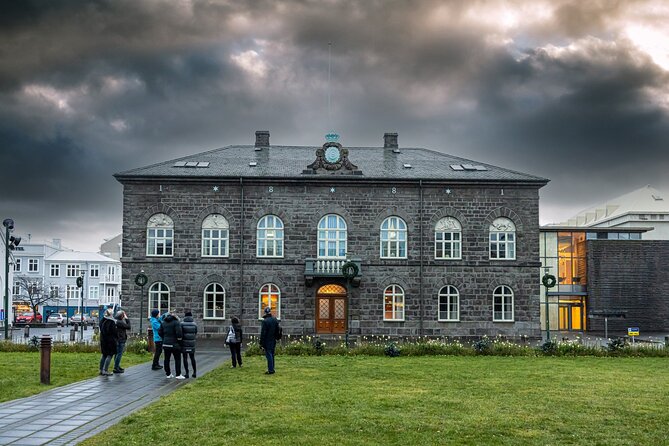
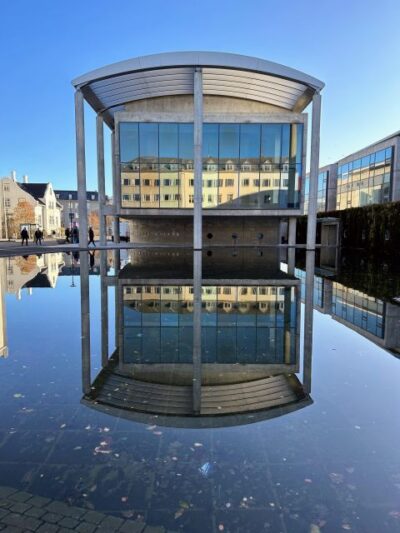
Next you’ll pass by the Parliament Building area (listed as 43W5+MWW). The key theme here is independence and how the distinctive stone facade connects to that national shift. It’s one of those buildings where the details matter more than the size.
Stop 3: Aðalstræti 10 (one of Reykjavik’s oldest houses)
At Aðalstræti 10, the tour asks you to imagine life during the city’s earlier days. The value isn’t just the age—it’s the way old architecture survives while the city around it changes. It’s a quick stop, but it anchors you in the idea that Reykjavik has been evolving for a long time.
Stop 4: Lækjargata (Iceland’s oldest concrete structure)
Now look at Lækjargata, described as the oldest concrete structure in Iceland. The audio connects it to real civic functions: it served as the Prime Minister’s office and also has ties to its past as a prison. That combo can feel jarring in a good way. One building holds multiple eras.
Stop 5: Bankastræti (street life and the fishing-village to capital shift)
Bankastræti is where the tour pivots from individual buildings to city change. You’ll walk a lively street and learn about the transformation from small fishing village roots into a capital city. This is the kind of context that helps you understand why so much of Reykjavik feels compact and walkable.
Stop 6: Skólavörðustígur (murals, rainbow path, and Hallgrímskirkja in view)
On Skólavörðustígur, you get color and craft at street level: artistic murals, unique boutiques, and the famous rainbow path. At the end of the street, you’ll get a view toward Hallgrímskirkja, which is smart because it sets up your next big landmark.
If you’re taking photos, this is a good place for it. The tour’s pacing gives you a little breathing room instead of rushing you out of the best angles.
Stop 7: Vesturgata 2 (Reykjavík Gate and the old harbor)
At Vesturgata 2, stand near the Reykjavík Gate and look toward the old harbor area. The audio ties the gateway to maritime history and how the port shaped Reykjavik’s development. If you’re the type who likes to understand the city’s “why,” this stop is for you.
Stop 8: Steinbryggja (Stone Pier sculptures and seafaring stories)
Walk along Steinbryggja, the Stone Pier, and pay attention to the sculptures. Each one connects to Iceland’s seafaring heritage. These are small visual stories along the walkway, and they work well during winter light or clear summer weather.
Stop 9: Laugavegur street art (shopping avenue energy)
At Laugavegur, you’ll pass Reykjavik’s main shopping street and see street art along with shops and cafes. The guide’s focus is the city’s personality in motion—local crafts, colorful murals, and everyday life. This is also where you’ll likely feel the most pedestrian traffic, so keep your pace steady and let audio direct your attention.
Stop 10: Aðalstræti 15 (Bailiff’s Garden and older settlement clues)
At Aðalstræti 15, the tour points you toward the Bailiff’s Garden. The mood shifts from street bustle to pathways and native Icelandic flora. This stop is valuable because it gives you a small break—and it also connects to the history of old Reykjavik settlements.
Stop 11: Eyjarslóð 9 (harbor views and fishing heritage)
Next is Eyjarslóð 9, along the harbor with views toward surrounding mountains. The audio emphasizes fishing heritage and why this port mattered culturally. The combination of water views and historical explanation makes it easier to understand Reykjavik beyond the tourist postcard.
Stop 12: Njarðargata 51 (Einar Jónsson sculpture garden myths)
At Njarðargata 51, you’re led through a sculpture garden linked to Einar Jónsson. The audio leans into myths and stories behind the works. Even if you don’t know Icelandic art history, the storytelling approach helps you look at sculptures like characters, not just objects.
Stop 13: Hallgrímskirkja (architecture inspiration and city views)
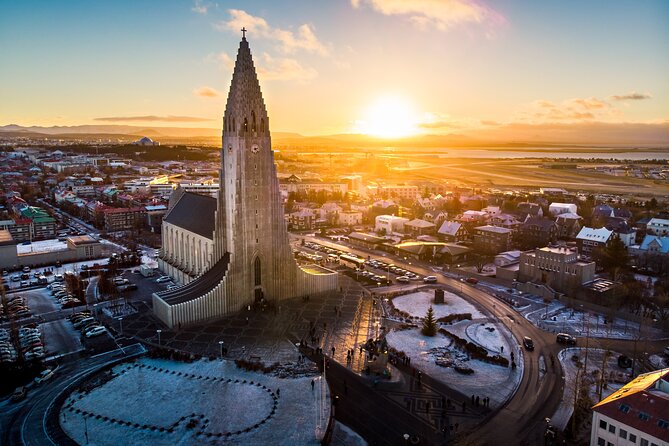
Here’s your big icon: Hallgrímskirkja. The tour asks you to admire the facade and learn what inspired its unique architecture. You’ll also get sweeping views over the city when the street angle opens up.
This stop is one of the best “wow, that’s Reykjavik” moments on the entire route. The audio helps you read the building like a design statement, not just a landmark.
Stop 14: Grjótagata (folklore about hidden folk)
At Grjótagata, the guide shifts to folklore. You’ll hear local tales about hidden people said to live within it. It’s short, but it adds personality to the walk. If you like Iceland’s ghost-story vibe (without the spooky Hollywood volume), this is a fun breather.
Stop 15: Austurstræti 4 (Ingólfstorg Square and first settler origins)
At Austurstræti 4, you’ll reach Ingólfstorg Square, with the tour tying the city’s origins to Ingólfur Arnarson. Look for nearby sculptures and murals that highlight Icelandic heritage and history. This stop is where the city’s past becomes the start of your mental map.
Stop 16: Finish at Harpa (basalt-inspired glass facade) and a note about the New Synagogue
Finally, you end at Harpa. The audioguide focuses on the glass facade, inspired by Iceland’s basalt landscapes, and its significance in Reykjavik’s cultural scene.
The tour directions also say to end your journey at the New Synagogue, described as a symbol of resilience and remembrance. Since your meeting-point finish is listed as Harpa, I’d treat that synagogue note as part of the route context rather than assuming it replaces the Harpa finish.
What the quizzes and recorded videos do for you (and where the experience can feel thin)
The audio isn’t just facts—it’s structured like short prompts, each paired with quizzes. That changes the vibe. Instead of zoning out while you walk, you keep returning to key points. It’s especially helpful when you’re outdoors and distracted by real-life Reykjavik details: weather, architecture, and street-level scenes.
In a practical sense, the quizzes act like checkpoints. You know you heard the message when you can answer the question, even if you’re moving quickly.
That said, there’s one legitimate risk. If you want a super packed itinerary with lots of stops that require deeper looking or extra time inside buildings, this format might feel light. One experience described it as a long walk with limited interesting info, which matches the structure: short pauses outside, then more walking. For some people, that’s perfect. For others, it’s not enough story density.
Best fit: who should book this and who should think twice
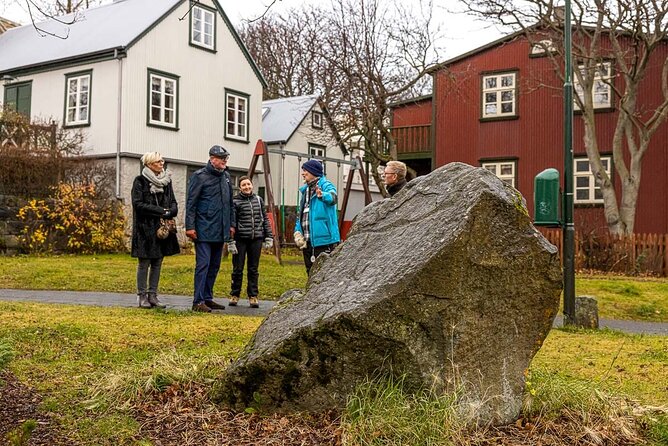
I think this tour is ideal for you if you:
- Like independent walking with guided structure.
- Want to see multiple areas of Reykjavik without booking separate attractions.
- Enjoy architecture, public buildings, and street art more than indoor museum time.
- Prefer audio you can control at your own pace.
You might want to think twice if:
- You don’t enjoy walking for roughly the length of a one-and-change-hours stroll.
- You’re likely to struggle with phone internet in the moment you start.
- You want big payoffs that depend on entrances, tickets, or long dwell times.
The good news is that it’s near public transportation and service animals are allowed. Also, most travelers can participate, and the tour is designed as a straightforward walking route.
Practical tips before you start at Dómkirkjan
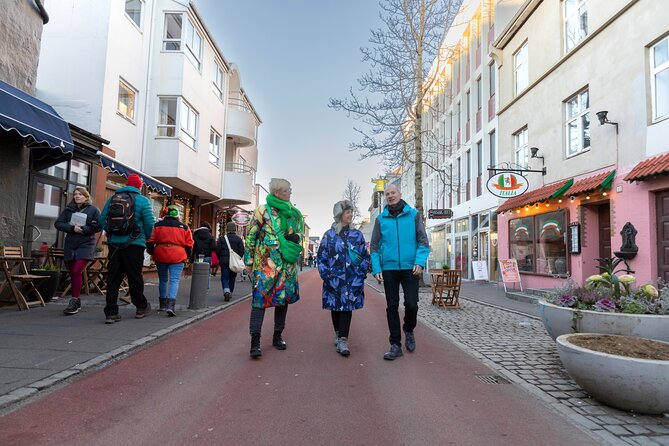
Plan for quick decisions. Each stop gives you about five minutes, so you’ll need to balance listening with looking.
Bring:
- Comfortable shoes. You’re doing a central-city walk with frequent little pauses.
- A charged phone battery. The experience is smartphone-driven.
- A strategy for internet: since it isn’t offline, check your connection before you begin.
If the weather turns, don’t panic. You can keep moving, pause when you need, and restart audio as you go. The walking map and recorded format mean you’re not stuck waiting for a group schedule.
Should you book the Reykjavik Interactive City Tour?
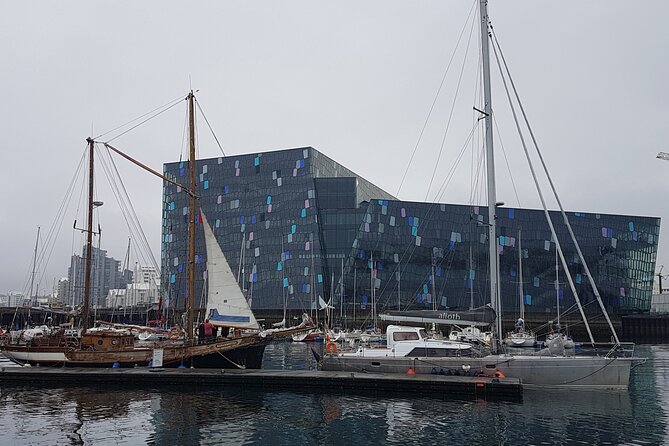
Book it if you want an affordable, low-commitment way to understand central Reykjavik with real storytelling. At $8.47 and about 1 hour 45, it’s a smart use of time when you want broad coverage: cathedral, parliament, harbor history, street art, folklore, sculptures, and the big modern finish at Harpa.
Skip it if you hate walking or if you strongly prefer indoor sights and ticketed attractions. This tour is designed for the sidewalk and the view. If that fits your style, you’ll have a fun, self-paced afternoon with facts that stick.
FAQ
How long is the Reykjavik Interactive City Tour?
The tour is about 1 hour 45 minutes (approx.).
What does the tour cost?
It costs $8.47 per person.
Do I need to download an app?
No. The tour is described as self-guided on your smartphone and APP not needed.
What languages are available?
The audioguide is available in English plus Deutsch, Italiano, Français, Español, Português, and 中文.
Do I need internet during the tour?
Yes. Internet is needed on your phone, and it is not available offline.
Are tickets or entrance fees included?
No. Tickets or entrance fees are not included, and the tour emphasizes stops you view from outside.
Where do I start and end?
You start at Dómkirkjan í Reykjavík (Kirkjustræti, 101 Reykjavík) and end at Harpa (101 Reykjavík). The directions also mention ending at the New Synagogue.
Is this a private tour?
Yes. It’s listed as private, meaning only your group participates.
More City Tours in Reykjavik





More Tours in Reykjavik


More Tour Reviews in Reykjavik


Fresh off the road around Reykjavik


City Tours, compared.
 ★ 3.9City Sightseeing Hop-On Hop-Off Bus TourFrom $471,283 reviews
 ★ 4.3Reykjavík City CardFrom $40964 reviews
 ★ 3.0City Sightseeing Reykjavik Hop-On Hop-Off Bus Tour: 24 or 48-HourFrom $48839 reviews
 ★ 4.0Airport Transfer in Iceland from Keflavik Airport to Reykjavik City With Hotel Drop OffFrom $40464 reviews
 ★ 5.0Walking tour of Reykjavik cityFrom $51416 reviews
 ★ 4.8City Walking tour in Small Group with Local GuideFrom $51380 reviews
 ★ 4.0Airport Transfer in Iceland from Reykjavik City to Keflavik Airport with Hotel Pick UpFrom $41332 reviews
 ★ 4.0Airport Express Shared Departure transfer from Reykjavik City to Keflavik AirportFrom $29169 reviews
Browse the lists this tour appears in