
Winter Iceland feels like a movie scene on rails. In 3 days, you hit the Golden Circle basics (Þingvellir, Gullfoss, Geysir, plus Kerið) and then swing into the South Coast for the big waterfall-and-coast hits before finishing with a glacier hike and ice cave tour. I love that the itinerary packs must-see nature without making you plan every transfer yourself. I also love the small group setup (max 19) and the way guides help with real-life needs like bathroom timing. One possible drawback: it’s a full schedule, and winter weather can make the long driving days feel intense.
This is also one of those tours where the guide matters. I’ve seen the difference in reviews firsthand through names like Eeli, Sindri, Anna Maria, Thomas, and Zef—people consistently credit them for keeping the day moving, finding good spots, and adjusting when the cold and wind won’t cooperate. Pickup is offered from your hotel or the bus stop (the bus has a sign in the window), and you get 3-star hotel nights with breakfast to recharge between big exterior days.
In This Review
- Key Things I’d Prioritize on This Winter Tour
- Why This 3-Day South Coast + Golden Circle Works in Winter
- Day 1: Þingvellir, Gullfoss, Geysir, and Kerið Crater (Golden Circle Essentials)
- What to keep in mind on Day 1
- Day 2: Seljalandsfoss to Reynisfjara, Then Skaftafell and Solheimajökull
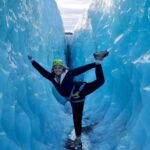
- Solheimajökull glacier hike: the hands-on highlight
- Northern lights attempt from the South Coast
- Day 3: Jökulsárlón Ice Cave, Diamond Beach, Glacier Lagoon, Eldhraun, and Vík
- Guides Matter: What Makes These 3 Days Feel Smooth
- Price and Value: What $1,050 Buys You in Winter
- Practical Winter Tips That Actually Help
- Who This Tour Fits Best (And Who Should Rethink It)
- Should You Book This Winter South Coast + Golden Circle Tour?
- FAQ
- What time does the tour start?
- Is pickup included?
- What’s included in the price?
- Are lunch and dinner included?
- How large is the group?
- Will I see the northern lights?
Key Things I’d Prioritize on This Winter Tour
- Golden Circle Day 1 with Þingvellir, Gullfoss, Geysir, and Kerið Crater as a tight start.
- South Coast Day 2 waterfall run from Seljalandsfoss to Skógafoss, plus Gljúfrabúi and Reynisfjara.
- Solheimajökull glacier hike with included gear—a hands-on highlight, not just viewpoints.
- Jökulsárlón ice cave and Diamond Beach to end the trip on pure ice-and-coast magic.
- Small group (up to 19) and guides who actively manage timing in winter.
- Weather-dependent northern lights attempts from the South Coast area rather than promises.
The classic loop, run a few other ways
- Reykjavik: Golden Circle Full-Day Tour with Kerid Crater★ 4.8 · 24,485 reviews
- From Reykjavik: Golden Circle, Kerid, & Secret Lagoon Tour★ 4.8 · 6,009 reviews
- Small-Group Golden Circle, Blue Lagoon with Ticket & Kerid Crater★ 5.0 · 5,631 reviews
Why This 3-Day South Coast + Golden Circle Works in Winter
If you’re visiting Iceland in winter and you want the headline sights, this tour style makes a lot of sense. You get the classic interior trio (Golden Circle) on day 1, then you concentrate the South Coast and the glacier/ice features across the next two days.
The big value here is logistics. You don’t have to figure out where to sleep, how to link drives, or which ticket to buy for which stop. The tour includes 3-star hotel with breakfast, WiFi on board, and the two hardest “nature experiences” to organize solo: the glacier hike (with gear) and the ice cave tour.
The tradeoff is intensity. This is not a slow wandering trip. Expect a lot of time outside in cold, windy conditions, and you’ll be traveling between regions fast enough that meals mostly become take-it-as-it-comes. Lunch and dinner aren’t included, so you’ll plan on paying for food when stops line up.
Day 1: Þingvellir, Gullfoss, Geysir, and Kerið Crater (Golden Circle Essentials)
Day 1 is built like a greatest-hits playlist for the Golden Circle route, and it starts close to Reykjavik at Thingvellir National Park (Þingvellir), about 40 km from the city. It’s a UNESCO World Heritage site, and it’s also one of Iceland’s most important stops for understanding how the land is still forming. You get about 2 hours there, with admission included.
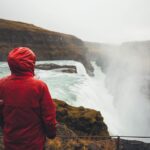
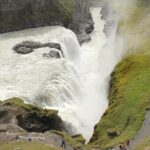
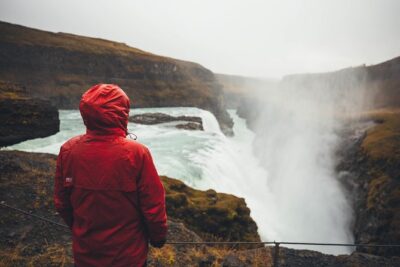
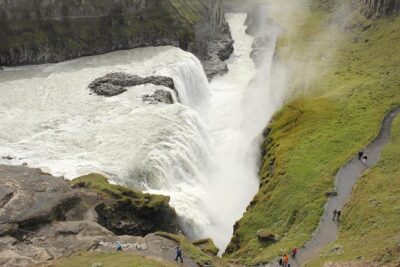
From there, you move to Gullfoss Falls, one of Iceland’s most famous waterfalls. The tour gives you roughly 1 hour and includes the ticket. Gullfoss is in a canyon setting in the Hvítá River area, so in winter you’re not just looking at a waterfall—you’re watching fast water in a dramatic setting where the wind can feel personal. Go prepared to get cold fast, even when the scenery is worth it.
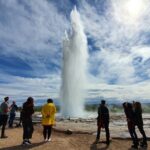
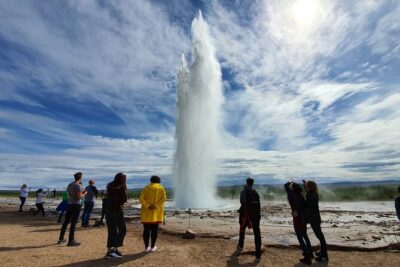
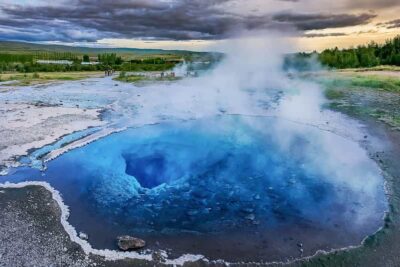
Next comes Geysir (Haukadalur Valley) for another about 1 hour. Admission for this stop is listed as free, which is a nice bonus on a day that already includes tickets for Þingvellir and Gullfoss. It’s the geothermal side of the Golden Circle: steam, heat, and motion where you feel how close you are to Iceland’s engine.
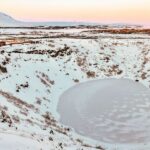
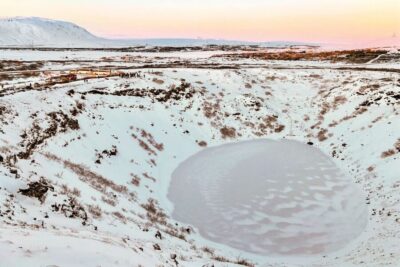
Then you round off with Kerið Crater. This is the volcanic crater lake stop in the Grímsnes area, listed around 55 km from Reykjavik. You get about 1 hour, with admission included. Kerið is one of those “brief but unforgettable” stops because the colors can look unreal in winter light, and the dramatic crater shape gives you an easy photo frame even when the weather tries to ruin your hair.
What to keep in mind on Day 1
This is a “walk, look, repeat” kind of day. In winter, that means you should dress for movement and for waiting outside between stops. You’ll likely spend more time than you expect standing around for photo angles, and timing matters when roads are slick.
Day 2: Seljalandsfoss to Reynisfjara, Then Skaftafell and Solheimajökull
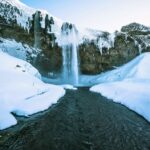
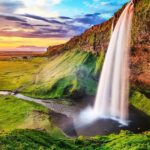
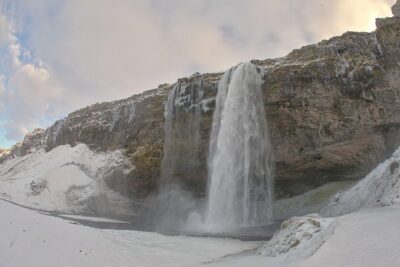
Day 2 is where the South Coast really hits you. It starts with Seljalandsfoss (ticket free in the tour info) about 120 km from Reykjavik, then moves on to Skógafoss, about 150 km from Reykjavik with admission included. You get about 1 hour at Seljalandsfoss and about 1 hour at Skógafoss.
Seljalandsfoss is famous because it’s so easy to feel close to the waterfall in winter. Skógafoss feels bigger and louder, and it’s an easy win if you like waterfalls that look powerful rather than just pretty. Even if the weather is rough, these stops stay worth it because the scale is obvious.
After that, the tour adds Gljúfrabúi, a more tucked-away waterfall right by Seljalandsfoss. It’s listed as included with admission included, and it’s a short walk to reach it. Gljúfrabúi gets its name from the canyon feel, so you’re not seeing a wide-open falls moment. You’re seeing a more hidden, enclosed vibe—usually the kind of contrast that makes a day feel more than “the same waterfall, different angle.”
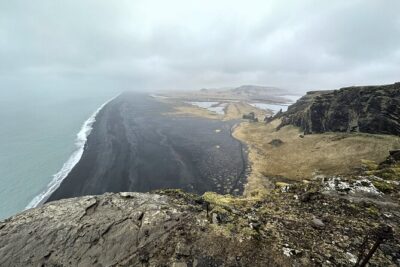
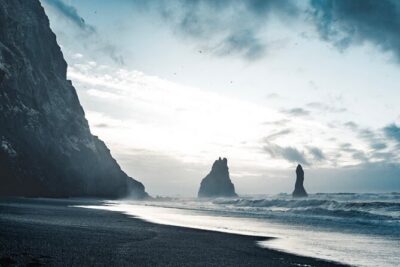
Then you head to the coast for Vikurfjara / Reynisfjara Black Sand Beach, near Vík í Mýrdal. You’ll spend around 1 hour and admission is included. This is basalt-column territory with jet-black sand and rough surf. In winter, the waves and wind can be intense, so treat it as a “look from the right places and keep moving” stop. The reward is the stark Iceland-at-the-edge-of-the-world feeling.
After the beach, you’re in the Skaftafell area, listed as Bridge Monument (Bridge of the Volcanoes), with about 1 hour and admission free. The tour may adjust this part depending on where you’re staying, but the point stays the same: it’s a break-in-the-route feature before the glacier hike.
Further along the black-sand coast, side by side
Solheimajökull glacier hike: the hands-on highlight
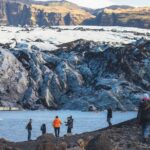
Next is Solheimajökull glacier hike, listed as 3 hours with admission included. You get the gear as part of the tour, so you’re not scrambling for winter equipment at the last minute. This is the part many people call the best experience because it’s active and physical. You’re not only looking—you’re walking on and around ice under guide supervision.
A quick reality check for winter hiking: the hike can feel more rigorous than expected, even if you’re in good shape. Your winter layers matter. Also, cold air feels sharper when you’re moving slower, like when you stop for guidance or group checks.
Northern lights attempt from the South Coast
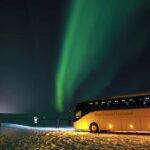
Day 2 ends in the Hofn area, where the tour lists Northern Lights from the hotel with about 1 hour and admission free. I like this approach. It doesn’t waste every minute of the night driving around. Instead, it tries while you’re already set up where you sleep. In reviews, guides like Sindri and others are praised for knowing where to go quickly when the lights show up—so it’s smart to ask the guide for their plan before you assume you’ll stay put.
Day 3: Jökulsárlón Ice Cave, Diamond Beach, Glacier Lagoon, Eldhraun, and Vík
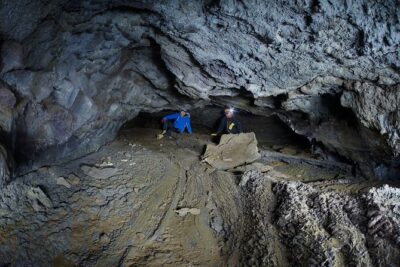
Day 3 is built for maximum ice impact and dramatic scenery. It begins with Jökulsárlón Ice Cave, with a 3-hour ice cave tour. The tour info lists it as free for this stop, but the bigger point is that ice caves are not a “grab a photo and leave” activity. You’re with a guide and you’re moving through a structured experience on ice.
Then you go to Diamond Beach, near the Jökulsárlón Glacier Lagoon. It takes around 1 hour, with admission included. Diamond Beach gets its name from the icebergs that wash up and scatter across the black sand like sparkles. Even in bad weather, this is still visually strong because the contrast between dark sand and bright ice is obvious.
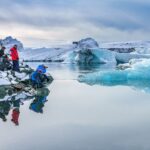
Next is Jökulsárlón Glacier Lagoon itself. You get roughly 1 hour, with admission included. The lagoon is described as the deepest and largest glacial lagoon in Iceland, covering about 18 square kilometers and reaching over 248 meters deep. For you, that matters because it’s not just a pretty pond. It’s a major glacier system in action, and the scale is part of the mind-blow factor.
After the lagoon, the tour includes the Eldhraun Lava Field, about 1 hour with admission included. The Eldhraun area is listed as covering around 565 square kilometers and formed by one of the largest volcanic eruptions in recorded history. Here, the value is change of pace. After ice caves and lagoons, you get a different kind of Iceland power: hardened lava fields that look alien.
Finally, the trip ends with a stop in Vík í Mýrdal (Vík), with about 1 hour and listed as ticket free. Vík is described as the southernmost village in Iceland and a popular base for exploring coastal scenery. It’s a good ending point because it’s a real village stop, not just a viewpoint pull-off.
Guides Matter: What Makes These 3 Days Feel Smooth
This tour has a maximum of 19 travelers, which helps a lot in winter. Fewer people means fewer delays when you’re loading and unloading. It also makes it easier for the driver and guide to watch the group and manage timing when the weather changes fast.
Reviews repeatedly praise guides who manage the day like they’re working a shift, not just showing up with a script. Names that come up: Eeli is described as accommodating with bathroom stops and creating a custom feel. Sindri is praised for getting everyone safely on time and for quickly adjusting when northern lights chances came up. Ana Maria receives a lot of praise for taking care of the group and staying on schedule. Zef is credited with lots of knowledge and a personal touch. And Thomas is mentioned as a northern lights enthusiast who explains the science while hunting.
So for you, the practical benefit is simple: when you have a tight winter itinerary, a guide who watches timing and conditions saves your energy. It means you’re less likely to get stuck in the wrong spot at the wrong time, and it also means the day feels more human.
Price and Value: What $1,050 Buys You in Winter
At $1,050 per person, you’re not buying a “cheap seats” tour. But you are buying a lot of what makes Iceland difficult in winter: transport between distant regions, hotel beds, and the two big paid activities.
From the included list, the value story looks like this:
- 3-star hotel with breakfast (so you’re not paying for lodging separately, at least for the included nights)
- Glacier hike with gear (Solheimajökull)
- Ice cave tour
- WiFi on board
- Breakfast included twice during the trip
Lunch and dinner aren’t included. That’s normal for Iceland tours, and it’s where you’ll want to budget a bit extra depending on where you eat during the included stops.
When I judge value for a winter tour like this, I focus on two things: (1) Are the most complicated pieces handled for you? and (2) Are you paying less than you’d spend assembling it yourself? Here, the glacier hike gear and ice cave tour are the biggest “assemble-it-yourself” headaches. That alone usually makes the package feel fair for short trips.
Practical Winter Tips That Actually Help
Winter Iceland punishes bad planning, but it rewards good prep. The reviews stress cold and wind. So pack like you’re going to be outside more than you expect.
Here’s what matters most for you on this specific itinerary:
- Wear layers you can move in, not just stand still in. You’ll be walking short distances, then freezing while you wait for the group to reposition.
- Plan for slippery surfaces at waterfalls and coasts. You don’t need extreme gear unless your guide advises it, but you do need boots with traction.
- Expect a jam-packed feeling. One review describes eating, sleeping, and showering as the hotel’s main job during the trip. That matches how this type of itinerary works.
- Bring a sense of humor. Wind changes plans. Sometimes the best idea is to accept the weather and photograph what you can safely reach.
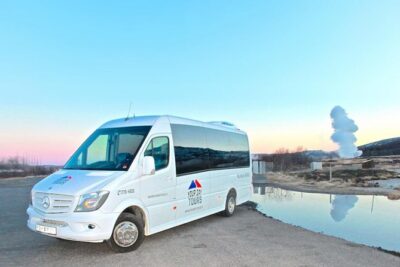
One more practical note: the tour includes a start time of 9:00 am, and pickup is offered from the bus stop or your hotel. Show up early-ish at pickup so you’re not stressed when it’s cold outside.
Who This Tour Fits Best (And Who Should Rethink It)
This is a strong fit if you:
- Want Golden Circle + South Coast highlights in about 3 days
- Prefer guided logistics over rental car planning in winter
- Care about real outdoor experiences like a glacier hike and an ice cave tour
- Like a group size that stays manageable (up to 19)
You might rethink it if you:
- Want a super slow pace with lots of free time and long restaurant lunches
- Get overwhelmed by tight schedules and frequent changing plans due to weather
- Prefer to choose exactly when and where you stop rather than follow a set route
Also remember: the tour requires good weather. If it’s canceled due to poor weather, you’ll be offered a different date or a full refund. And the northern lights portion is an attempt rather than a promise—winter skies are unpredictable.
Should You Book This Winter South Coast + Golden Circle Tour?
If you’re short on time and you want the best odds of seeing Iceland’s winter “greatest hits” without playing logistics roulette, I’d book it. The reason is simple: this tour bundles the hardest parts—driving between regions, hotels with breakfast, a glacier hike with gear, and an ice cave tour—into one plan.
I’d especially recommend it to first-timers who want a confident introduction: Þingvellir and Gullfoss for geology and waterfalls, Reynisfjara and the South Coast for coastal drama, and then Jökulsárlón ice and Eldhraun lava for the big payoff days.
Just go in knowing it’s busy. Pack warm layers, keep an easygoing attitude about timing, and treat the day as a series of short, high-impact moments. If you do that, you’ll come away with a trip that feels full, not empty.
FAQ
What time does the tour start?
The start time is 9:00 am.
Is pickup included?
Yes. Pickup is offered either from your hotel or the tour bus stop. The driver will call out your name, and the bus has a sign in the window.
What’s included in the price?
The tour includes 3-star hotel with breakfast, WiFi on board, glacier hike with gear, and an ice cave tour. Breakfast is included twice. Tickets for specific stops are listed as included or free throughout the itinerary.
Are lunch and dinner included?
No. Lunch and dinner are not included.
How large is the group?
The tour has a maximum of 19 travelers.
Will I see the northern lights?
The itinerary includes a northern lights opportunity from the hotel on the South Coast area, but it isn’t guaranteed. The tour requires good weather, and winter conditions can affect what you see.
More Tour Reviews in Reykjavik

Further Down the South Coast
The Golden Circle, A Few More Ways Round
Fresh off the road around Reykjavik
Golden Circle Tours, compared.
 ★ 4.8Golden Circle Full-Day Tour with Kerid CraterFrom $8224,485 reviews
 ★ 4.8Golden Circle, Kerid, & Secret Lagoon TourFrom $1326,009 reviews
 ★ 5.0Small-Group Golden Circle, Blue Lagoon with Ticket & Kerid CraterFrom $2495,631 reviews
 ★ 4.5Golden Circle Classic Day Tour from ReykjavikFrom $735,195 reviews
 ★ 4.9Golden Circle, Kerid Crater, & Blue Lagoon TourFrom $2434,351 reviews
 ★ 4.5Golden Circle with Kerid Volcanic Crater Day Tour from ReykjavikFrom $852,826 reviews
 ★ 4.6Golden Circle Full Day TourFrom $842,337 reviews
 ★ 5.0Small-group Golden Circle Classic Tour from ReykjavikFrom $1162,023 reviews
Browse the lists this tour appears in