
Reviewed · GUIDED
13-Day Iceland Geology Adventure Guided Tour from Reykjavík
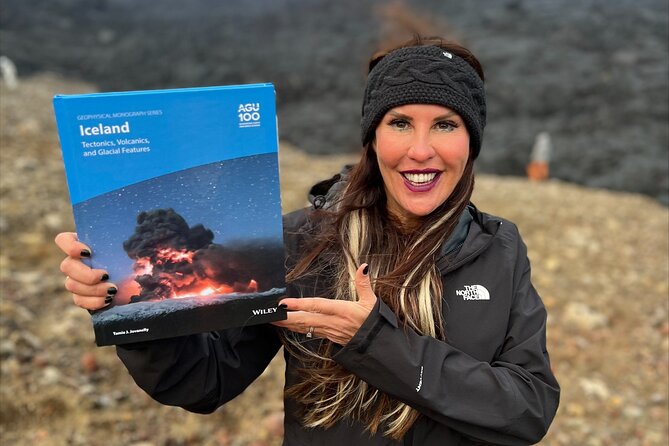
Iceland’s rocks tell a story. This 13-day geology adventure is led by Dr. Tamie Jovanelly and Joe Cook, using their field guide book on tectonics, volcanism, and glacial features so you look at each stop with a clear explanation instead of just awe.
I love that the tour is built for active exploration but doesn’t require a geology background. I also like how much is included: from geothermal energy and carbon capture at Hellisheidi to the glacier hike near Skaftafell, plus the ice-lagoon circuit and even a wine-and-cheese reception after the glacier walk.
One thing to consider: it’s a big investment at $9,200 per person, and the trip depends on good weather for key outdoor days. If Iceland says not today, your timing can shift.
In This Review
- Key reasons this geology tour earns top marks
- Reykjavik warm-up: meet the team and get your bearings fast
- The Blue Lagoon plus a fresh volcano: easing in with geothermal reality
- What to watch for
- Hellisheidi geothermal power and the Plate Boundary visual
- A possible drawback
- Thingvellir to Geysir: Vikings, waterfalls, and hot water at the source
- My practical take
- Lava Centre and Hekla: interactive science, then a very active volcano
- Heads-up
- Skaftafell National Park: glacier-top hiking with a wine-and-cheese reward
- Consideration for your body
- Fjallsárlón, Diamond Beach, and Jökulsárlón: icebergs you can read like a map
- Weather reality
- Dettifoss: columnar basalt in full force
- Hverfjall, pseudo-craters, and Dimmuborgir’s debated origins
- A good fit
- Akureyri free day: let Iceland breathe while you reset
- Stykkisholmur’s Water Museum: glaciers past and present
- Snæfellsnes and Vatnshellir: stratovolcano views plus a lava tube
- Back to Reykjavík: one last look before departure
- Price and value: what you’re paying for at $9,200
- Who this tour is best for (and who should think twice)
- Should you book this Iceland geology adventure?
- FAQ
- How long is the Iceland geology tour?
- Where does the tour start and end?
- What time does the tour start?
- Do I need a geology background to join?
- Who leads the tour?
- What’s included in the price?
- How large is the group?
- Is good weather required?
- Is the tour refundable if I cancel?
- Are service animals allowed?
Key reasons this geology tour earns top marks
- Dr. Jo’s field-guide approach using Iceland: Tectonics, Volcanics, and Glacial Features (Wiley, 2020)
- Small group size (max 16), so questions actually get answered in the field
- Excursion fees included, which matters when you add up museums, caves, and guided hikes
- More hands-on stops than typical bus tours, including glacier-top hiking and lava-cave exploration
- Big geology themes, linked to real-world impacts, like geothermal power and plate separation
- Fun, energetic leadership from Tamie and Joey/Joe that keeps the days moving
More days handed to a local guide
- Reykjavik: Whale Watching Tour with Expert Guide★ 4.3 · 2,422 reviews
- The Golden Circle Guided Bus Tour from Reykjavik★ 4.5 · 1,726 reviews
- Reykjavik: Guided Foodie Walking Tour with 6 Tastings★ 4.9 · 1,645 reviews
Reykjavik warm-up: meet the team and get your bearings fast
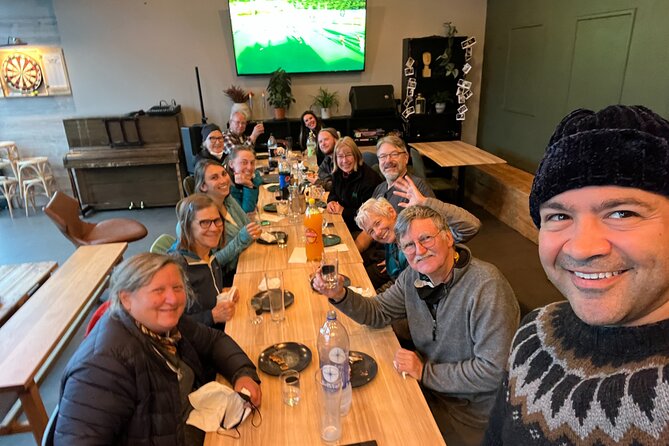
You start in Reykjavík at Gistiheimilið SunnaÞórsgata 26 with an early 7:00 am start, then you get a bit of city time before the group meet-and-greet. Day 1 ends with a group dinner, which is a smart way to help everyone settle in and meet the leaders before you go rock-hunting.
What makes this first day work is pacing. You don’t immediately throw yourself into long, exhausting driving. You get a chance to absorb the vibe of Reykjavík, then you shift into “field mode” with Dr. Jovanelly and Joe Cook guiding the conversation about why Iceland looks the way it does.
The Blue Lagoon plus a fresh volcano: easing in with geothermal reality
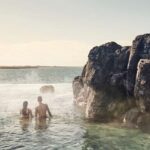
Day 2 is a classic Iceland adjustment combo: you head to the Blue Lagoon in the afternoon to relax and shake off jet lag. It’s a good reset because the next day starts hitting tectonic and volcanic fundamentals in a very practical way.
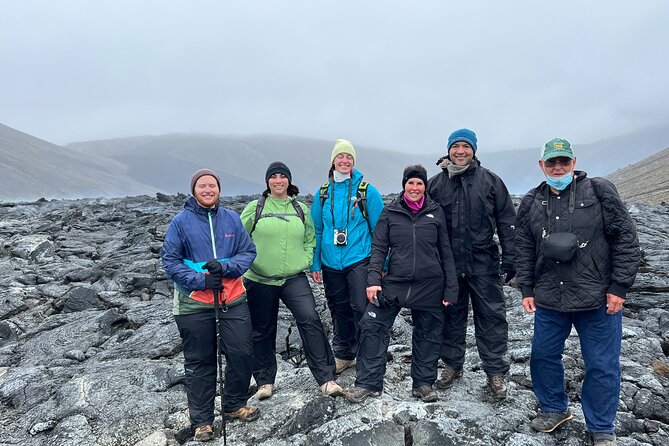
Then comes Fagradalsfjall Volcano, framed as some of Iceland’s most recent volcanic activity. Even without a geology background, you’ll likely find yourself noticing details you’d normally gloss over. The real value here is interpretation: seeing fresh-looking volcanic terrain and then learning how that links to Iceland’s active plumbing beneath your feet.
What to watch for
This is a day where timing and energy management matter. If you soak too long at the lagoon, you can feel it later when the group heads out. Aim for comfortable, not heroic.
Hellisheidi geothermal power and the Plate Boundary visual
Day 3 turns geothermal into something you can picture in real life. At Hellisheidi Power Plant, you learn about geothermal energy and carbon capture projects. This is where Iceland’s geology stops being an abstract subject and becomes an example of how people use Earth’s heat and manage emissions.
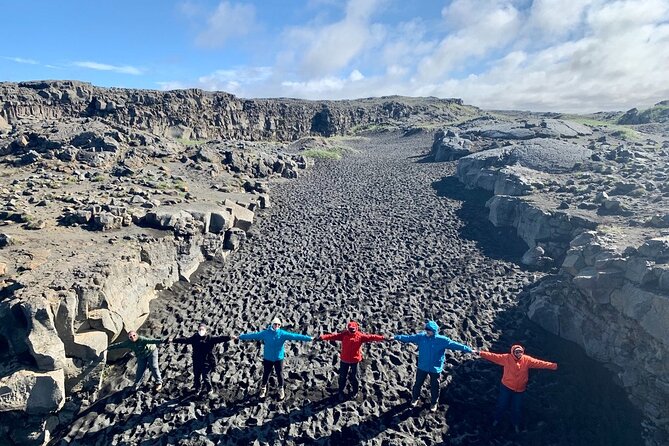
From there, you visit the Bridge Between Continents, a visual spot showing the separation between the North American and Eurasian plates. This is one of those moments that makes tectonics feel physical rather than textbook. You’re not just hearing that plates move—you’re standing in a place that marks that action.
The day doesn’t slow down. You also stop at Stampar, a scoria crater field, then take in a look at one of Iceland’s largest and deepest lakes that sits along a fissure. That lake stop adds a useful perspective: fissures are not just geological features for specialists; they also shape where water collects and how the land behaves.

A possible drawback
This is one of the more concept-heavy days. If you’re the type who likes to absorb slowly, you might want to ask for a quick recap during breaks so the plate/volcano/geothermal threads stay tied together in your head.
Thingvellir to Geysir: Vikings, waterfalls, and hot water at the source
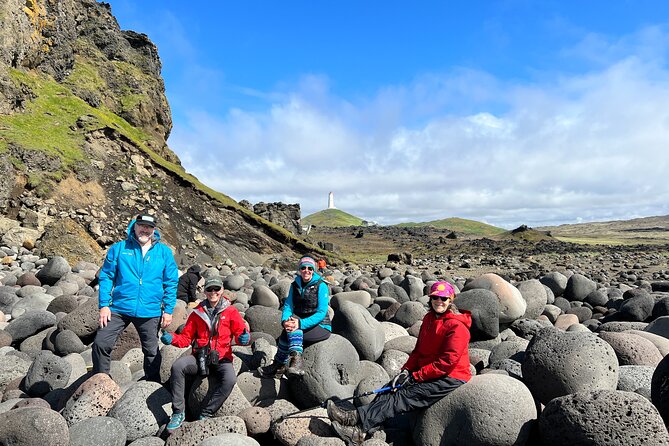
Day 4 is built around three big-name hits, but they’re explained through the tectonic lens. At Þingvellir (Thingvellir) National Park, you learn how the plates are spreading apart and how that affected Viking settlements. That’s a smart pairing: geology affects where people could live, travel, farm, and build.
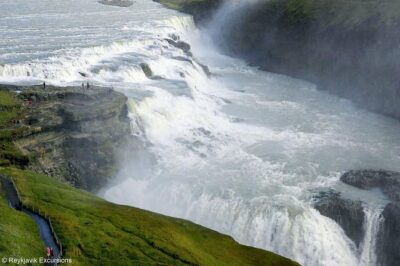
Then you go to Gullfoss Falls, where the group experience is simple: go see one of Europe’s largest waterfalls and feel the scale in person. After that, Geysir brings the heat. If geothermal systems are present, geysers often follow, and the stop focuses on the boiling hot spots that power the spectacle.
My practical take
This day is great if you want famous sights without the typical I-visited-a-place vibe. The geology explanations give you a reason to look beyond the obvious. You’ll likely catch yourself thinking, where is the heat coming from, and why does it concentrate here?
Lava Centre and Hekla: interactive science, then a very active volcano
Day 5 starts at the Lava Centre, described as an interactive volcanology museum. This kind of stop is valuable because it gives you mental tools before you see another volcanic heavyweight.
After that, you sit in Hekla’s shadows and learn about a volcano that’s been active in recent time. Hekla has a reputation, but what makes this stop fit the tour is the teaching style. You’re not just hearing history or legends; you’re learning how recent volcanic activity fits into Iceland’s broader system.
Heads-up
Museums can make you feel “caught up,” but then the outdoor parts remind you that Iceland is real-time geology. Wear layers and be ready to switch modes quickly.
Skaftafell National Park: glacier-top hiking with a wine-and-cheese reward
Day 6 is pure action in the best way. At Skaftafell National Park, you hike on top of a glacier during a 3-hour guided tour. That duration matters: it’s enough time to learn the basics of glacial surfaces and the story ice leaves behind, without turning the hike into a quick photo stop.
Then, there’s a small but memorable treat. After your hike, Dr. Jo and the team have a wine-and-cheese reception waiting. It’s not just a nice break. It’s also a moment to compare what you noticed: surface texture, ice features, and how glacial terrain changes your sense of scale.
Consideration for your body
You’ll be walking for hours on ice-related terrain. Even if you’re not a “hike person,” this is the kind of day where good footwear and a calm pace will make everything easier.
Fjallsárlón, Diamond Beach, and Jökulsárlón: icebergs you can read like a map
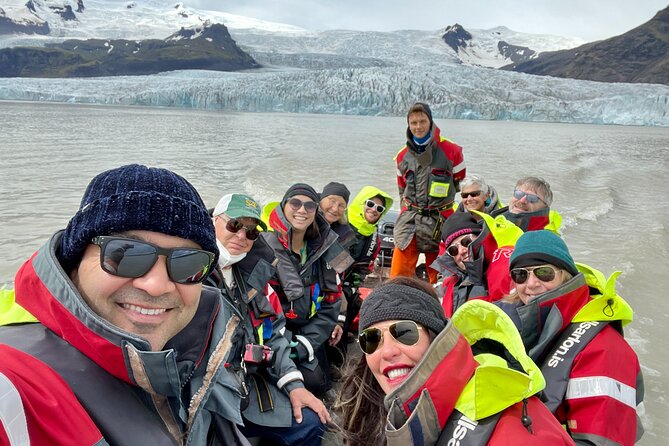
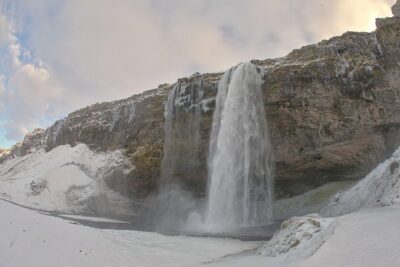
Day 7 is your ice-lagoon day, and it’s structured like a visual lesson. First you visit Fjallsárlón Iceberg Lagoon, looking at the glacier from the water side. Then you go to Diamond Beach, where you see where icebergs land after drifting out.
After that comes Jökulsárlón, with stunning icebergs and the possibility of seal viewing and birding. There are also food vendors, so you can grab something hot like a hot dog if you want a simple comfort reset.
What I like about this sequence is that it builds understanding. You see ice forms, then you see ice transported, then you see ice collected. By the time you reach Jökulsárlón, the whole iceberg journey feels like one connected process instead of three separate stops.
Weather reality
This is a day you’ll feel outside conditions. You’re viewing large water-and-ice scenes, and visibility can change. Still, that’s part of Iceland’s charm—and it’s why this tour is weather-dependent.
Dettifoss: columnar basalt in full force
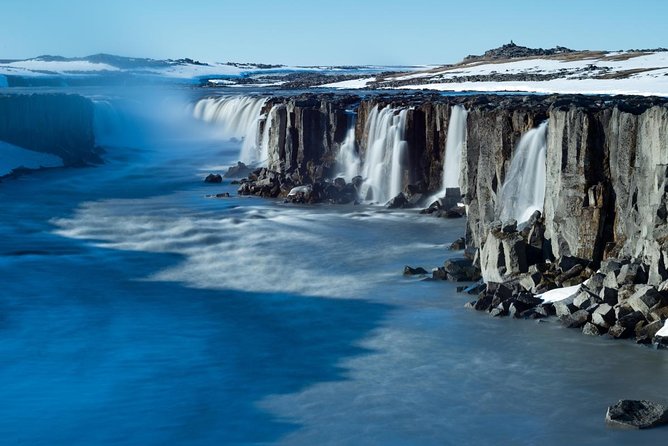
Day 8 targets Dettifoss, described as a massive waterfall exposing columnar basalt. Columnar basalt is one of those geology details that looks almost designed, but it’s created by natural cooling and cracking patterns.
This stop is strong because you get both scale and structure. The waterfall provides power you can feel. The basalt columns provide pattern you can study. If you like learning through direct observation, this is the kind of place that sticks with you.
Hverfjall, pseudo-craters, and Dimmuborgir’s debated origins
Day 9 takes you into the volcanic “weird and wonderful” zone, and it doesn’t waste time explaining what you’re seeing.
At Hverfjall, you visit a massive explosion crater. Next is Skútustaðagígar, where you learn about pseudo craters and how they impacted Viking life. That link to Vikings gives the geology a human anchor.
Then you tour Dimmuborgir Lava Formations, where the guided tour focuses on features with a debated origin. That last phrase matters. This tour doesn’t only show facts; it also acknowledges that geology sometimes leaves room for different interpretations depending on what evidence you emphasize.
A good fit
If you like science that admits uncertainty, this day will feel especially rewarding.
Akureyri free day: let Iceland breathe while you reset
Day 10 is a free day in Akureyri, described as charming with options like resting, shopping, whale watching, and birding. You also get downtime, which is smart after a series of highly active and explanatory days.
This free day is also a nice way to personalize the trip. If you want calmer time, you can choose it. If you want more wildlife and water views, you have options.
Stykkisholmur’s Water Museum: glaciers past and present
Day 11 visits Stykkisholmur and an art installation at the Water Museum that pays respect to glaciers past and present. This is a useful change of pace. You’re still talking about ice, but now you’re thinking about what ice does over time, not just what it looks like today.
It’s the kind of stop that helps the rest of the itinerary connect in your mind. After glacier hikes and ice lagoons, this museum-style moment gives your learning a longer shelf life.
Snæfellsnes and Vatnshellir: stratovolcano views plus a lava tube
Day 12 focuses on west-side geology. In Snæfellsnes, clear skies can bring views of a stratovolcano. Even if the sky isn’t perfect, the stop is still about seeing how the peninsula’s structure shapes what you can observe.
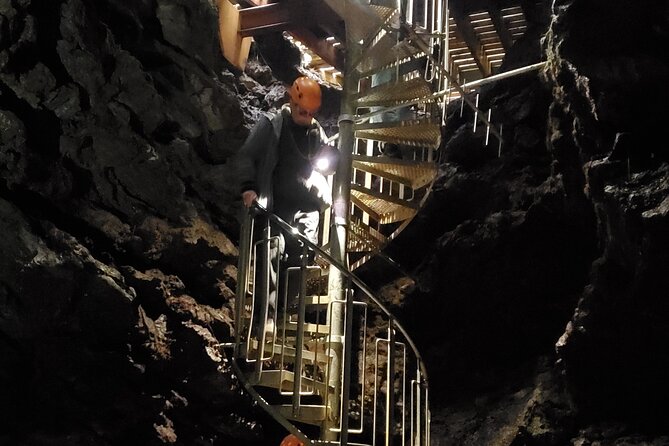
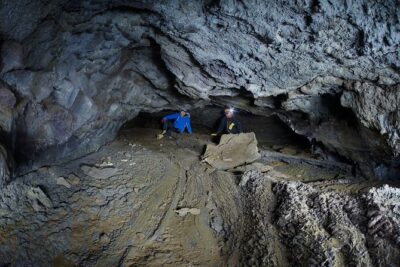
Then you go underground at Vatnshellir Lava Cave, exploring a lava tube and learning how it forms. Lava tubes are a great example of Earth doing quiet work: they preserve a channel of flow that you can walk through and picture.
The day ends at Snæfellsjökull National Park & Glacier for a visit to the national park and glacier area. That final stop ties your trip back to the glacier theme you started with at Skaftafell and continued through the iceberg lagoons.
Back to Reykjavík: one last look before departure
On Day 13, you return to Reykjavík for a final window to explore before you depart. That closing hour matters more than it sounds like. After 12 days of geologic intensity, it’s a chance to rest your eyes, get a meal that feels easy, and remember that your trip isn’t only rocks—it’s also time and weather and human scale.
Price and value: what you’re paying for at $9,200
At $9,200 per person for 13 days, you’re not buying a cheap bucket-list montage. You’re paying for a tight group size (max 16), expert leadership by Dr. Tamie Jovanelly and Joe Cook, and—this is big—all excursion fees included.
You’re also paying for an itinerary that includes multiple guided components rather than only viewpoint hopping: glacier-top hiking, guided stops around tectonic and volcanic features, a lava-cave exploration, plus museum time and guided interpretation. That’s the difference between seeing Iceland and understanding it while you see it.
Is it expensive? Yes. But if geology is your interest, the structure makes the cost easier to justify. You’re paying to have your questions answered in the field, not after you get home.
Who this tour is best for (and who should think twice)
This experience fits best if you want:
- hands-on learning in real places, not just in lecture halls
- an active itinerary with outdoor time, guided hikes, and cave exploration
- small-group dynamics where you can ask “why” questions without feeling rushed
You might think twice if:
- you’re uncomfortable with long days and weather-dependent outdoor stops
- you only want a light, sightseeing-only vacation with minimal focus on explanations
Should you book this Iceland geology adventure?
I think this is a strong yes for anyone who likes geology, active travel, or both. The standout advantage is the combo of expert leadership and built-in interpretation at every major stop, including the geothermal and tectonic sites that usually get skimmed on mass tours.
If the price is your main worry, focus on value: excursion fees are included, the group is small, and multiple stops are guided. That reduces the hidden add-ons you’d normally face on a self-planned Iceland trip.
If you can travel when the weather cooperates and you’re okay paying for focused time with Dr. Jovanelly and Joe Cook, you’ll likely leave with more than photos. You’ll leave with a working mental map of how Iceland is still being made.
FAQ
How long is the Iceland geology tour?
It runs for 13 days (approximately).
Where does the tour start and end?
It starts at Gistiheimilið SunnaÞórsgata 26, 101 Reykjavík and ends back at the same meeting point.
What time does the tour start?
The start time listed is 7:00 am.
Do I need a geology background to join?
No. The tour explicitly notes that a geology background is not necessary.
Who leads the tour?
The tour is led by Dr. Jovanelly and her husband Joe Cook (also referenced as Tamie and Joey Cook in participant comments).
What’s included in the price?
The overview states that all excursion fees are included.
How large is the group?
The tour has a maximum group size of 16 people.
Is good weather required?
Yes. The experience requires good weather, and if it’s canceled due to poor weather, you’ll be offered a different date or a full refund.
Is the tour refundable if I cancel?
The cancellation policy says the experience is non-refundable and cannot be changed for any reason. If the experience is canceled due to poor weather or because the minimum number of people isn’t met, you’ll be offered a different date/experience or a full refund.
Are service animals allowed?
Yes, service animals are allowed.
More Days with a Guide

More Tours in Reykjavik
More Tour Reviews in Reykjavik
Fresh off the road around Reykjavik
Guided, compared.
 ★ 4.3Whale Watching Tour with Expert GuideFrom $872,422 reviews
 ★ 4.5The Golden Circle Guided Bus Tour from ReykjavikFrom $881,726 reviews
 ★ 4.9Guided Foodie Walking Tour with 6 TastingsFrom $1421,645 reviews
 ★ 4.0Northern Lights Guided Bus Tour from ReykjavikFrom $731,183 reviews
 ★ 4.4Guided Afternoon Hiking Tour to New Volcano SiteFrom $126934 reviews
 ★ 4.8Snaefellsnes & Mt. Kirkjufell Guided Minibus TourFrom $159757 reviews
 ★ 4.5Whale Watching Tour with Professional Guide from ReykjavikFrom $97744 reviews
 ★ 4.3Northern Lights Guided Tour with PhotosFrom $95718 reviews